
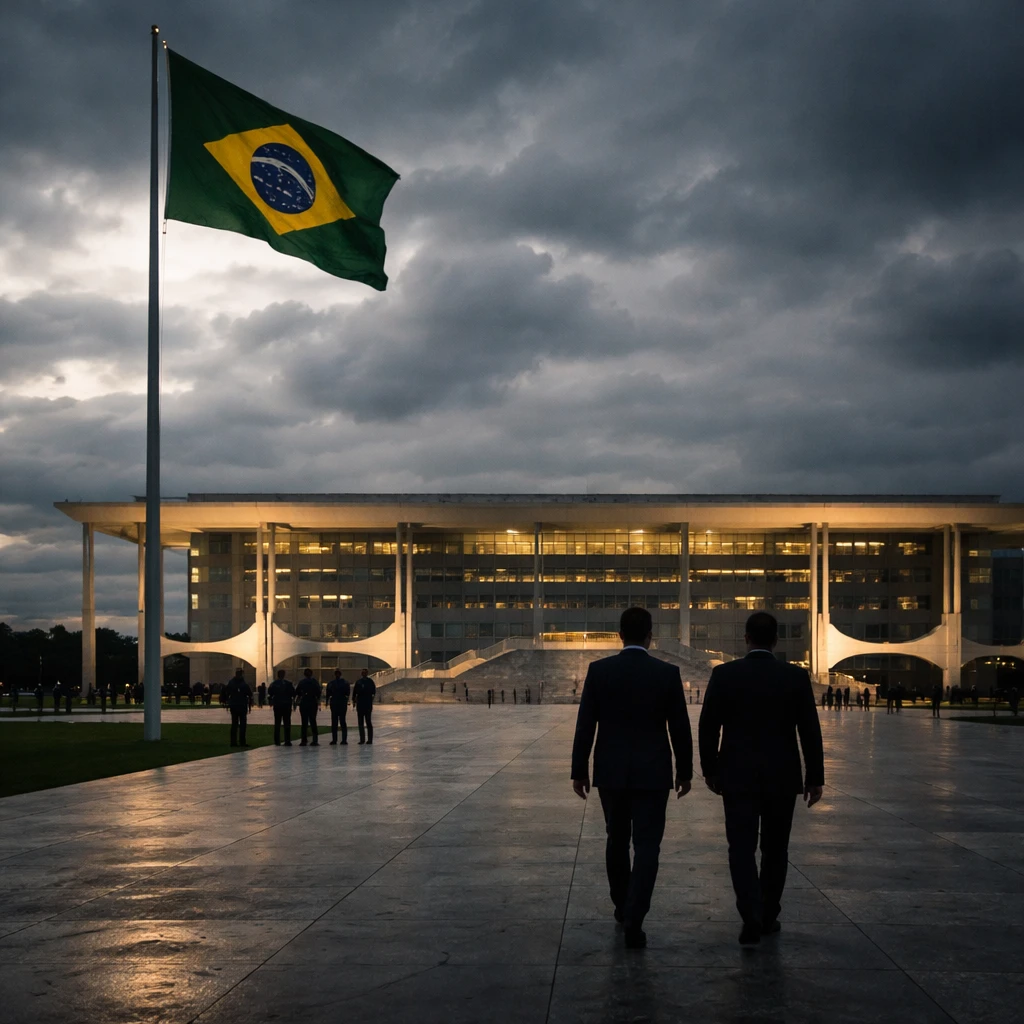
Brazilian authorities denied visa requests on Friday for two U.S. officials who intended to travel to the country to scrutinize its voting systems, two Brazilian officials with direct knowledge of the matter said on condition of anonymity due to the sensitivity of the issue.
The officials said the planned delegation from the previous U.S. administration was viewed in Brasília as an attempt to influence the October presidential election, where leftist incumbent Luiz Inácio Lula da Silva will compete against Senator Flavio Bolsonaro, an ally of former President Donald Trump.
According to the Brazilian officials, the U.S. delegation would have included Riley M. Barnes, Assistant Secretary at the State Department's Bureau of Democracy, Human Rights, and Labor, and Samuel Samson, a deputy assistant secretary. Both had sought visas to enter Brazil but were refused on Friday.
The U.S. State Department did not immediately provide a response to a request for comment, the Brazilian officials said.
Officials who discussed the matter with reporters stressed that their account reflected concerns inside Brazil's government about the nature of the U.S. visit. They described the planned trip as oriented toward casting doubt on the integrity of Brazil's electoral mechanisms rather than engaging in routine election-technical cooperation.
Media coverage of the U.S. plan preceded confirmation of its details, with reporting indicating the visit had been reported by U.S. outlets and later corroborated by follow-up reporting, the Brazilian officials noted.
The visa denials and related commentary underscore tensions between diplomatic engagement on election-related issues and perceptions of foreign interference as Brazilian political actors prepare for a contested vote in October.
Context limitations: The information above is drawn from accounts provided by two unnamed Brazilian officials and reflects what they reported regarding the visa requests, the planned delegation composition, and their interpretation of the delegation's purpose. The U.S. State Department had not issued an immediate statement responding to inquiries, according to those officials.