
DUBAI/MANILA, July 22 - U.S. Secretary of State Marco Rubio told Southeast Asian foreign ministers on Wednesday that the United States remains willing to pursue diplomacy to resolve the Iran crisis, but he expressed doubt that Tehran is equally committed to serious negotiations. His remarks came amid a widening confrontation that has disrupted two of the world’s most important energy transit routes.
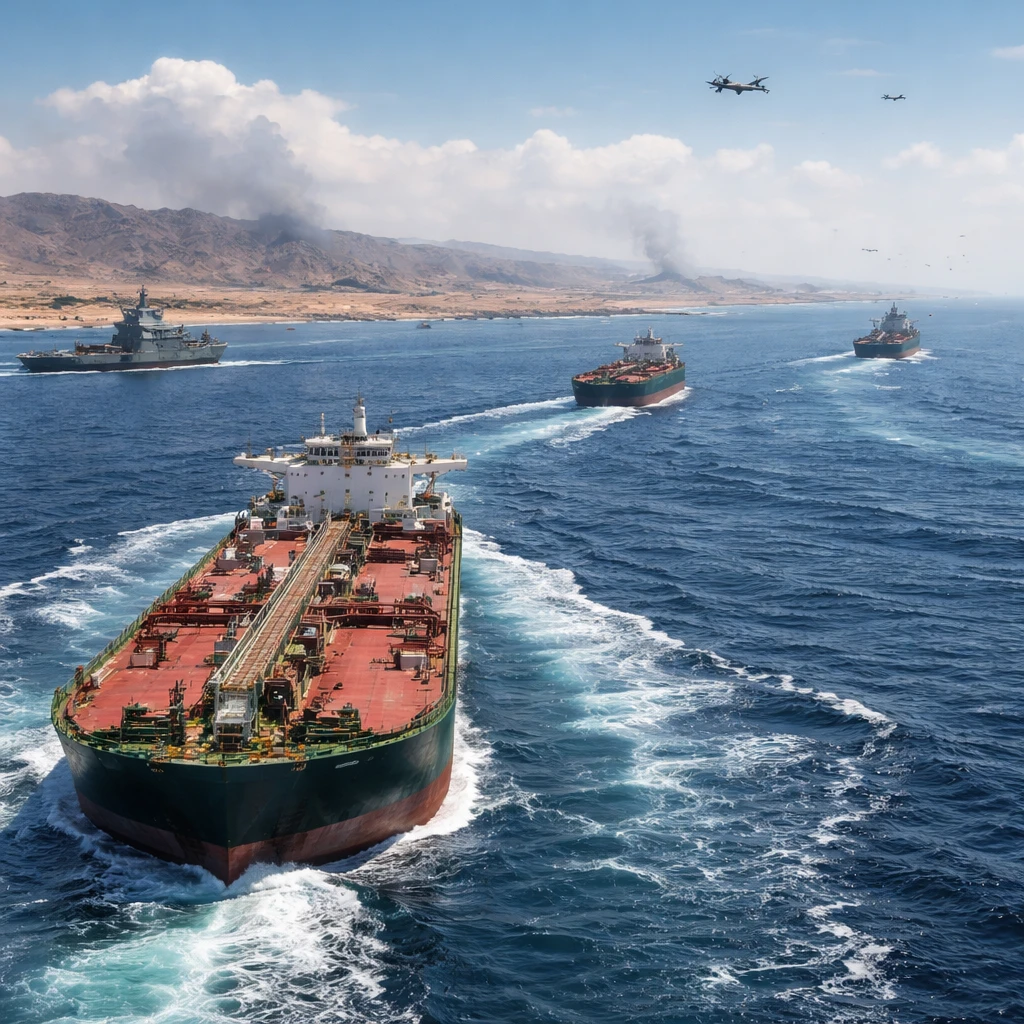
Rubio spoke a day after three oil tankers loaded with Saudi crude bound for Asian buyers altered course in the Red Sea, apparently reacting to threats issued by Yemen’s Iran-aligned Houthi fighters. The Houthis, who control the coastal area at the mouth of the Red Sea, announced a naval blockade on Saudi Arabia on Monday, creating the prospect of a new front in the war that, according to the reporting, has killed thousands of people across the Gulf since it began on February 28 with U.S. and Israeli attacks on Iran.
With Iran already menacing shipping through the Strait of Hormuz - the main outlet from the Gulf - the Red Sea has become a principal alternate route for millions of barrels of Saudi oil per day. That position has made the Red Sea a focal point for both commercial traffic and military attention.
A senior Iranian official told Reuters on Monday that Tehran had received a proposal from mediators for a 10-day ceasefire, an effort to revive the interim ceasefire agreement signed by the U.S. and Iran in June that followed an earlier April ceasefire. Diplomacy appeared to be active in other ways as well: Iran’s Interior Minister Eskandar Momeni visited Pakistan and asked Islamabad to continue mediating efforts.
Rubio reiterated Washington’s commitment to diplomatic engagement but questioned Iran’s reciprocity. "The problem we’re having right now is that they’re not serious about talks. If they’re serious, we’re serious. If they’re not, then we will do what’s necessary to protect our interests, and also the interests of our allies," he said in Manila.
He warned that allowing Iran to exert control over the Strait of Hormuz would set a dangerous global precedent. "If we create a precedent in the Middle East where a nation state can decide that they are going to control an international waterway, charge a toll, and if you don’t pay them blow up your ships, we have created a very dangerous precedent, which will repeat itself in other parts of the world, including in this region," Rubio said, noting potential parallels for Southeast Asian countries that contend with territorial disputes in the South China Sea.
Despite diplomatic overtures, military action continued. The U.S. military conducted air strikes across Iran for an 11th consecutive night on Tuesday, and residents of Tehran reported explosions in the early hours of Wednesday as Iranian air defences were activated over the capital, the semi-official Fars news agency reported. Iran’s official IRNA news agency reported explosions in the southeastern coastal cities of Chabahar and Konarak, and two blasts in Bushehr, the location of Iran’s only nuclear power plant.
Earlier developments included Iranian strikes targeting U.S. military positions in Bahrain, Kuwait and Jordan, and an incident in which a tanker was hit in the Strait of Hormuz. Iran claimed to have struck infrastructure belonging to the U.S. company Amazon in Bahrain, where the company operates a regional data centre. Amazon did not comment and the report could not be independently verified.
U.S. President Donald Trump confirmed that 18 U.S. service members have been killed so far in the conflict, including four who died in Iranian attacks on U.S. military bases in Jordan and Iraq in recent days.
Markets responded quickly to the maritime threats. Oil prices rose in Asian trading on Wednesday following a more than 2% increase on Tuesday after the Houthi threats, with Brent crude hovering above $91 a barrel and U.S. gasoline trading back over $4 a gallon. The potential choke points have direct implications for global energy markets, as movements of crude and refined products are sensitive to disruptions along the routes exiting the Gulf and passing through the Red Sea.
The Houthis warned shippers in a letter on Tuesday that they would attack any vessels that load or discharge Saudi oil. In response, President Trump said the Houthis had not yet closed the Bab el-Mandeb strait - often called the "Gate of Tears" - which leads into the Red Sea, and he threatened action if they did. "So far it hasn’t happened," Trump said. "If something like that happens, we take care of it." Three tankers carrying Saudi crude for China and India made U-turns in the Red Sea on Tuesday, opting for a route toward the Suez Canal rather than passing close to the Yemeni coast at the mouth of the sea.
Throughout the conflict, Saudi Arabia has sought to limit shipping disruption by moving oil to the Red Sea port of Yanbu via pipelines. Analysts and officials caution, however, that a full closure of the alternative Red Sea route by the Houthis could materially reduce global oil supply by leaving most Saudi exports stranded.
On the diplomatic and military fronts, President Trump renewed threats on Tuesday to attack Iran’s Natanz nuclear facility "pretty soon", reiterating his June 2025 claim that the site had been "totally obliterated" after U.S. military operations that month targeted a facility embedded in a mountain range. Iran has vowed to retaliate for attacks on its territory.
The human cost of recent strikes in Iran was also cited in official tallies: a health ministry official said 50 civilians had been killed and 500 wounded in recent U.S. strikes on Iran.
Outlook - The situation remains fluid. Diplomatic channels appear active in parallel with continued military strikes, while the security environment around two vital maritime passages - the Strait of Hormuz and the Red Sea - is contributing to market volatility. For as long as the threats to shipping persist, oil flows, freight scheduling and regional security calculations are likely to be affected.