
World August 6, 2026 12:14 PM

Uganda's Parliament Approves Potential Deployment to Gaza Under U.S. Plan

Kampala authorizes force contribution to an envisioned international stabilization mission tied to Donald Trump's Gaza ceasefire proposal

By Jordan Park
Share
Twitter Reddit Facebook LinkedIn

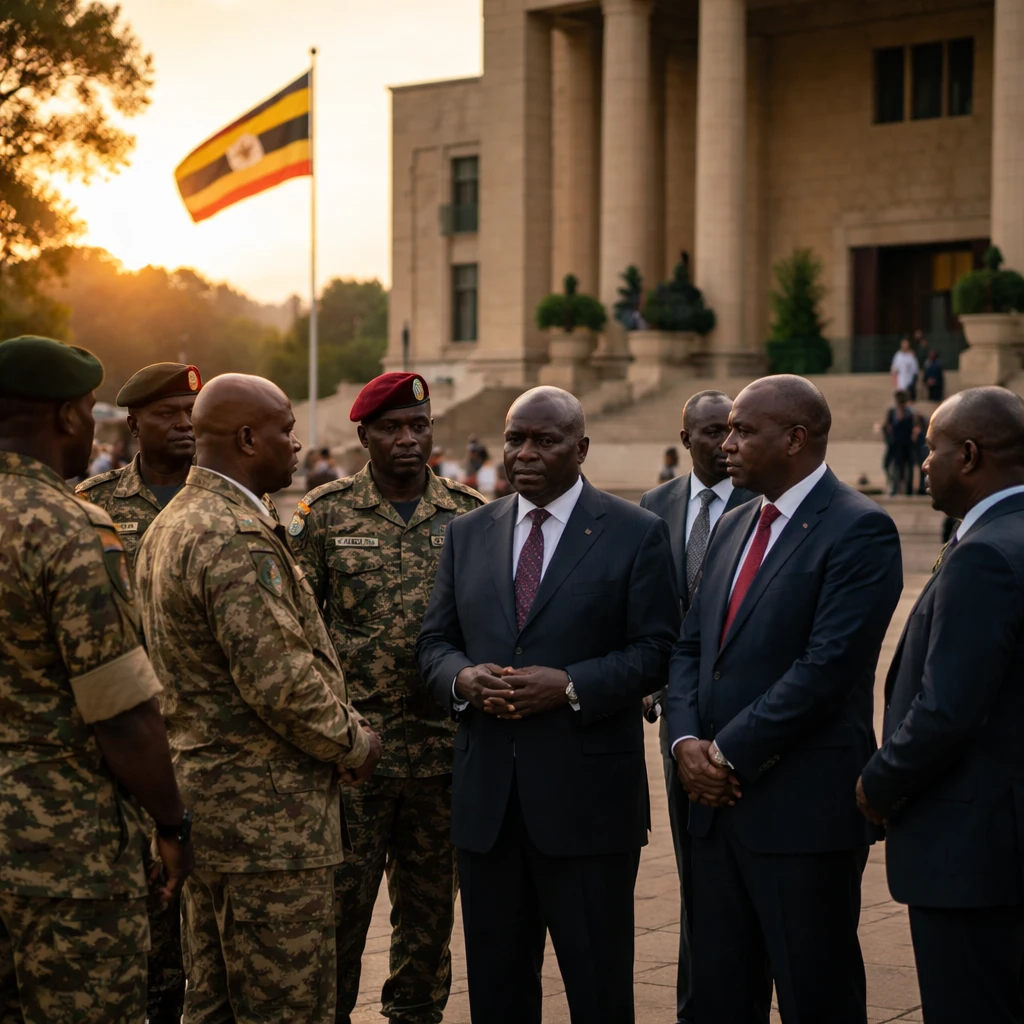
Uganda's parliament has voted to allow the deployment of its military to the Gaza Strip if called upon to join an International Stabilization Force envisaged in a U.S. ceasefire plan. Defence Minister Kiryowa Kiwanuka told lawmakers that President Yoweri Museveni received a July request via emissaries from U.S. President Donald Trump for Kampala's contribution. The plan - which remains stalled - includes provisions for humanitarian aid, a civilian technocratic administration and Israeli withdrawal, with uncertainty persisting over if and when a multinational force will be deployed.

Uganda's Parliament Approves Potential Deployment to Gaza Under U.S. Plan
Summarize with
ChatGPT Perplexity Claude Grok Gemini

Key Points

  • Uganda's parliament approved the potential deployment of its military to Gaza as part of a multinational force outlined in President Donald Trump's ceasefire plan.
  • Defence Minister Kiryowa Kiwanuka said Trump contacted President Yoweri Museveni in July via emissaries requesting Uganda's contribution; an Israeli official previously indicated "friendly countries" could take part.
  • The U.S. plan calls for increased humanitarian aid, civilian administration by Palestinian technocrats, Hamas disarmament and Israeli withdrawal; deployment timing for an International Stabilization Force remains unclear.
  • Sectors potentially affected include defense and security (troop deployments and logistics), humanitarian aid and relief operations (aid surges and reconstruction), and international peacekeeping funding and contracts.

KAMPALA - Uganda's parliament on Thursday passed a motion permitting the Uganda People's Defence Forces to be deployed to the Gaza Strip if required as part of a multinational security contingent described in a ceasefire plan put forward by U.S. President Donald Trump.

Defence Minister Kiryowa Kiwanuka informed lawmakers that Trump, through emissaries, reached out to President Yoweri Museveni in July to request Uganda's participation in the proposed international force. An Israeli official had indicated last month that personnel from "friendly countries" including Uganda could form part of such a force if it were to be established.

Thursday's parliamentary debate marked the first public acknowledgment from Uganda that it might take part in operations in Gaza. Kiwanuka told members of parliament: "Following the invitation by His Excellency Donald Trump ... the President of the Republic of Uganda, is ready to deploy in the Gaza Strip the desired Uganda People’s Defense Forces contingent."

During the discussion, some legislators queried the legal framework that would govern any deployment. Kiwanuka said that a status of forces agreement - often abbreviated as SOFA - would be signed following the parliamentary approval.

The proposed U.S. plan, set out after a fragile ceasefire deal struck in October, envisages several elements for Gaza: a surge of humanitarian assistance, civilian administration by a group of Palestinian technocrats called the National Committee for the Administration of Gaza, the laying down of arms by Hamas and a withdrawal of Israeli forces. The plan has not advanced, and the technocrat-led committee has remained outside Gaza.

Within that framework, an International Stabilization Force is conceived to operate in areas not under Israeli control. The timing for the creation or deployment of such a force remains unclear.

Uganda has a record of contributing to international peacekeeping and enforcement missions, and currently deploys contingents to Somalia, South Sudan and the Democratic Republic of Congo. Much of Gaza remains extensively damaged after two years of full-scale war that was triggered by the Hamas-led attacks on Israel on October 7, 2023.

Risks

  • Uncertainty over deployment timing and the stalled status of the U.S. plan - this creates planning and operational risks for defense and logistics providers who might support a stabilization force.
  • Legal and governance questions remain until a status of forces agreement is negotiated - this legal uncertainty could affect defense contractors, insurers and states considering participation.
  • Ongoing destruction in Gaza from two years of war increases humanitarian and reconstruction demands - uncertainty over security arrangements may slow delivery of aid and reconstruction contracts in the humanitarian sector.

More from World

Caught Between Concessions and Escalation: Trump’s Iran Dilemma Deepens Aug 6, 2026 Israeli Authorities Indict Settler in Killing of Palestinian Activist, a Rare Legal Move Aug 6, 2026 U.S. Seeks Extradition of Philippine Pastor Accused of Sex Trafficking and Abuse Aug 6, 2026 Italy Elevates Major Cities to Red Alert as Heatwave Intensifies Aug 6, 2026 Ghana's Inflation Falls to 4.6% in July as Food Price Gains Slow Aug 6, 2026