
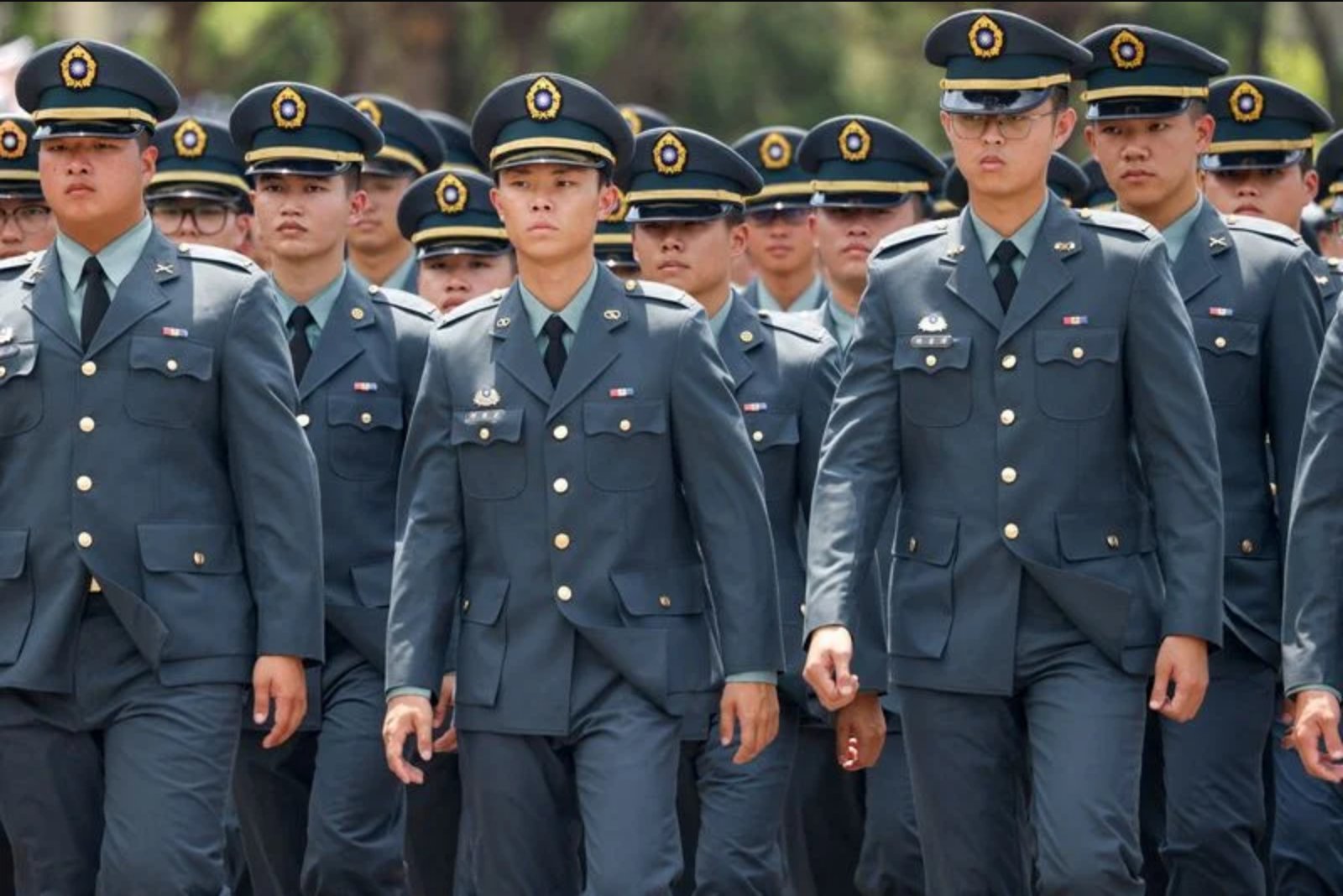
Taiwan's defence ministry announced on Sunday that it has brought back formal "anti-communist patriotic education" for graduates of its military academy, reviving a program that had been discontinued in 2002. The ministry said the change responds to what it described as a growing military and infiltration danger from China, and aims to ensure new officers understand national security threats and the mission of the armed forces - "why we fight, and for whom we fight," according to the ministry statement.
The ministry also said that a range of government bodies will contribute lectures to the restored curriculum. Presenters will include officials from the Mainland Affairs Council, the National Security Council, the Ministry of Justice and the research organization Academia Sinica. The ministry said the objective is to "establish among graduates a clear awareness of friend and foe."
Historically, Taiwan ran broad campaigns during the Cold War warning about the dangers posed by what were then termed "communist bandits" across the strait. Formal anti-communist instruction for military graduates was phased out in 2002 and the program was renamed "patriotic education". The defence ministry's announcement marks a return to the earlier, explicitly anti-communist title for the curriculum.
The move comes as Taiwan reports significant Chinese military activity in the surrounding seas. Joseph Wu, secretary-general of Taiwan's National Security Council, posted on X late on Saturday that as of Friday Taiwan was tracking a record of more than 110 Chinese military and Coast Guard ships operating up and down the first island chain. Wu characterized the deployments as "a clear sign of [China's] expansionism," referring to the maritime arc that runs from Japan to Taiwan, the Philippines and Borneo.
Taipei also registered a recent action by China’s Coast Guard, which launched a new patrol off Taiwan's east coast on Saturday. Taiwan said the patrol prompted a sharp response from its authorities and reiterated that Beijing has no jurisdiction in those waters. Taiwan's government continues to reject Beijing's sovereignty claims, while China's defence ministry did not respond to a request for comment outside office hours. The announcement noted that China has never renounced the use of force to bring Taiwan under its control.
Officials framed the educational reinstatement as a response to both overt military pressure and the risk of infiltration. The defence ministry emphasized the need for graduates to have a clear understanding of national security threats and their military duties. The new lectures draw on inputs from multiple government departments and an academic institution, reflecting a cross-institutional approach to the revived course content.
Summary
Taiwan has reinstated formal "anti-communist patriotic education" for military academy graduates, a program title not used since 2002. The defence ministry said the step addresses rising military and infiltration threats from China and that experts from several government bodies and Academia Sinica will lecture graduates. The announcement coincides with Taiwan tracking a record number of more than 110 Chinese naval and coast guard vessels along the first island chain, and with a recent Chinese Coast Guard patrol off Taiwan's east coast that drew a firm response from Taipei.
Key points
- Taiwan's defence ministry has restored "anti-communist patriotic education" for military academy graduates, citing increased military and infiltration threats from China.
- Lectures will be provided by officials from the Mainland Affairs Council, National Security Council, Ministry of Justice and Academia Sinica, intended to clarify threats and the military's mission.
- Taiwan reported tracking a record of more than 110 Chinese military and Coast Guard ships along the first island chain, and noted a new Chinese Coast Guard patrol off its east coast.
Risks and uncertainties
- Escalation risk - Continued high levels of Chinese military and coast guard activity near Taiwan raises the possibility of further confrontations or tense encounters, affecting defence readiness and regional security.
- Maritime disruption - Increased patrols and deployments along the first island chain could create uncertainty for commercial shipping and maritime operations in nearby waters.
- Political and sovereignty tensions - Assertions of jurisdiction by Chinese maritime forces and Taiwan's rejection of those claims sustain a persistent diplomatic and security uncertainty in the region.