
Stock Markets August 19, 2026 06:51 AM

Target Shares Drop Despite Upgraded Sales Outlook and Tariff Windfall

Retailer lifts annual sales and profit guidance but stock falls as macro signals and dependence on tariff refunds temper investor enthusiasm

By Jordan Park
Share
Twitter Reddit Facebook LinkedIn
TGT

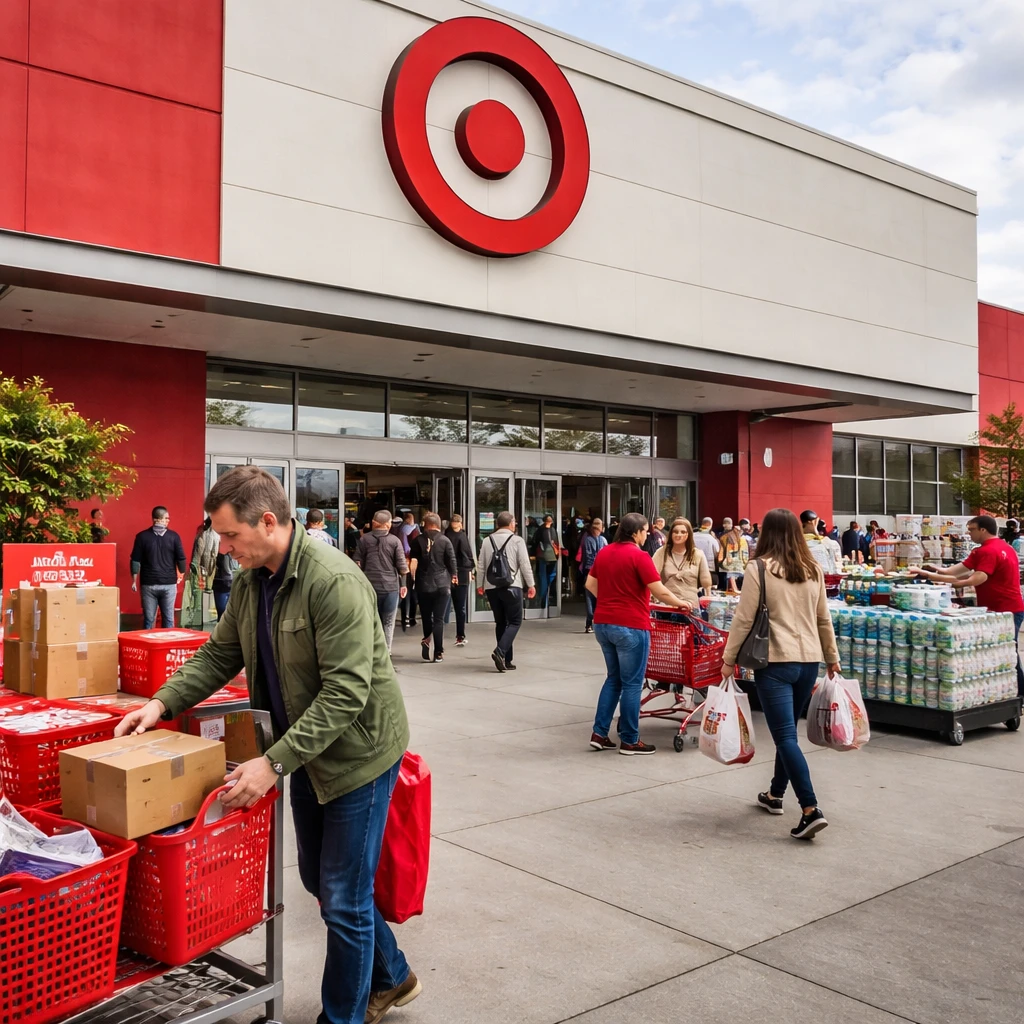
Target shares fell about 4.0% in pre-market trading after the company raised its annual sales forecast and lifted profit guidance, citing stronger traffic, gains in digital sales and roughly $1 billion in tariff refunds that boosted quarterly results. The retailer reported comparable sales growth that outperformed estimates, but broader concerns about consumer spending and upcoming Federal Reserve minutes weighed on sentiment.

Target Shares Drop Despite Upgraded Sales Outlook and Tariff Windfall
TGT
Summarize with
ChatGPT Perplexity Claude Grok Gemini

Key Points

  • Target's shares fell about 4.0% in pre-market trading despite the company raising its annual sales and profit guidance.
  • Comparable sales rose 3.8% for the quarter ended August 1, outpacing estimates of 2.5%, with a 3.6% increase in traffic and an 8.7% jump in digital comparable sales driven by same-day delivery.
  • Tariff refunds of nearly $1 billion boosted gross margin and operating income; excluding approximately $1.65 per share in tariff benefits, Target increased the midpoint of its annual profit forecast by $0.75. Sectors impacted include retail, consumer discretionary, and broader equity markets.

Target Corporation's stock opened lower, sliding 4.0% in pre-market trading even after the company raised its outlook for the year and highlighted improvements in pricing and merchandise assortment. Management said its price cuts and refreshed inventory are producing results, and the quarter included nearly $1 billion in tariff refunds that supported the retailer's margins and operating income.

For the quarter ended August 1, Target reported comparable sales growth of 3.8%, ahead of the 2.5% gain analysts were expecting, according to LSEG data. That increase reflected a 3.6% rise in store traffic and an 8.7% surge in digital comparable sales as more customers chose same-day delivery options.

The tariff refunds materially affected profitability for the period. Target said that, excluding roughly $1.65 per share in tariff-related benefits, it raised the midpoint of its annual profit forecast by $0.75. In May, the company had guided to earnings near the high end of a $7.50 to $8.50 range.

On the top line, Target now anticipates year-over-year net sales growth of about 5%, an increase from its prior outlook of roughly 4% growth.


Market context and investor reaction

Investors appeared to weigh the positive company-specific developments against a softer backdrop for consumer spending. Economists at Goldman Sachs signaled that U.S. real consumer spending growth may slow to between 1.0% and 1.5% in the second half of 2026, a notable deceleration from the tax-refund-fueled pace earlier in the year. In addition, July retail sales fell 0.6% month-over-month, marking the largest sequential decline in 14 months.

Those macroeconomic data points contributed to caution among market participants. The Federal Reserve was scheduled to publish minutes from its July policy meeting the same day, adding another element of uncertainty for broader markets. U.S. futures traded with limited movement, with the S&P 500 near flat and the Nasdaq slightly lower.


What the results mean

Target's quarter shows an operational rebound in traffic and digital demand alongside deliberate price and assortment actions. The company has also benefited from an accounting boost tied to tariff refunds, which supported margins and enabled a modest lift in profit guidance when certain one-time benefits are excluded. Nevertheless, the stock's decline indicates that investors are factoring in the uncertain consumer backdrop and the transitory nature of tariff-related gains.

Going forward, Target will navigate both its internal merchandising and pricing initiatives and the broader consumer and policy environment referenced by recent economic data and upcoming Fed disclosures.

Risks

  • A slowdown in consumer spending - Goldman Sachs economists expect U.S. real consumer spending growth to decelerate to 1.0%–1.5% in the second half of 2026, which could pressure retailers and the consumer discretionary sector.
  • Reliance on tariff refunds - Target's quarterly margins and operating income were materially aided by roughly $1 billion in tariff refunds; dependence on such one-time benefits can create volatility in reported profitability for retail companies.
  • Macro and policy uncertainty - Recent weak retail sales data (July retail sales fell 0.6% month-over-month) and the impending release of the Federal Reserve's July meeting minutes introduce additional market uncertainty that can affect retail stocks and broader markets.

More from Stock Markets

Volkswagen Sees India Partner Deal This Year, Skoda Chief Says Aug 19, 2026 Target Raises Full-Year Outlook as Pricing and Merchandising Efforts Gain Traction Aug 19, 2026 European fund managers tilt toward growth while keeping defensive cash buffers, BofA survey finds Aug 19, 2026 Data-center build-out sends demand down factory supply chains, lifting niche manufacturers Aug 19, 2026 Estée Lauder Shares Jump Ahead of Quarterly Report as Analysts Brace for Beat Aug 19, 2026