
Aug 19 - Target reported a stronger-than-expected quarter on Wednesday, lifting its full-year sales target as the retailer's push to trim prices and refresh merchandise continued to show results. Management said the quarter's profit received a near $1 billion uplift from tariff refunds, helping to bolster margins and operating income.
The company described the quarter as the third straight period of solid performance under CEO Michael Fiddelke, whose turnaround plan has focused on fixing assortment and pricing problems. Target has already raised its growth outlook once this year, in May, and the latest results suggest the strategy is beginning to take hold ahead of the critical holiday shopping season. The stock has climbed notably this year with management noting positive consumer response to the changes it has made.
"It’s encouraging to see a strong consumer response to change where we’ve made it," Fiddelke said on a pre-earnings call on Tuesday. He cautioned, however, that more work remains: "There’s a lot more to come, and ... we need to execute well."
Operational performance
Comparable-store sales for the quarter ended August 1 rose 3.8%, outpacing consensus estimates of roughly 2.5% growth compiled by LSEG. That improvement included a 3.6% increase in store traffic and an 8.7% gain in digital comparable sales as shoppers showed increasing preference for same-day fulfillment options.
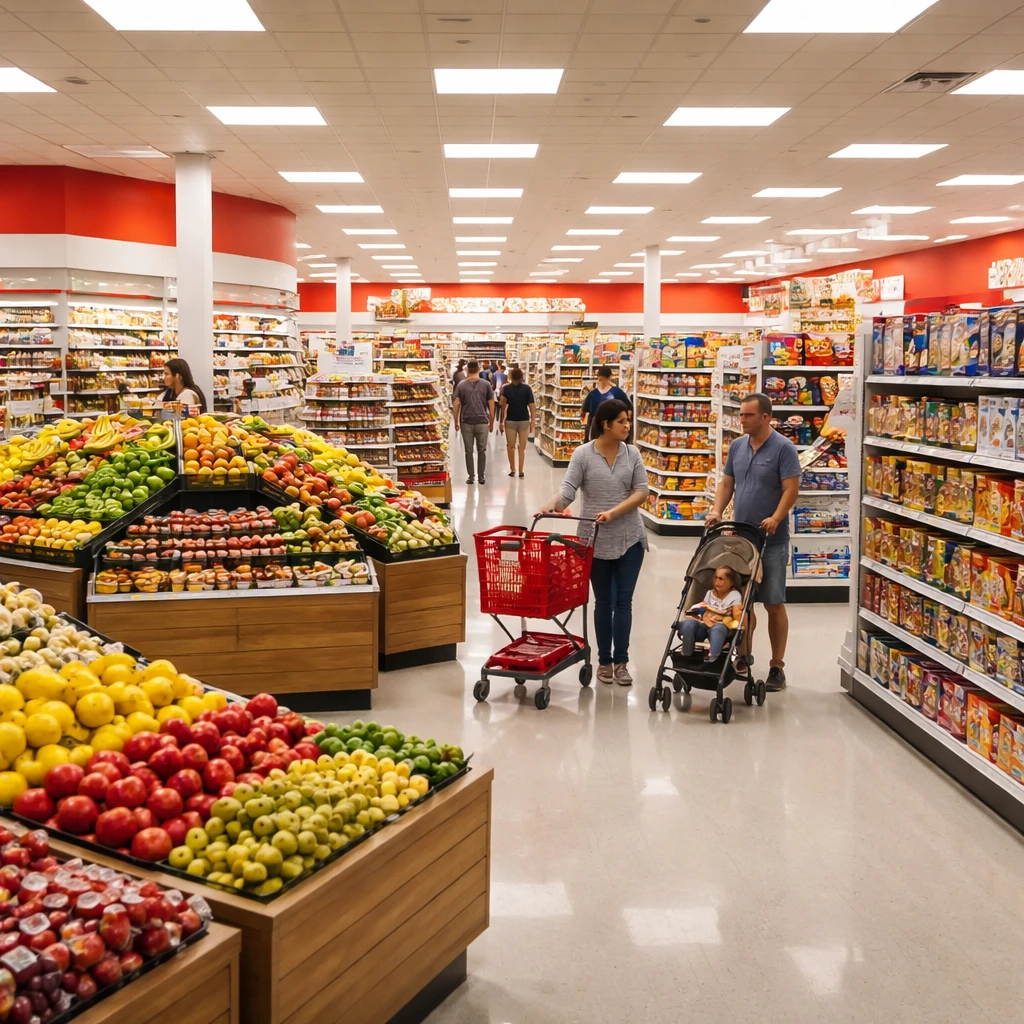
Target said it has reduced prices on more than 10,000 items over the past year and highlighted back-to-school pricing where about 95% of school supplies were priced below last year’s levels. Management singled out category-level changes as well: the company expanded space for fresh produce, snacks and bakery items, reporting snack sales rose 15% year-over-year, and it noted double-digit growth in its hardline segment known as Fun101, where Lego products were cited as a leading driver.
Chief Merchandising Officer Cara Sylvester described an ambition to transform Target’s food business from a convenience or "while-you’re-at-Target" option into a destination that attracts shoppers by itself.
Use of tariff refunds and financial guidance
Chief Financial Officer Jim Lee said the company has used and will continue to use tariff refund dollars to invest in price, though he did not provide further specifics on allocation plans. Management reported tariff refunds contributed about $1.65 per share in benefit for the quarter. Excluding that gain, Target raised the midpoint of its full-year earnings-per-share forecast by $0.75. In May, the retailer had guided to annual earnings near the high end of $7.50 to $8.50 per share.
On the top line, Target upgraded its expected year-over-year net sales growth to around 5%, from a prior target of roughly 4%.
Execution, margin sensitivity and planned investments
Analysts and management emphasized the narrow margin for error in Target's recovery. Morningstar analyst Brett Husslein noted the quarter served as a key barometer for whether Target can consistently execute on pricing, product mix and in-store experience - the three elements management has prioritized. Husslein contrasted Target's model with that of a lower-price, higher-margin competitor, noting Target's margins are more tightly tied to retail sales and therefore more vulnerable if shoppers pull back.
Target reiterated earlier commitments to invest in merchandising: in March the company said it would add $2 billion in spending on top of a previously announced $4 billion to address assortment and inventory issues that had driven shoppers away. Fiddelke said some categories - including apparel and home - are "just barely positive" and still require substantial work.
Management signaled additional investments to sustain growth, including rolling out beauty studios in more than 600 stores, enhancing the home merchandise assortment and advancing the retailer's use of technology.
What this quarter shows
The quarter combined several encouraging data points: traffic gains, strong digital performance, category-specific improvements and an intentional pricing program supported by tariff refunds. Yet executives and outside analysts stressed that consistent execution remains essential, especially as Target seeks to convert in-store improvements into long-term market share gains. Changes in consumer behavior, category performance and macroeconomic pressure were cited as ongoing variables that could affect results.
Target’s leadership reiterated a cautious optimism - the company is seeing initial payoffs from its turnaround work but is still advancing investments and execution efforts to sustain momentum into upcoming shopping seasons.
Summary
Target’s quarterly report showed progress on the retailer's turnaround plan, supported by significant tariff refunds and strategic price cuts. Management raised sales and profit guidance, pointed to stronger traffic and digital sales, and announced continued investments across categories and stores to solidify the recovery ahead of the holiday period.