
Taiwan’s Defence Minister Wellington Koo said the island’s ties with the United States may be closer than many assume, pointing to deeper military exchanges with the U.S. Pacific Command as a channel for strengthening Taiwan’s defensive capabilities.
In an interview with a small group of reporters, Koo expressed gratitude for Washington’s support and described ongoing efforts to build capability through bilateral military cooperation. "Our cooperation with the United States may be far closer than many people imagine," he said, adding that Taiwan continues to enhance its defensive combat capabilities through military exchanges and cooperation with the Pacific Command at all levels.
Koo noted the Pacific Command’s role in preserving peace and security across the Indo-Pacific and said it views Taiwan as occupying a pivotal location in the so-called first island chain that runs from Japan through Taiwan to the Philippines. He credited the exchanges with helping Taiwan boost its defensive combat readiness.
Diplomatic and military context
While Taiwan lacks formal diplomatic ties with the United States, the minister reiterated that Washington remains Taiwan’s most important international backer and supplier of arms. Beijing has consistently denounced military interactions between Taipei and Washington, reflecting the tension that surrounds such cooperation.
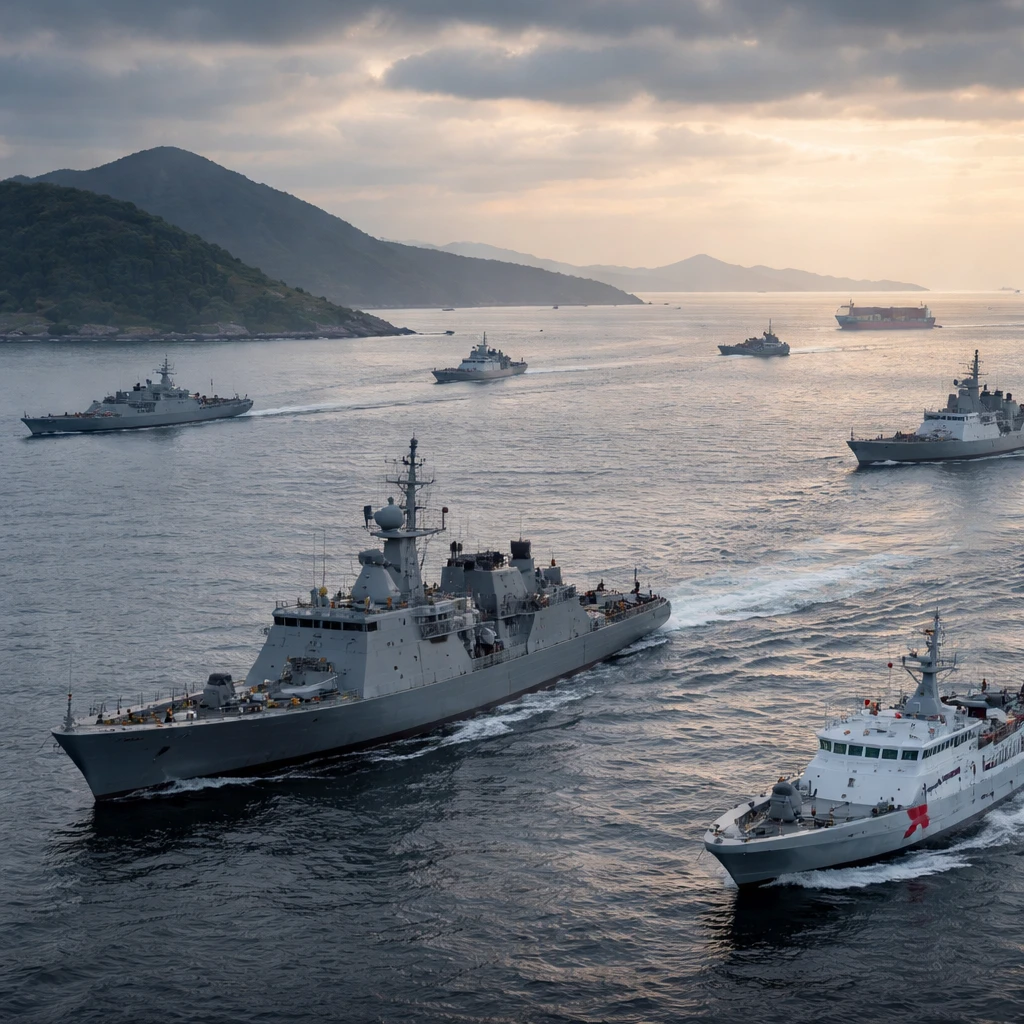
According to Koo, China has intensified its military pressure around Taiwan, including coast guard operations off Taiwan’s Pacific coast - an area Taipei regards as crucial for wartime supply routes from allied partners. Those activities have prompted Taiwan to conduct drills simulating a range of Chinese escalatory actions, including the possibility of a blockade.
On the risks of blockade
The defence minister warned that a maritime blockade of Taiwan would carry major risks for China. Koo argued that such an action would present a significant challenge to Beijing because of its dependence on external trade and the role of its ports in global shipping. "In fact, a maritime blockade would pose an even greater challenge for China," he said, adding that the move would likely have a severe economic impact at a time when China faces economic difficulties and could trigger heavy international sanctions.
Koo also raised the potential domestic political consequences for Chinese leadership. He said China's leadership would have to consider the internal political risks for President Xi Jinping, adding: "Under such circumstances, whether China’s regime could remain stable and whether Xi Jinping’s rule could be secured would be a very, very big challenge. I believe Xi Jinping must consider this."
Implications for readiness and deterrence
The minister framed military exchanges with the U.S. Pacific Command as practical measures to raise Taiwan’s defensive posture. By deepening cooperation at multiple levels, Taipei aims to reinforce deterrence and operational readiness while signaling the strategic importance of Taiwan within regional security planning.
While Koo emphasized the contributions of those exchanges to Taiwan’s combat capabilities, he also highlighted the broader strategic calculations that would accompany any significant escalation, particularly a maritime blockade, underscoring the interconnected economic and political stakes involved.