
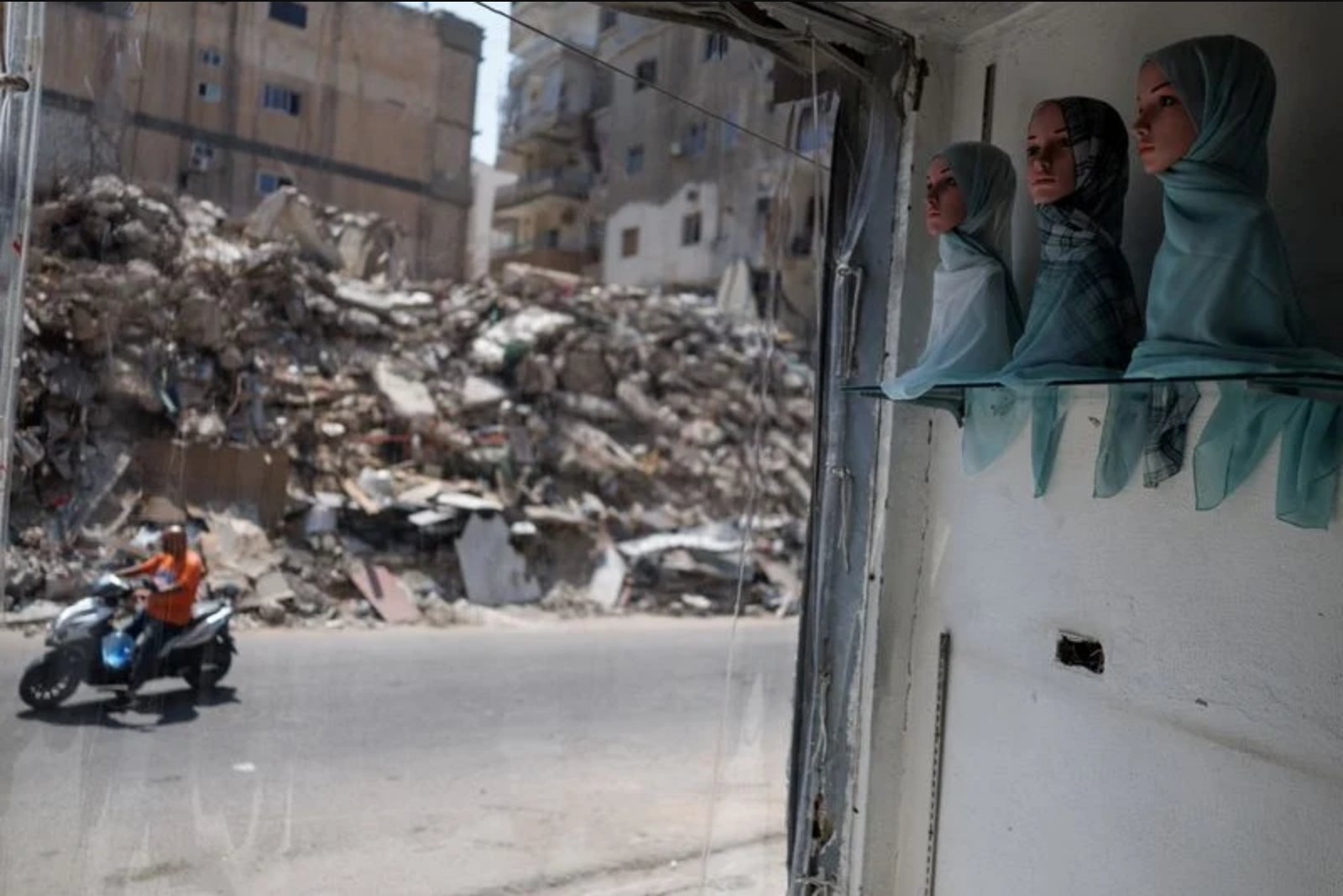
On the sands of Tyre, along Lebanon's southern coastline, a fragile routine is re-emerging: children wading into the sea, families clustered beneath parasols and beachfront cafés and restaurants reopening their doors. The visible calm, however, coexists with a starkly different reality beyond the shore, where residents returning after months away are confronting the scale of damage inflicted by Israeli bombardment and coping with the constant fear of a flare-up between Israel and Iran-backed Hezbollah.
"People are coming back to Tyre to rebuild, to work - all the restaurants are open again," said local resident Ali Skaiky, dripping from a recent swim and holding a rubber lilo. "We still hear strikes and fighting at night, but it’s far away. There’s destruction beyond imagination, but we hope everything will stay calm." Skaiky is one of some 400,000 people who have returned to southern Lebanon in the weeks since a ceasefire between Israel and Hezbollah. The truce has not ended hostilities entirely, but it has reduced their intensity.
Returnees across the region are absorbed in the practical tasks of repair and recovery. In damaged neighborhoods, residents sweep rubble from homes, salvage what they can and attempt to revive businesses and services that were shut down during the conflict. For many, however, the renewed normal means living with a persistent readiness to flee again: keeping a suitcase packed, monitoring news constantly and limiting how far they travel from their homes.
For 42-year-old Fadlallah Qassim, coming back meant facing the physical ruin left in the wake of strikes that struck his house. "We returned to find the whole house caved in with rubble, and all the furniture ruined," he said. "I cleaned up, fixed it, and brought some basic things for the house, now my wife, children and I all live in one room." Qassim's experience is echoed in multiple communities where families have reduced their domestic footprint to a single inhabitable room while they try to restore basic living conditions.
In nearby Srifa, where entire neighborhoods suffered damage, the emotional toll of return was pronounced. "The moment you arrive, it doesn’t feel like your village anymore," said 55-year-old Suzan Fakih. "Everything is black and grey. It hurts your soul. You look around and think, 'This can’t be the village I’ve lived in all my life.'" Her description captures the disorientation many residents describe on first seeing their towns after months away.
YOU PACK YOUR BAGS AND RUN
Srifa lies deep in southern Lebanon, close to a strip of territory occupied by Israeli troops from which the Israeli military has carried out regular attacks it says target Hezbollah positions. In areas near that zone, Israeli operations have left almost entire villages demolished. For residents like Fakih, the possibility of another evacuation remains an abiding fear.
"I can’t remember a time in my life when I wasn’t living with a bag packed, ready to leave. A few quiet years pass, then you pack your bags and run again," she said, underscoring the cyclical disruption experienced by civilians in the region.
The broader humanitarian impact is substantial. Lebanon’s social affairs ministry reports that the hostilities and levels of destruction have left a further 600,000 people internally displaced. Many families whose homes were destroyed remain living in makeshift arrangements such as schools or in rented accommodation they used during the height of the conflict.
Lebanon’s recent ordeal is part of the deadliest spillover of a wider regional confrontation that began after U.S.-Israeli strikes on Iran in February. The conflict spread to Lebanon on March 2, when Hezbollah fired on Israel in support of Tehran, triggering an Israeli air and ground campaign. Lebanon’s health ministry reports that at least 3,783 people have been killed in the country.
About 32 km (20 miles) north of Tyre, residents who have returned to the Bekaa Valley town of Sohmor described a similar pattern of caution. Mohammad Sweid, 31, said he continues to pay rent on the house his family fled to during the conflict as a contingency measure. "If something happens again, we may not find another place," he said, explaining why he maintains the second residence despite being back home.
In Beirut, the southern suburb of Dahieh - repeatedly targeted by Israeli strikes over the last two years because it is home to Hezbollah’s leadership - residents are also attempting to piece together daily life. Moussa Ghamloush, 68, has set about repairing his bomb-damaged home and reopening a restaurant that had been completely destroyed in a separate strike. "We’re not the kind of people who leave. Our roots are here. We stayed, and if there’s a third war, we’ll stay again," he said, reflecting a determination to remain despite the risk and damage.
The pattern that emerges across southern Lebanon and parts of Beirut is one of cautious restoration: commercial activity returning to coastal streets, people attempting repairs and families resuming routines while coping with the psychological and material scars of sustained bombardment. Still, the area remains fragile - the ceasefire has eased but not extinguished the threat of renewed violence, and many households continue to live with limited shelter and an uncertain future.