
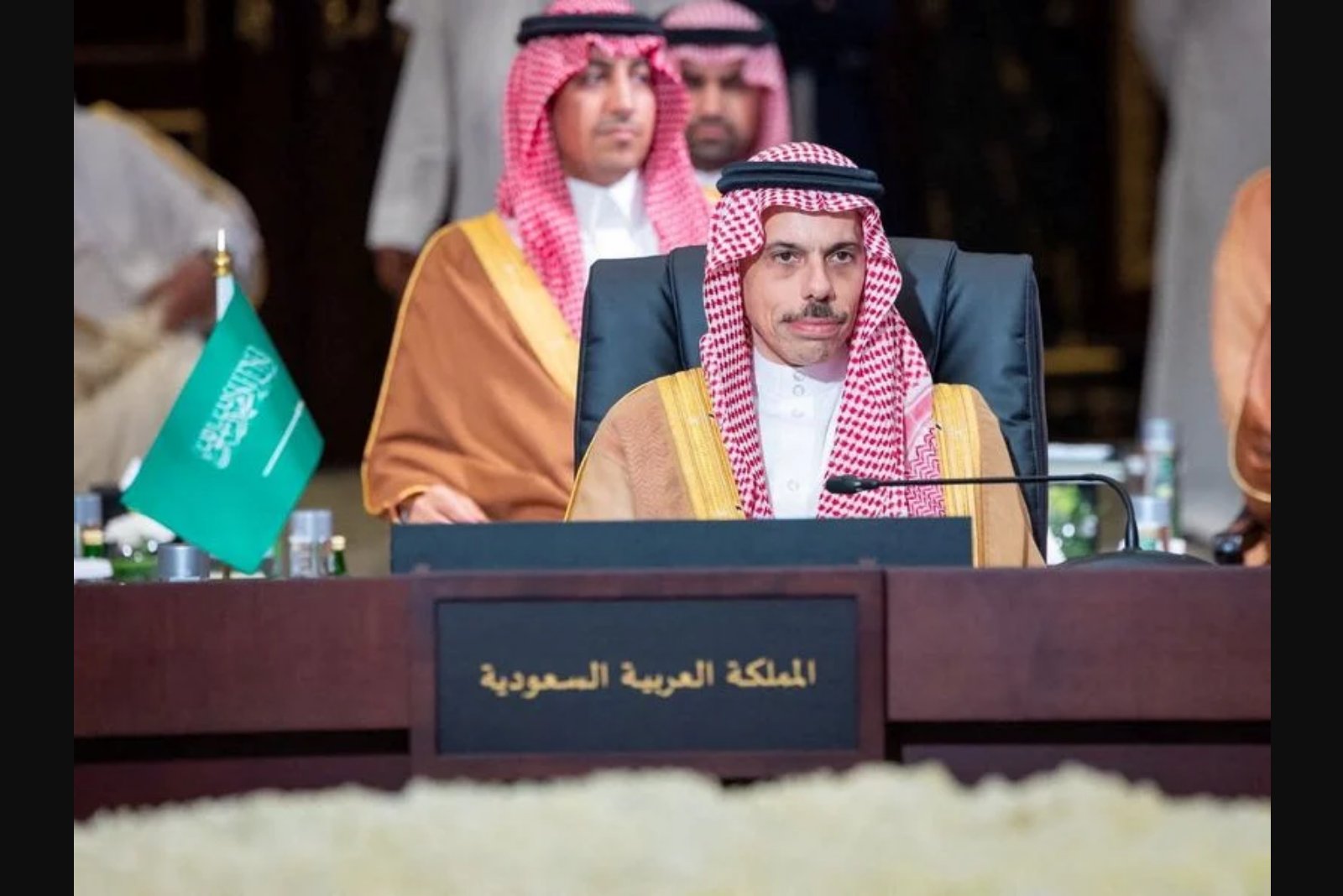
The most consequential issue in the approaching negotiations between Iran and the United States will be the system for policing Iran's nuclear activities, Saudi Foreign Minister Prince Faisal bin Farhan told delegates on Wednesday in Vienna.
U.S. and Iranian officials have said they reached a memorandum of understanding to halt fighting and begin broader discussions that will include Iran's nuclear programme. A senior U.S. official read the text of the memorandum aloud but cautioned that either side could still withdraw until a binding agreement is concluded.
"The detail will matter," the prince said, speaking at a conference in Vienna hosted by the Brussels-based think-tank the European Council on Foreign Relations. He added that he had not seen the final version of the memorandum and therefore would not comment on its provisions.
Saudi Arabia - a U.S. partner and regional rival to Iran - has maintained sustained interest in Tehran's nuclear activities, which Iranian authorities assert are solely for peaceful purposes. Prince Faisal highlighted that verification mechanisms will be decisive, pointing beyond headline commitments on enrichment to how uranium and other nuclear material are handled.
"It will be most important to see the verification mechanisms that are (put) in place beyond the actual commitments on (uranium) enrichment, the actual commitment on the removal or downblending of nuclear materials," he said.
U.S. President Donald Trump has publicly said he wants Iran's most highly enriched uranium removed; such material is close to weapons-grade. A senior Iranian official said on Sunday that Iran had agreed in principle to dilute, or downblend, that material.
The 2015 agreement between Iran and major powers placed strict restrictions on Tehran's nuclear activities and included enhanced authorities for the U.N. nuclear watchdog, among them the capacity to carry out snap inspections at undeclared sites. That accord remained in effect until 2018, when the United States withdrew. In response, Iran substantially expanded its nuclear programme beyond the 2015 limits and revoked some of the additional verification arrangements as the deal unraveled.
Prince Faisal said that the essential test will be how long-term and sustainable a verification regime can be made. "How we will have a long-term, sustainable verification regime is what will matter the most, and that is what will give the international community but also the regional countries the most confidence and the ability to look towards a better future," the prince said.
The coming discussions will therefore be judged not only on headline commitments but on the specifics of monitoring and material accounting - elements the prince indicated are necessary to restore confidence among regional states and the broader international community.
Conference details: Remarks delivered at a Vienna event hosted by the European Council on Foreign Relations.