
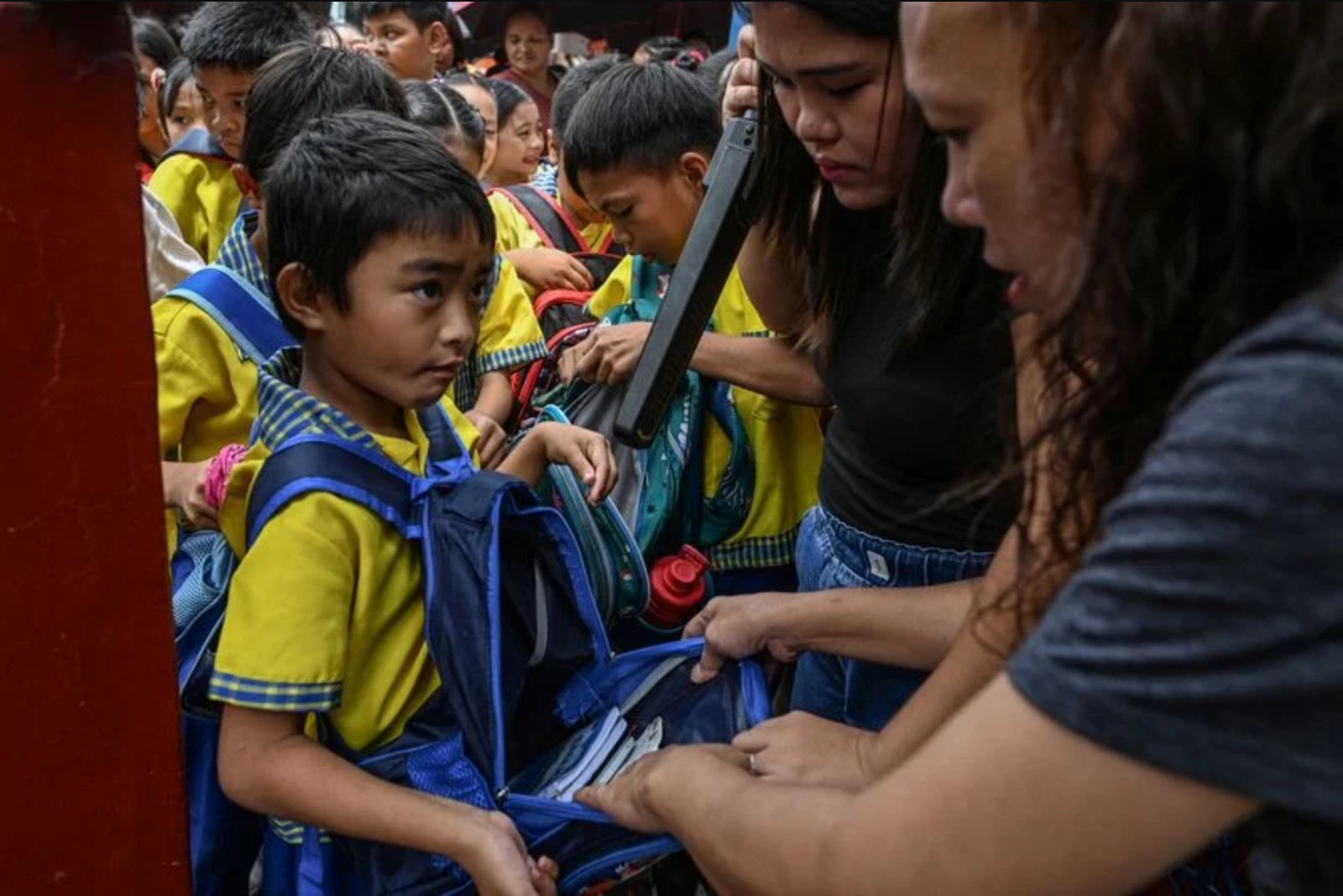
Philippine authorities said they will revise school safety policies and widen civil defence planning to address gun violence, following a rare and deadly attack at a public high school in Tacloban City that killed three students and injured 20 others.
The shooting occurred on Monday at a school that enrolls close to 2,000 students. Two classmates, aged 15 and 14, fired at fellow pupils using a 9mm Glock pistol and a .38-caliber revolver, authorities said. The youngest of the wounded was a 12-year-old student.
President Ferdinand Marcos Jr has called for an investigation into the incident. Senior civil defence official Rafaelito Alejandro told reporters that the episode will change how schools are prepared for safety. "This will change how we prepare our schools for safety, not just for earthquakes," he said. "We need to fast-track preparedness, not only for natural disasters but also for human-induced, crime-related incidents."
Police and school officials described the scene as one for which the institution had not prepared. Lieutenant Evalyn Diaz, a police spokesperson, said some students panicked and ran in different directions, which inadvertently exposed them to the shooters instead of taking cover under tables. "We really don’t prepare for this kind of incident," Diaz said. "They didn’t really know what to do, so they ran in different directions." Police recovered at least 40 empty shells at the scene.
The attack occurred just weeks after schools reopened following a two-month summer break. Health Secretary Teodoro Herbosa said he would meet with education and health officials to update emergency protocols and increase training for teachers and students on how to respond to shooting-related incidents. "It is all about training people when there are emergencies so they know what to do," he said.
Both suspects have been turned over to social welfare authorities. It remains unclear how they obtained the firearms used in the attack. Police said the pistol had been issued to a police officer who is now in custody and under investigation. The revolver was registered to a security agency based in Cebu City in the central Philippines.
National police officials also voiced support for lowering the minimum age at which children can be held criminally responsible from 15 to 12. A police spokesperson said the national police back the change. A version of a pending bill has proposed lowering the age to 10.
Initial questioning suggested the two suspects may have been bullied since seventh grade, but authorities cautioned that investigations were still ongoing and that conclusions should not be drawn prematurely. Lieutenant Diaz noted other lines of inquiry are being pursued, including the possible influence of social media on the attackers.
Education Secretary Sonny Angara highlighted concerns about children’s exposure to online violence. "It’s not just a peace and order problem. We also need to manage the children," Angara told reporters. He added that authorities were worried about copycat incidents observed in other countries. "We’re very concerned, we don’t want a situation seen in the United States, where there have been concerns about copycat incidents," he said. The article referenced a high-profile US tragedy, noting the 2012 Sandy Hook Elementary School shooting, where a gunman killed 20 children and six educators.
Senator Risa Hontiveros said she will reopen a Senate inquiry into allegations that online platforms, including gaming spaces, are being used to groom and radicalise children into committing violence. "If the internet is being used to exploit children, there must be accountability. We will not wait for more victims before we act," she said in a public post.
The incident has prompted a review of the country’s approach to firearm regulation and school security. The Philippines maintains relatively strict rules on gun ownership, officials said. Those regulations include background checks and psychological evaluations, limitations on civilian ownership to small arms, restrictions on automatic and other high-powered weapons, and requirements for separate permits to carry firearms in public. Nonetheless, authorities acknowledge that illegal firearms remain in circulation.
Officials have emphasised that the unfolding investigation will determine the specifics of how the weapons used in this attack were procured and whether any institutional lapses contributed to the tragedy. For now, the event has spurred immediate action to broaden emergency preparedness in schools to include protocols for human-induced, crime-related incidents in addition to natural disasters.
Summary
A rare and deadly school shooting in Tacloban City, Philippines, has left three students dead and 20 injured. Two teenage classmates, aged 15 and 14, used a 9mm Glock and a .38-caliber revolver in the attack. Officials said they will expand civil defence and school safety planning to include responses to gun violence, and investigations are ongoing into how the firearms were obtained and the motives behind the attack.
Key Points
- Fatal attack at a Tacloban public high school left three students dead and 20 injured; two suspects aged 15 and 14 were involved, and both are now with social welfare authorities.
- Authorities recovered at least 40 empty shells; one firearm was issued to a police officer who is in custody and under investigation, while the other was registered to a security firm in Cebu City.
- The incident prompted plans to expand school and civil defence preparedness beyond natural disasters to cover human-induced, crime-related events, with health and education officials set to update emergency training.
Risks and Uncertainties
- Ongoing investigations leave uncertainty about how the firearms were obtained and whether institutional failures contributed to their misuse - this affects law enforcement and security sectors.
- Potential legal changes on juvenile criminal responsibility could alter policing, judicial, and social welfare approaches and have implications for youth services and criminal justice funding.
- Concerns over online exposure and possible grooming could prompt regulatory or oversight actions affecting technology platforms and digital content moderation, with knock-on effects for platform operators and related service providers.