
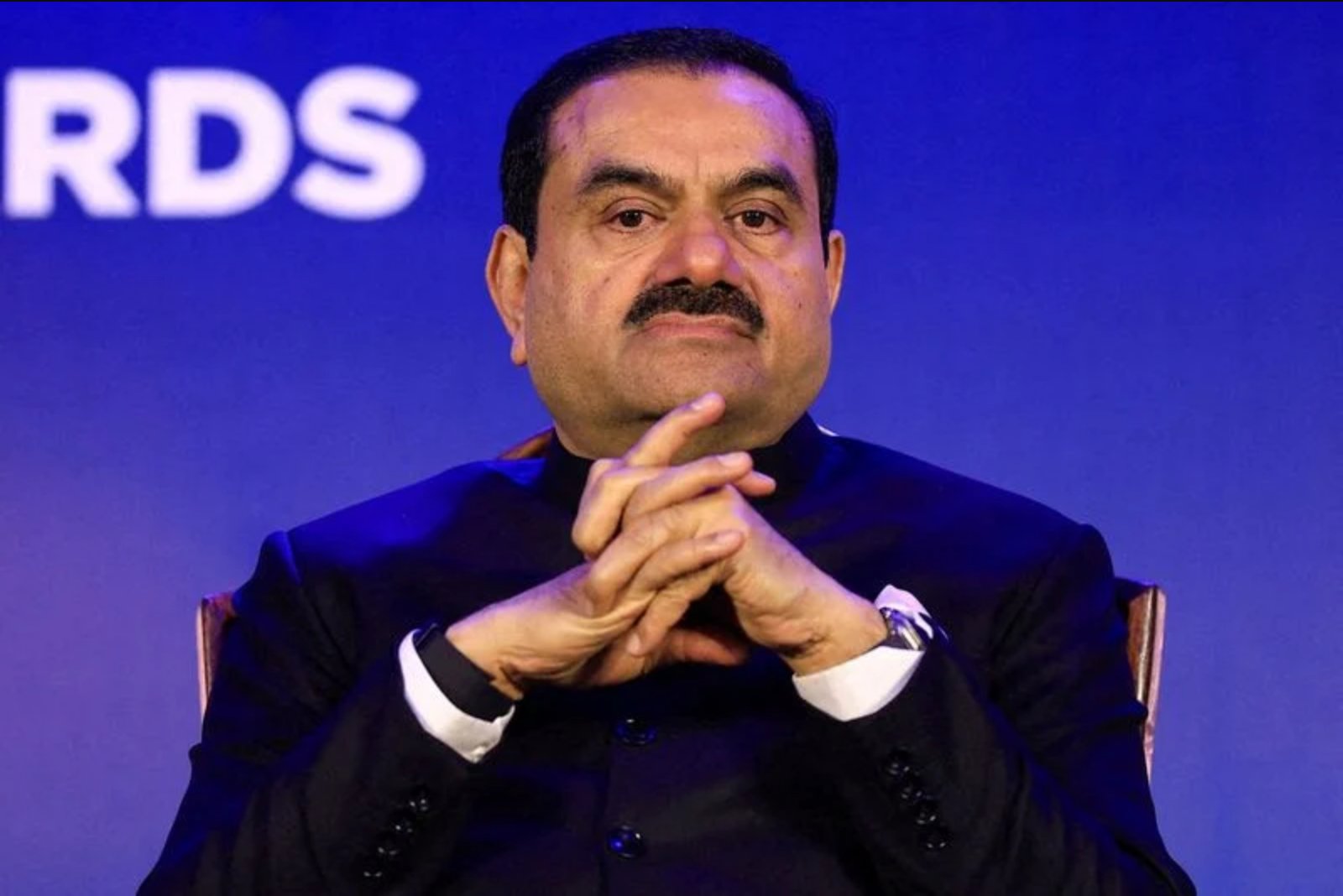
The U.S. Justice Department on Saturday filed a 10-page submission asking a federal judge to dismiss criminal charges brought against Indian billionaire Gautam Adani and others, arguing the case is largely foreign in nature, difficult to prove, and inconsistent with the department's present priorities.
Last month, U.S. District Judge Nicholas Garaufis directed prosecutors to explain why they sought to abandon the prosecution. Garaufis had asked them to justify the decision to drop the case after the Biden-era prosecutors originally charged Adani with securities fraud and wire fraud connected to an alleged bribery scheme.
In its latest filing, the Justice Department said the indictment was unsealed near the end of the prior administration and characterized it as lacking a realistic prospect of reaching trial. "The indictment was unsealed in the final days of the prior Administration, apparently as a 'name and shame' designed to levy accusations without any realistic prospect of a trial ever occurring," the court filing states.
The department argued that the conduct alleged in the indictment is primarily foreign, involving payments by Indian nationals working for Indian companies to the Indian government, and that no U.S. companies or national security interests are implicated. "The alleged 'payments' in this case were made by Indian nationals, working for Indian companies, to the Indian government, with no U.S. interests implicated in any way," the filing says.
Adani was charged in 2024 with agreeing to bribe Indian government officials so that a subsidiary of his Adani Group could secure approval to develop a solar energy plant, and with misleading U.S. investors by providing reassurances about the company's anti-corruption practices. Adani Group has consistently denied any wrongdoing. Adani himself has not appeared in U.S. court to respond to the charges.
The department asked that the charges be dismissed with prejudice, meaning they could not be refiled against the defendants. The filing also described the matter as hard to prove and inconsistent with current prosecutorial priorities.
The decision to move to dismiss the U.S. charges is the most recent example of the Justice Department seeking to end a high-profile white-collar criminal prosecution during President Donald Trump's second term. Legal experts noted in the filing that trial judges generally have limited authority to force prosecutors to continue criminal cases that the Justice Department no longer wishes to pursue, although the charges remain formally pending until Judge Garaufis signs an order dismissing them.
Summary
The Justice Department has filed to dismiss criminal charges against Gautam Adani and other defendants, saying the case centers on conduct in India, would be difficult to prove at trial, and does not implicate U.S. interests. A federal judge had requested prosecutors justify their decision to drop the case; the department responded with a 10-page filing and asked that the charges be dismissed with prejudice. Adani was charged in 2024 with bribery-related allegations tied to a proposed solar project and misleading U.S. investors; Adani Group denies wrongdoing and Adani has not appeared in U.S. court. Charges remain pending until the judge issues a dismissal order.
Key points
- DOJ filed a 10-page submission asking for dismissal with prejudice, arguing the case is mainly foreign, hard to prove, and not aligned with current priorities - impacts legal and enforcement sectors.
- The indictment, unsealed near the end of the prior administration, accused Adani of securities and wire fraud tied to an alleged bribery scheme and a proposed solar energy project; the energy and capital markets sectors are implicated by the allegations.
- Charges remain formally pending until U.S. District Judge Nicholas Garaufis orders dismissal; judiciary and markets face continued uncertainty.
Risks and uncertainties
- Uncertainty over Judge Garaufis's final ruling - until he signs an order, the charges are still on the docket, affecting legal clarity for the defendants and potential market perceptions.
- Potential for differing interpretations of prosecutorial discretion in high-profile white-collar cases - this may affect how future cross-border corporate misconduct cases are handled by U.S. prosecutors and courts.
- Ongoing reputational and market implications for entities connected to the allegations, particularly in the energy and financial sectors, while the case remains unresolved.