
Introduction
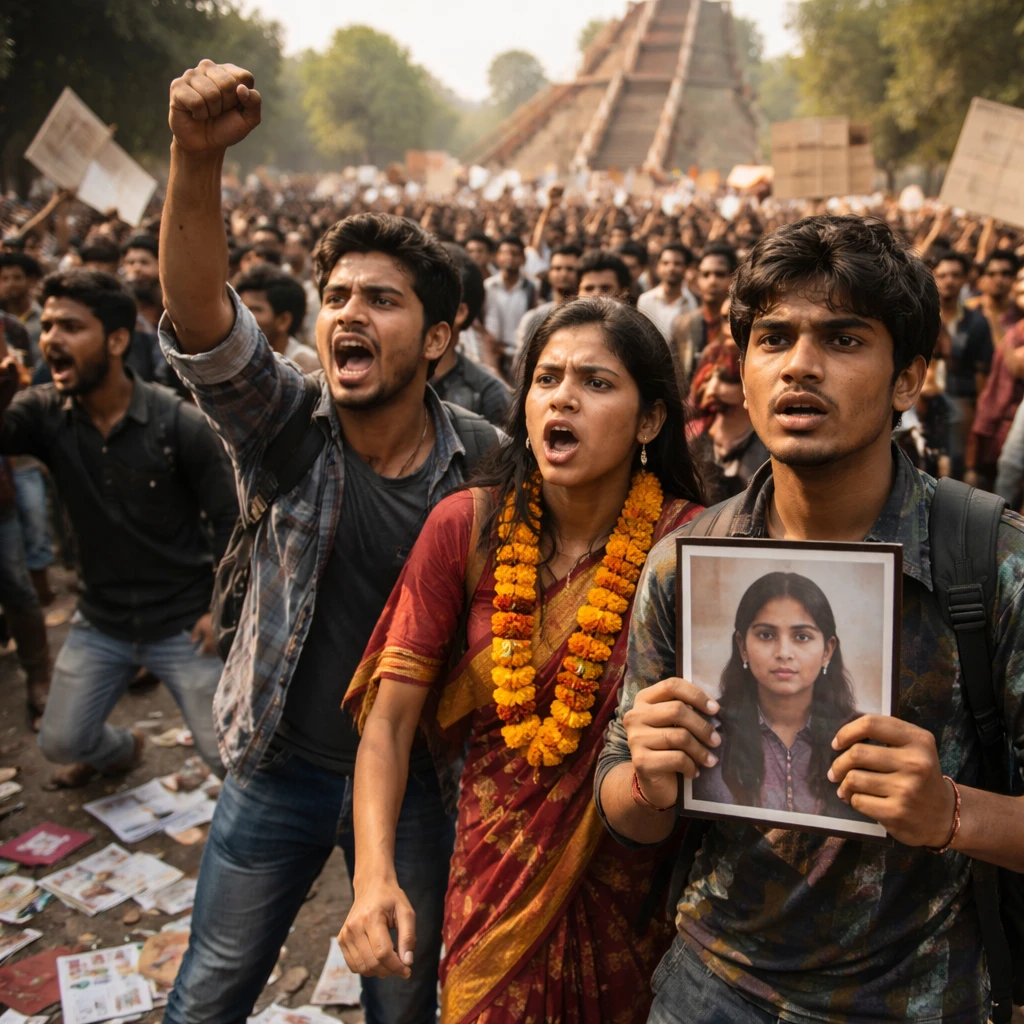
In a string of confrontations that have drawn tens of thousands into the streets, young Indians frustrated with repeated test scandals and limited job prospects have mounted fierce protests, focusing their ire on a government they credit with earlier improvements to their lives but now hold responsible for systemic failures. The immediate flashpoint was the government’s decision to invalidate the results of a national medical entrance exam after authorities discovered that test questions had been leaked - a development that left roughly two million students in limbo and ignited outrage among applicants and their families.
What the Invalidated Exams Mean
Standardized national examinations in India are more than academic hurdles; they are the main mechanism by which millions of candidates compete for thousands of public-sector positions. These positions - ranging from diplomats and high-level administrators to clerks and forest rangers - often provide long-term job security, pensions and housing benefits not typically available in the private sector. For many families, success in such exams is a pathway out of subsistence work and into the middle class.
That system has been widely trusted but also repeatedly compromised. Since 2014, at least two dozen exams have been annulled because of leaks, according to a review of public records and media reports. The latest cancellation - of a medical school test taken in May - did not simply revive old frustrations; it set off one of the largest waves of street protest the country has seen in decades.
The Movement and Its Name
The protests have been organized in part by the Cockroach Janta Party, a satirical, youth-led movement. Its name stems from a disparaging remark made earlier in the year by India’s chief justice about unemployed young people, a comment he later said had been misconstrued. The Cockroach Janta Party’s gatherings, chants and imagery have resonated with a broad cross-section of young Indians who feel shut out of secure employment and betrayed by repeated exam-management failures.
What began as a focused reaction to leaked exam papers quickly widened into a vehicle for broader grievances: economic inequality, high youth unemployment, and concerns over restrictions on free expression. Protesters have underscored that these issues persist even as official growth figures show strong macroeconomic performance.
Protests in Delhi and Beyond
Demonstrations centered around Jantar Mantar, an 18th-century observatory that has become a central protest site in New Delhi. On one high-profile day, more than 50,000 people attempted to march on parliament, according to some estimates. The marchers met a forceful police response. Authorities later said the demonstrations were policed professionally and reported that 118 officers were injured during the July 20 confrontation. Protesters, for their part, said they faced baton charges and other hardline tactics during attempts to press their demands.
Despite the forceful policing, the movement won broad online sympathy and expanded beyond university campuses and coaching centers to include people from different age groups and socio-economic backgrounds. Bollywood personalities and cultural figures publicly expressed support for the demonstrators, and the protests’ reach grew rapidly as images and accounts circulated online.
Personal Stories: Brothers from Bihar
The protests have a deeply personal dimension for many families. Consider the story of Ashok Kumar and his younger brother Abhishek, who grew up in a farming household in Bihar. As a child, Ashok watched his parents struggle to make ends meet, and he credits the prime minister’s programs after 2014 - such as cheaper cooking gas and direct farm subsidies - with improving his family’s circumstances. Those measures led Ashok’s parents to vote for the prime minister in three elections.
Yet Ashok, age 25, and Abhishek, age 20, joined protests in New Delhi after the latest exam fallout. Ashok moved to Delhi four years ago, roughly a thousand kilometers from his home, to pursue a master’s degree and to prepare for elite civil service examinations at a test-cramming school. He has taken multiple national-level tests over several years, missing the required cut-offs repeatedly. During that time, he estimates he has spent more than $10,000 - nearly all from his father’s savings - on attempts to secure a government position.
Abhishek, who had attempted the medical entrance test several times and had planned to become a doctor, was among those affected when the government invalidated the May exam. The cancellation undermined not only his immediate prospects but also the family’s broader plan for upward mobility. Abhishek had hoped that a medical degree would allow him to buy his mother jewellery or a television and to lift his family further out of subsistence conditions. Instead, he found himself returning to his parents to ask for money for basic needs, like replacing worn-out flip-flops.
Their family’s home in a remote area of Bihar offers a stark illustration of the stakes. Reuters reporters who visited the household observed a courtyard with a buffalo tethered amid dung; the animal provides milk their mother sells to top up income from farming a small rice plot. It is a life in which government jobs represent one of the few realistic escapes from the cycle of low-income agriculture.
Education, Coaching and Sacrifices
India’s competitive examination culture has supported a large private coaching industry and required families to invest significant sums and sacrifice considerable time. In the case of Simran Singh, the 21-year-old daughter of a housekeeper, that investment ran to more than $3,000 a year for coaching in Mumbai - money that her mother, Mamta, earned by working long hours in the city after relocating from Bihar.
Simran studied intensively for months, isolating herself socially to prepare. She expected to score above 500 points on the exam, a result that would likely have secured her admission to medical school. When allegations of irregularities surfaced, she retreated into a period of despair and two days of not eating. The government subsequently said it would invalidate the test "in the interest of students" and referred the suspected leak to federal investigators - the same course it took after a suspected leak the prior year.
A retest was scheduled and held in June, but Simran’s performance did not match her earlier expectations. Even before the retest, Simran had decided to abandon her medical school ambitions and to pursue a less prestigious course of study. For Mamta, the outcome left painful questions about the sustainability of pushing a child through repeated cycles of coaching and testing. "After one year she’ll be 22 and again the same thing will happen," she said, expressing a fear that the family could be trapped in an unending loop of preparation and disappointment.
A Broader Sense of Betrayal
Many young protesters expressed a feeling that the examination system has largely collapsed. Ashok, who once believed that sheer application of effort would lead to success, now views the system as riddled with mismanagement and corruption. He described the long hours spent studying, sometimes by lantern light when electricity failed, and the repeated disappointments that followed narrow misses in scoring. On one exam he came up short by just 10 points for advancement to the next round - a near-miss that still left him excluded from the process and disillusioned about meritocracy in practice.
The sense of betrayal is compounded by historical incidents that drew international attention, including a 2015 episode when relatives of candidates were photographed scaling a building to pass answers through windows. Reports of large-scale cheating and alleged leaks have recurred in various states, with Bihar featuring prominently in media accounts of exam irregularities. Those episodes have contributed to the present eruption of anger.
Political Consequences and Government Response
The protests delivered a tangible political result: Education Minister Dharmendra Pradhan, who became a principal focus of the demonstrators’ demands, resigned. His departure constituted a rare concession from the prime minister’s government, which has largely enjoyed a position of electoral dominance and which critics say has also constrained India’s media and civic space.
In response to the crisis, the central government announced a package of measures. It moved to strengthen the law against exam leaks, proposing harsher penalties for those found responsible. The prime minister addressed the nation directly in a video aimed at young people and announced the creation of a panel to review the examination system. The government also agreed to compensate families of students who had died by suicide after papers were leaked, and it said it would drop efforts to prosecute those who had protested. Authorities referred the suspected paper leakage to federal investigators - an investigative step taken after earlier suspected leaks, including those in the previous year.
These steps were framed by the government as necessary to restore faith in the system and to protect students. Officials have defended the broader economic record, saying claims of an unemployment crisis are exaggerated and that macroeconomic fundamentals remain sound. The government has not publicly acknowledged that systemic mismanagement of exams was at the heart of the latest unrest; instead, it has emphasized remedial measures and legal tightening.
Unemployment and Economic Context
Protesters and those who sympathize with them point to a labor market that has not kept pace with the aspirations of a youthful population. Government data indicate that Indians under the age of 30 are three times as likely as the average citizen to be unemployed. This statistic feeds into the logic that public-sector positions are highly prized, because they promise stability and benefits that private-sector jobs have not consistently matched.
Private-sector employment growth has slowed materially: corporate job growth has decelerated to 3% annually from 11% in the decade before 2020, according to Marcellus Investment Managers. For many families and aspirants, these slower rates of private hiring mean that competition for public-sector entry points remains intense, and any perceived unfairness in that competition becomes an existential issue.
Culture, Solidarity and New Alliances
One striking feature of the demonstrations has been the way they cut across traditional divisions. Protesters have come from different religious backgrounds, castes and languages and for the first time in many participants’ memories united around education as a common cause. The movement has drawn indie filmmakers, actors and cultural figures, along with ordinary students and aspirants, underscoring the depth of cross-class sympathy for the core grievance about the fairness and reliability of national testing.
Chants, songs and slogans accompanied the sit-ins and marches. Demonstrators revived a historical anti-colonial refrain - Inquilab Zindabad, meaning "Long live the Revolution" - and played globally recognized protest music at marches, reinforcing the mood of shared grievance and resistance against what protesters perceive as systemic injustice.
Wider Implications
For families like the Kumars and the Singhs, the immediate consequences are concrete: lost money, deferred careers and emotional strain. Collectively, the protests have signaled a political cost that the government could not entirely ignore, at least in the short term. The resignation of a cabinet minister, the promise of legal reforms and the creation of a review panel are acknowledgements of the problem’s gravity.
Yet many questions remain. Young people and families who invested time and money are skeptical that these reforms alone will rebuild trust. Protesters say that the system’s repeated failures have eroded faith that merit will prevail, and they worry about being caught in a cycle of repeated testing and retesting that drains savings and prolongs uncertainty.
Conclusion
The current unrest is rooted in a confrontation between a generation dependent on standardized testing to secure stable employment and a testing apparatus that several times over has failed to guarantee fairness and order. For participants, the protests are not merely about a single cancelled exam but about the future of a system that, when functioning, provides a ladder out of agricultural subsistence and into stable government employment. The demonstrations have pressured the government into a set of concessions and prompted promises of change; whether those steps will be sufficient to restore trust in the examination system and to ease the broader frustrations of India’s youth remains unsettled.
Note: This article draws on interviews with dozens of protesters and visits to affected families to outline how national exam mismanagement has translated into a broad social and political response. It limits itself to reported facts and statements attributed to interviewees, officials and public records.