
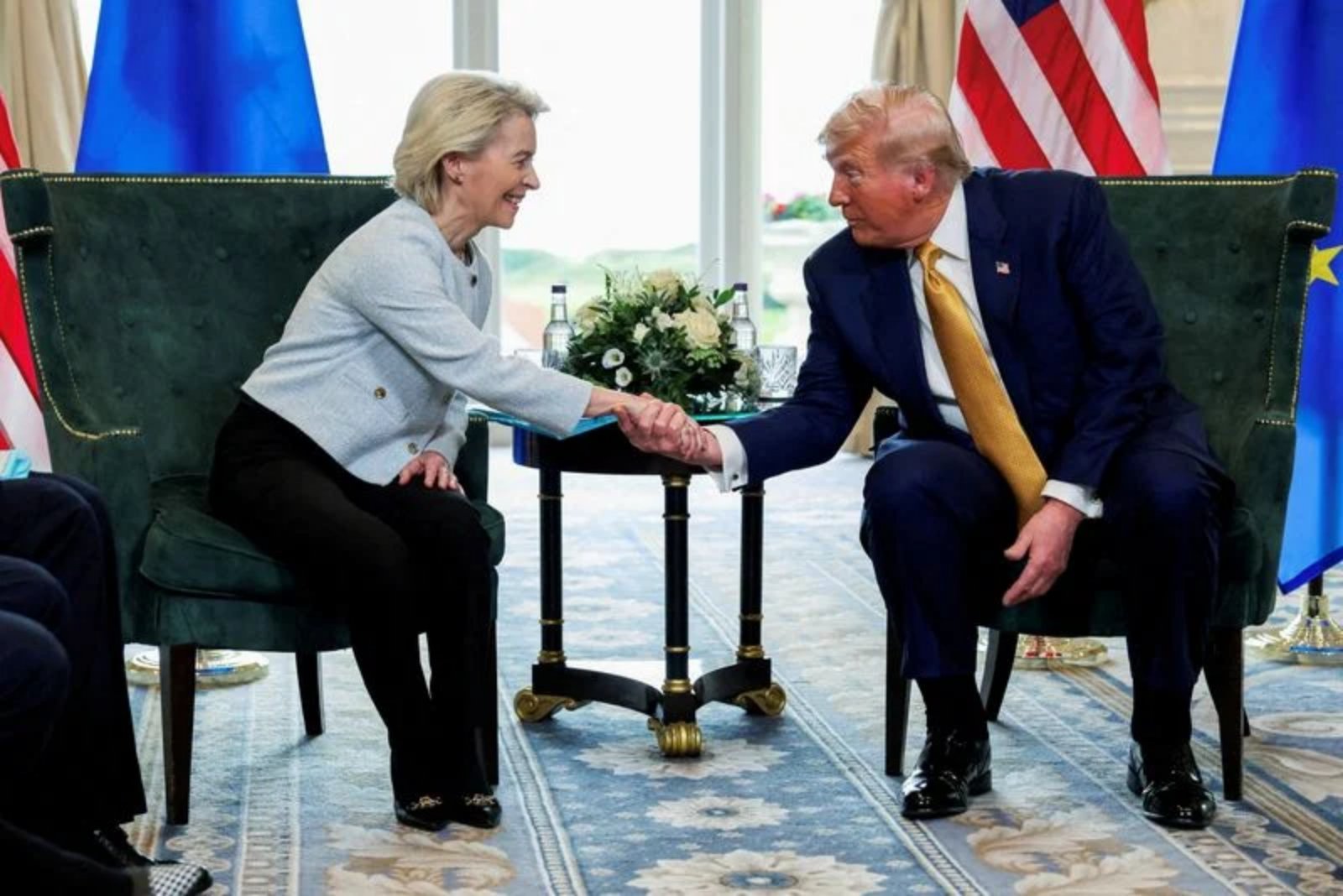
BRUSSELS, June 10 - The European Parliament is preparing to endorse the EU-U.S. trade pact next week, a senior lawmaker said on Wednesday, but he expressed limited confidence that the United States will follow the agreement's terms consistently.
Bernd Lange, chair of the European Parliament's trade committee, told reporters he expected a decisive majority in the assembly to back the agreement concluded last July at U.S. President Donald Trump's Turnberry golf resort in Scotland. Lange, a German Social Democrat, said the parliament's approval is conditional on a package of safeguards that would give the EU options to respond if the Trump administration fails to meet the deal's commitments.
Those safeguards include mechanisms to react to breaches and a built-in expiration of the deal at the end of 2029 unless new legislation is adopted to extend it. According to Lange, those protections were essential to securing parliamentary support for ratification.
Despite the planned vote, Lange stressed that certainty about U.S. adherence is lacking. "You can't have any certainty. That's the problem," he said, adding that under the current U.S. set-up "with decisions on important issues only made in the White House and by the president you have to constantly expect that decisions will be made against agreements."
Lange pointed to other recent U.S. trade actions as examples of this unpredictability. "We see that and others too, such as Brazil," he said, referring to the Trump administration's proposal of 25% tariffs on many imports from Brazil, an action Lange described as politically motivated.
He also argued that a relative advantage the EU once held under the Turnberry deal - lower tariffs on its exports compared with some competitors - has been eroded because 10% U.S. tariffs are now applied almost universally. "We can completely forget the special transatlantic relationship in this matter and we have to defend our interests rationally," Lange said.
On the U.S. side, Jamieson Greer, the U.S. Trade Representative, told reporters last week that Washington was committed to complying with the deal's terms. "We understand that a deal is a deal," he said on the sidelines of an OECD meeting in Paris.
The upcoming parliamentary vote will determine whether the EU formally accepts its side of the agreement, with lawmakers relying on the safeguards and the sunset clause to manage future risks. How the United States will act over the duration of the agreement, and whether it will adhere to the pact's conditions, remains a key uncertainty flagged by European officials.
Summary: The European Parliament is set to vote next week to approve the EU-U.S. trade pact reached at Turnberry, but a senior lawmaker warned that the United States may not reliably honour the agreement. Parliamentary safeguards and a 2029 sunset clause were crucial to securing EU support.