
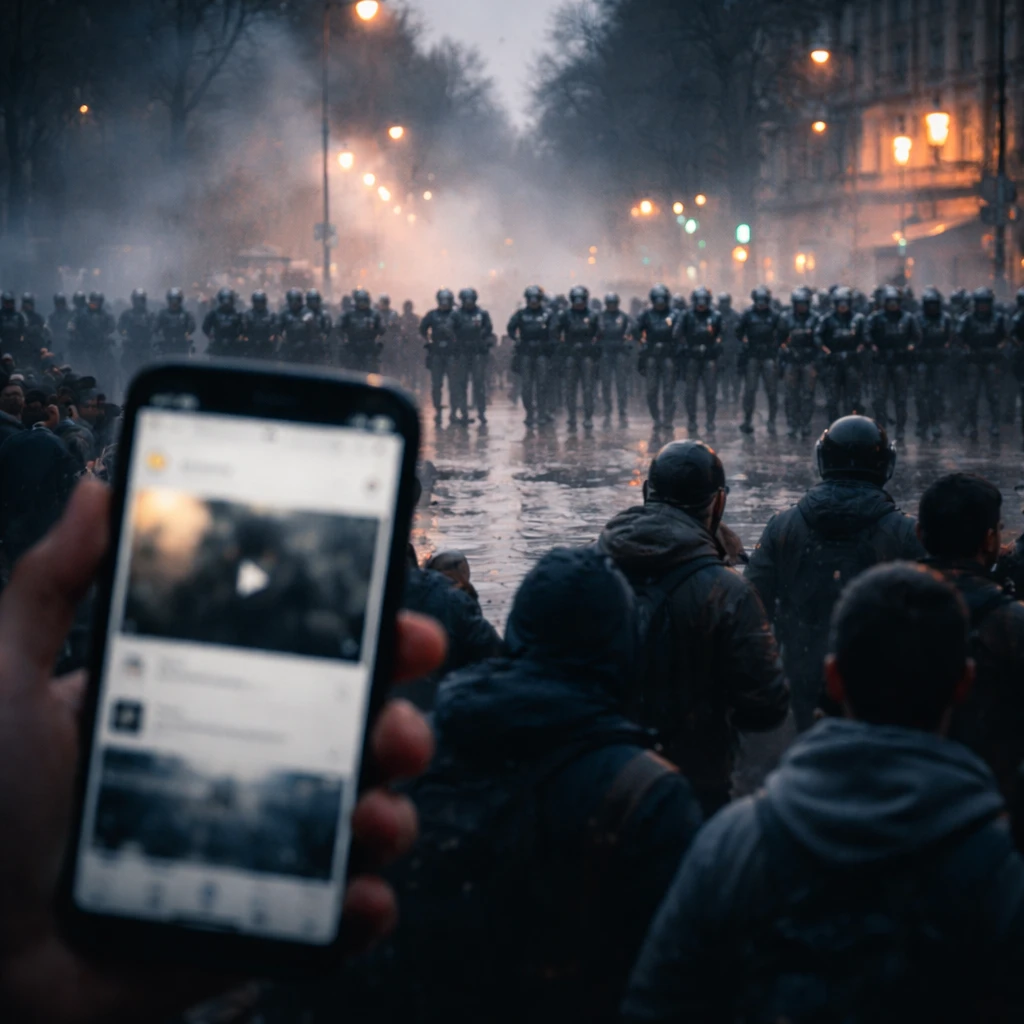
An internal analysis prepared by disinformation experts in the European Union's diplomatic service concludes that a covert Russian-aligned network moved quickly to exploit last month's violent riots in France by using social media to blame the turmoil on uncontrolled immigration and to portray the French government as ineffective and increasingly authoritarian.
Separately, an internal assessment compiled by France's foreign ministry reports that social media accounts linked to Israel and to the US MAGA movement also circulated hostile narratives about the unrest, connecting the disturbances to radical Islamism and migration. Taken together, the two restricted-circulation evaluations provide a window into how external actors sought to take advantage of France's domestic turmoil for political ends, according to the analyses.
The EU document, covering the period from October 7 to October 21, identifies a covert Russian network operating under the name "Operation Overload". It says the network produced and distributed videos that impersonated established Western media outlets to reach French audiences. Some of the material included false claims that migrants had raped protesters or that terrorist attacks were imminent.
The EU analysis characterizes these efforts as attempts to depict the French leadership as weak and increasingly authoritarian, and it explicitly frames the activity as opportunistic exploitation of unrest rather than evidence that Moscow or other external actors had directly instigated or escalated the protests. The document states: "Such events offer opportunities to undermine national governments, fuel fear and division, and shape public perceptions ahead of elections."
French authorities have previously commented on the recurrence of similar operations during moments of domestic tension. The internal French report examined the reach of various actors on the social platform X (formerly Twitter) during a concentrated period of the unrest. It found that the 10 most-viewed X posts on the events originating from "pro-Russian spheres" received about 2.8 million views between October 16 and October 18.
However, the French analysis shows this reach was dwarfed by content linked to other foreign-aligned accounts. The 10 most-viewed X posts tied to MAGA-linked officials, media outlets and influencers accumulated more than 49 million views in the same October 16-18 window, while the 10 most-viewed posts from Israeli officials, government accounts, media outlets and influencers reached more than 35 million views, according to the French ministry assessment.
The EU report traces "Operation Overload" back to activity beginning in September 2023 and describes it as a persistent campaign targeting Western public figures, institutions and media outlets with the aim of discrediting those entities and their support for Ukraine, while promoting content aligned with Russian interests. The EU analysis adds that the operation also sought to undermine European support for Ukraine by suggesting European governments prioritise Ukraine over domestic concerns.
According to material cited in the EU assessment, the operation uses a range of deceptive techniques: creating videos that resemble news reports, cloning experts' voices using artificial intelligence, forging newspaper headlines and manipulating images. The operation is said to pivot from country to country in order to exploit crises and debates.
France's disinformation watchdog, Viginum, has published detailed reporting on Operation Overload and similar Russian operations, and French officials have said these networks tend to re-emerge during protests, elections or other moments offering opportunities to discredit France.
The French and EU assessments also include commentary from outside analysts. A senior political scientist cited in the French analysis describes such campaigns as a slow-burning "narrative competition" that can, over time, influence how Western democracies are perceived both within Europe and beyond. The analyst warned that these narratives feed anti-immigrant backlash and can push European voters toward political extremes.
French officials pointed to public remarks by President Emmanuel Macron on October 21, in which he said there had been no visible foreign interference behind the protests but that there had been "foreign manipulation of information." The assessments underline the difficulty of attribution, while asserting that the activity observed was opportunistic exploitation rather than direct orchestration of the unrest.
Efforts to obtain comment from the Russian foreign ministry did not produce a response. Officials in Israel's prime minister's office and the Israeli foreign ministry did not respond to requests for comment, according to the assessments.
Both the EU and French ministry documents present the activity as part of a broader pattern of information operations that seek to shape public perceptions during moments of domestic crisis. The EU document cautions that such activity aims to undermine national governments, inflame divisions and influence public sentiment ahead of elections, while the French analysis provides concrete metrics on the reach of various actors' posts during the peak days of the unrest.
The assessments also note the limits of their claims. While detailing the techniques employed and quantifying the reach of selected posts, the reports do not assert that external actors initiated the violence. Instead, they describe the campaigns as opportunistic efforts to exploit already unfolding disturbances for strategic messaging goals.
Contextual note: The internal EU assessment covers October 7-21 and highlights the role of an operation labeled "Operation Overload," active since September 2023. The French foreign ministry report provides post-level view counts for October 16-18 that show significantly higher reach for MAGA-linked and Israeli-linked posts than for those from pro-Russian spheres.