
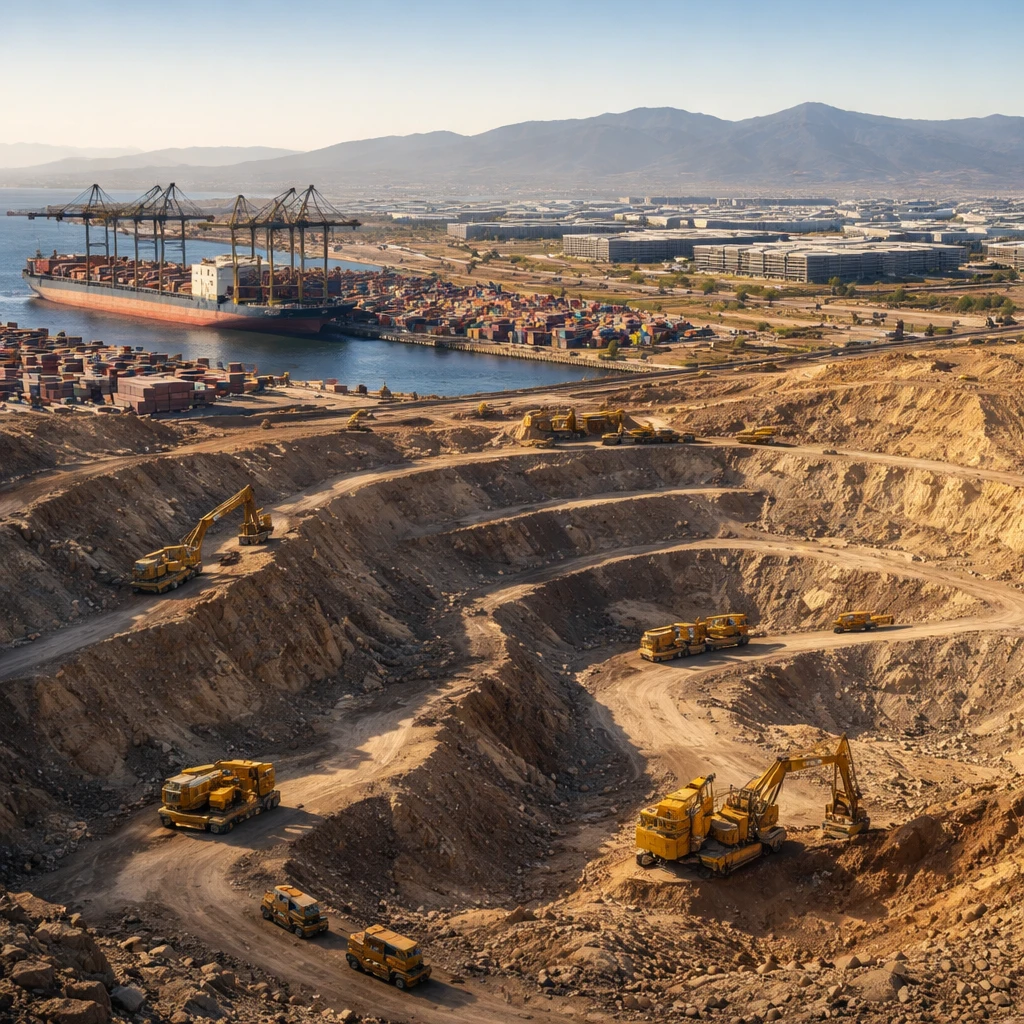
Chile announced plans to mobilize about $100 billion of investment into its copper sector across the coming decade as part of a strategic effort to diversify its customer mix and move up the value chain, Foreign Affairs Minister Francisco Pérez Mackenna said Wednesday at Bloomberg's Sustainable Business Summit in Singapore.
At the Singapore event, Pérez Mackenna framed the drive as a response to what he described as a narrow concentration of buyers for Chilean copper. "It’s highly concentrated and we need to expand the number of places that are buying copper from us," he said, explaining the rationale for a major capital push.
The minister emphasized the need to shift the country's export profile away from raw concentrate toward refined copper products. That, he said, will require significant investment to develop refining capacity and related infrastructure so Chile can begin shipping higher-value refined copper rather than relying principally on concentrate exports.
On the role of China, Pérez Mackenna noted that while diversification is the objective, Beijing will likely remain a large purchaser. "Probably China will continue to be a very significant client for our copper because of the industrial footprint they have," he said.
He also pointed to growing global demand drivers that could broaden the buyer base for Chilean copper. In particular, the international race to construct data centers is expected to lift demand for copper, a metal central to power transmission, electric vehicles and the high-density electrical infrastructure that supports artificial-intelligence workloads.
As part of the strategy to reach additional markets, Chile has opened negotiations on a free trade agreement with India and plans to reinforce existing trade arrangements with neighboring countries. Pérez Mackenna presented these trade steps as complementary to the investment program and necessary to secure more diverse export routes.
The minister's comments highlight Chile's dual focus: increasing domestic processing capacity to capture more value from copper production, and expanding commercial relationships to reduce reliance on a limited set of purchasers.
How the $100 billion is allocated across projects, and the timeline for expanding refining capacity and concluding trade deals, were not specified in detail at the summit.