
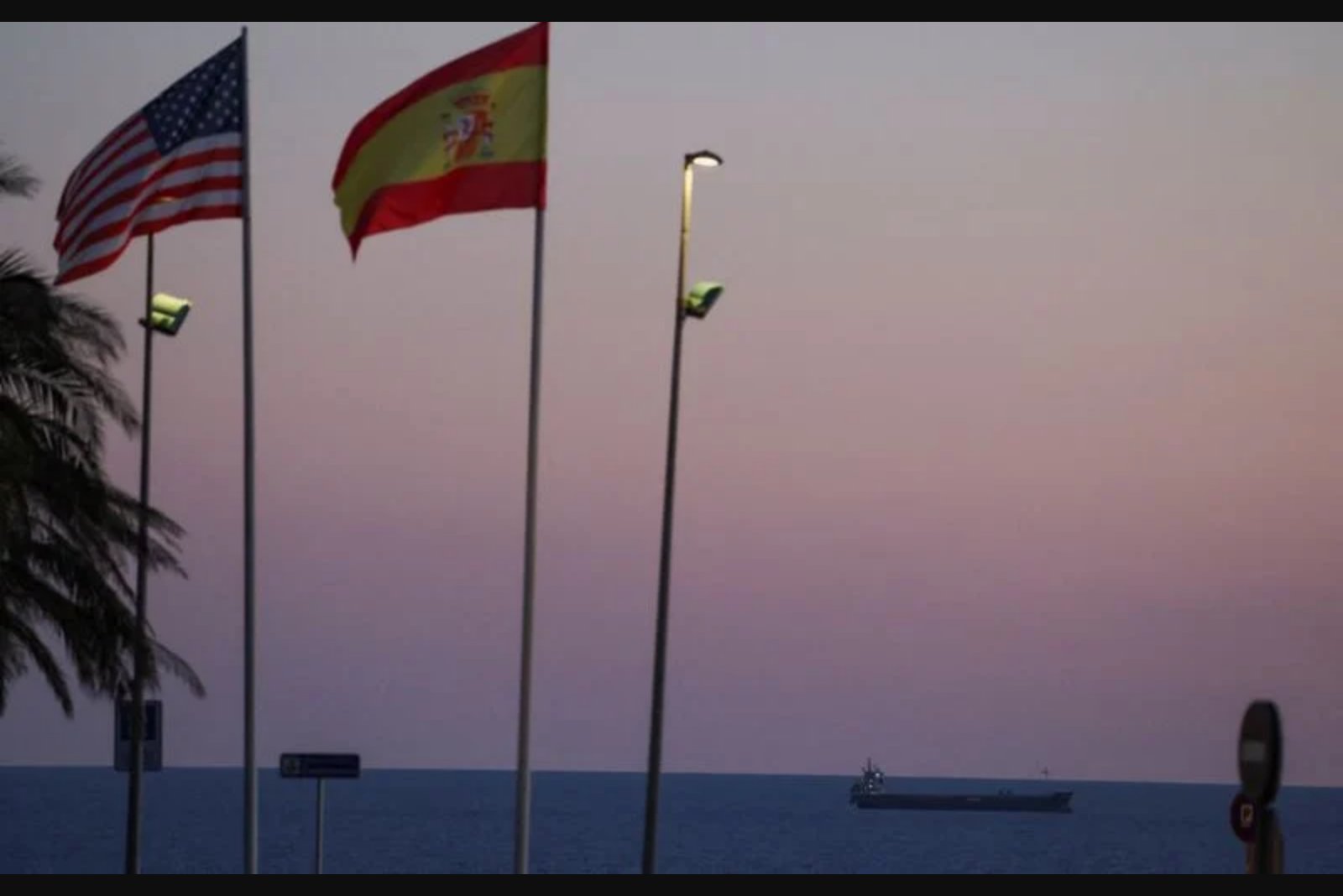
MADRID, July 8 - President Trump on Wednesday reiterated an instruction to Treasury Secretary Scott Bessent to "cut off all trade... including visits" with Spain, citing disagreements over defence spending levels. The directive has prompted scrutiny of what legal powers the U.S. presidency actually holds to carry out such a sweeping action and what the likely economic and political consequences could be.
What statutory authority could underpin a U.S. trade embargo?
Under the International Emergency Economic Powers Act (IEEPA), the president has broad authority to curtail or block economic transactions with foreign nations. The statute allows restriction of trade, financial transactions and other dealings provided the president first declares a national emergency and demonstrates that the foreign country poses an "unusual or extraordinary threat" to U.S. national security, foreign policy, or the economy.
Legal experts caution that qualifying a dispute over defence spending as the kind of national emergency IEEPA envisions would be difficult. Peter Shane, a U.S. law professor at NYU, said it was "hard to see" how the U.S.-Spanish disagreement over defence spending would meet the statute's threshold.
Practical complications also arise because the European Union conducts trade negotiations as a single bloc; targeting an individual EU member state like Spain could run up against EU-level trade competency.
Historically, IEEPA has been invoked in several instances cited by policymakers - for example, actions addressing Iran in 1979, Iraq in 1990, Syria in 2004 and Sudan in 1997. Separate authority exists under the Trading with the Enemy Act (TWEA), which the United States has used in the past against countries such as Cuba and North Korea, but that law is limited to periods of declared war.
Are there alternatives short of a total embargo?
Yes. Several statutory routes allow the president to impose targeted trade measures rather than a blanket ban.
- Section 232 of the Trade Expansion Act of 1962 permits tariffs or quotas on imports for products or sectors that the Commerce Department determines threaten national security.
- Section 301 of the Trade Act of 1974 allows the president to impose trade penalties when a foreign country is found to engage in discriminatory or unfair practices that burden U.S. commerce.
- Anti-dumping remedies can also be applied where foreign goods are sold below fair market value or subsidized, triggering duties.
The article notes an historical precedent involving Spanish black olives during Trump's first administration. At the behest of Californian olive producers, a 30% anti-dumping tariff was imposed on Spanish black olives under the 1930 Tariff Act, following a separate Commerce Department finding that the product benefited from unfair subsidies. The World Trade Organization later ordered a partial rollback. The episode coincided with a dramatic decline in Spain's share of the U.S. black olive market - from 49% in 2017 to 19% in 2024.
Has the president previously threatened similar measures against Spain?
Yes. The reporting indicates the first public threat came in October 2025, when President Trump said he "may" punish Spain with tariffs for refusing at a NATO summit in The Hague four months earlier to commit to raising defence spending to 5% of national output. In March of the current year, he ordered Treasury Secretary Scott Bessent and Trade Representative Jamieson Greer to begin investigations to embargo all products from Spain. To date, no such investigations have been disclosed on the Federal Register.
How large is bilateral trade between the United States and Spain?
The United States ran a goods trade surplus with Spain in 2025, exporting $26.6 billion in goods and importing $21.35 billion, according to the U.S. Census Bureau. Spanish firms have invested €97.2 billion in the U.S., making the United States their largest investment destination worldwide, a figure cited from Eurostat by the American Chamber of Commerce in Spain. Conversely, the United States is Spain's largest foreign investor, with over €116 billion in productive capital investment supporting approximately 200,000 jobs across Spain.
What is Spain's contribution to NATO and how has defence spending evolved?
Spain's core defence expenditure is expected to reach €35.41 billion in 2026, equivalent to 2% of GDP according to NATO's latest estimates. This is a substantial increase from €11.17 billion when Prime Minister Pedro Sanchez took office in 2018. In absolute terms, Spanish government figures citing NATO data indicate Spain ranked as NATO's seventh-largest defence spender in 2025.
Spain currently has nearly 3,000 personnel deployed to NATO operations abroad, making it the alliance's third-largest contributor of troops on peace and security missions. Spanish government figures show the country has deployed over 125,000 troops across more than 22 missions, with more than 100 of those personnel killed during NATO operations. Since 2022, Spain has mobilised a total of €3.795 billion in support for Ukraine.
Implications and constraints
A unilateral U.S. decision to "cut off all trade" with Spain would face legal, procedural and political hurdles under statutes such as IEEPA and the structure of EU trade authority. Less extreme but consequential measures - tariffs, quotas, anti-dumping duties and Section 301 penalties - remain available tools and have historical precedent for affecting bilateral trade patterns and market shares in specific sectors.
At present, the administration's directive has not produced publicly disclosed formal investigations in the Federal Register, and experts remain skeptical that the legal thresholds for an IEEPA-style embargo could be met given the nature of the dispute over defence spending.
For companies and markets, the practical effects would vary by sector - from agriculture (as with the prior olive dispute) to manufacturing, investment flows and defence-related industries - depending on which measures, if any, are adopted and how broadly they are applied.