
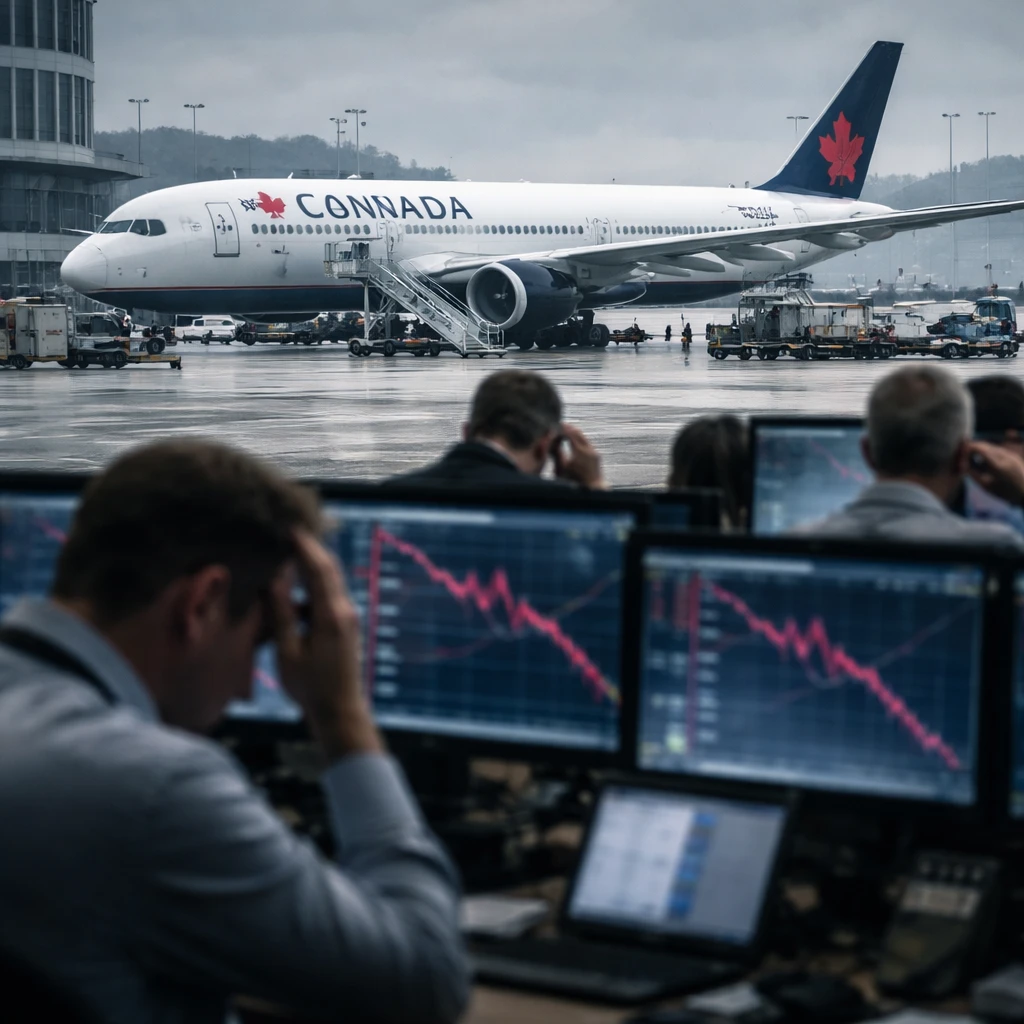
Air Canada shares dropped nearly 4.0% to C$24.36 following the company's announcement that Anko van der Werff - the sitting chief executive of Scandinavian Airlines - will assume the role of President and CEO by the end of January 2027. The current CEO, Michael Rousseau, will step down with an effective retirement date of August 31, 2026. Management confirmed van der Werff will join the airline's board and succeed Rousseau after his 19-year tenure with the carrier.
While van der Werff arrives with broad international airline experience, the decision to select an external successor introduced an element of investor uncertainty. That uncertainty came against the backdrop of a recent rally that had pushed the stock close to its 52-week high of C$25.50, leaving limited downside protection when the news hit the market.
The timing of the leadership change compounded an already-challenged near-term operational picture for the airline. Air Canada has again reduced services to the United States, citing elevated jet fuel costs and weaker demand for travel to the south. Those operational adjustments are material for revenue and capacity planning in Air Canada's network and were cited alongside other near-term pressures by management.
Analyst sentiment had been supportive in recent weeks, with National Bank Financial upgrading the stock to Outperform and setting a C$29.00 price target, while BMO Capital retained an Outperform rating and raised its target to C$30.00. However, those bullish calls were largely embedded in the stock's recent advance, offering little buffer against fresh negative news and market volatility.
External market forces intensified the selloff. U.S. stock futures fell after President Trump publicly questioned the status of the interim peace agreement with Iran, stating the deal was over and accusing Tehran of violating the fragile truce during comments at a NATO summit in Turkey. The comments coincided with Dow futures falling more than 550 points and S&P 500 futures dropping sharply. On the session, the S&P 500 declined 0.7% and the Dow was down 1.3%.
The geopolitical developments pushed oil prices higher, a direct cost headwind for airlines due to increased jet fuel expense. That dynamic, combined with deteriorating risk sentiment across North American equity markets, intensified selling pressure on carrier stocks including Air Canada.
Management had already warned of several near-term financial pressures that make investors sensitive to additional uncertainty. Those flags included rising unit costs driven by labor and depreciation, plus a peak capital expenditure cycle expected to weigh on free cash flow in 2026. In this setting, a high-profile leadership transition and renewed operational cutbacks amplified investor concern, contributing to today's weak trading in the stock.
Summary box
- Air Canada to appoint Anko van der Werff as President and CEO by end of January 2027; Michael Rousseau to retire August 31, 2026.
- Shares fell nearly 4% to C$24.36 amid the leadership announcement and operational headwinds.
- Reduced U.S. flying, higher jet fuel costs and a broader market risk-off tied to geopolitical tensions pressured the stock.