
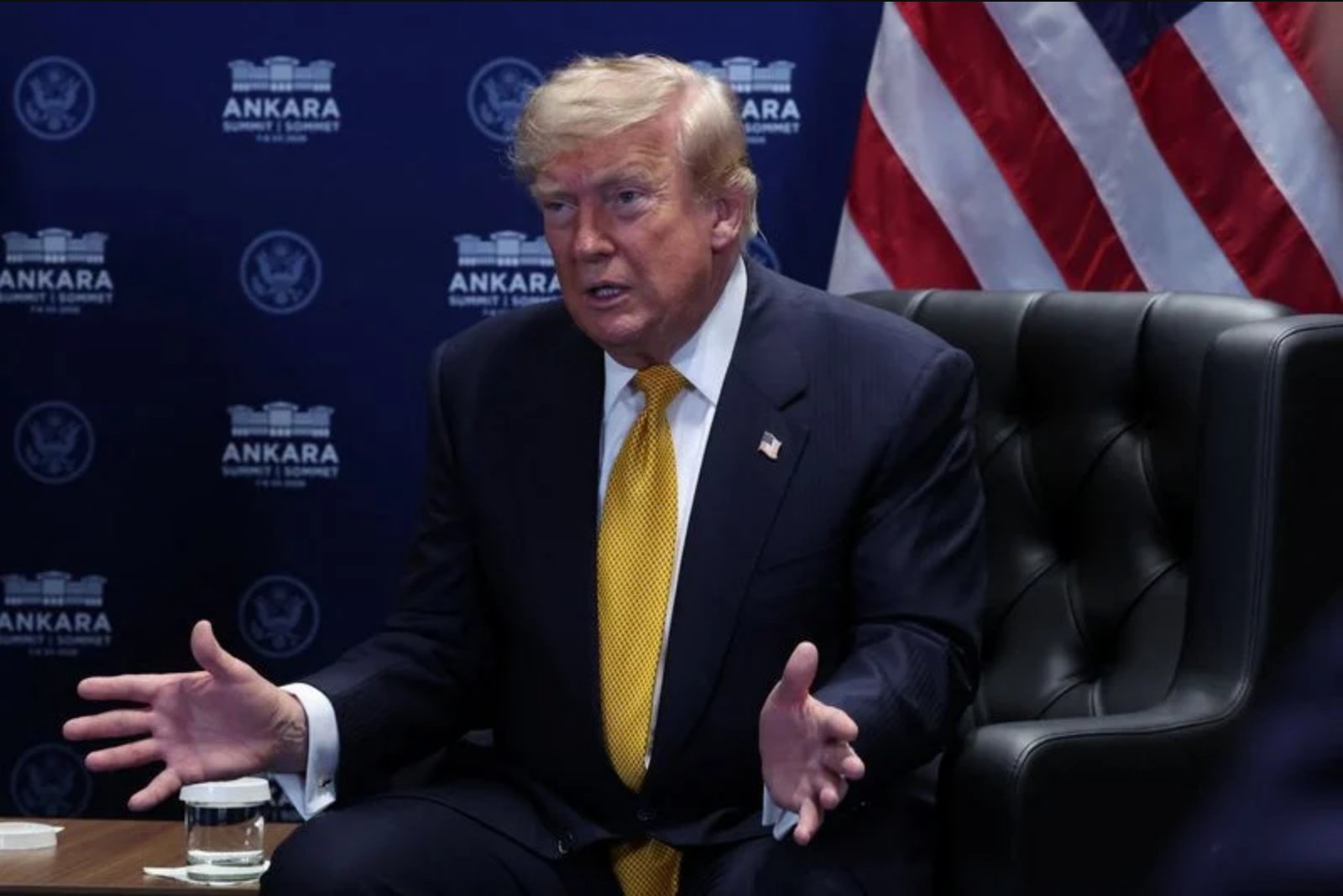
LONDON/NEW YORK, July 8 - Oil prices surged and global risk assets moved lower on Wednesday after U.S. President Donald Trump said the memorandum of understanding that had provided a framework for the ceasefire with Iran "was over" following an overnight exchange of attacks. Trump made the comment in Ankara at a NATO summit in the Turkish capital.
Markets reacted quickly. Brent and related crude benchmarks climbed, with oil up about 5% to $78 a barrel. European equities fell, with regional benchmarks down about 1.1%. The dollar strengthened and government bond yields rose as investors priced in greater geopolitical risk. U.S. equities were only modestly lower overall, although the technology-heavy Nasdaq retreated about 0.4% in early trade.
Market narrative and immediate drivers
The president's declaration that the MOU "was over" came after a fresh round of strikes between the two sides, and the comment appeared to erase some of the optimism that had reduced risk premia in oil markets in recent weeks. That shift in sentiment was reflected across asset classes: energy-sensitive instruments saw gains while interest-rate sensitive assets such as government bonds sold off.
On implications for inflation and policy
Ian Lyngen, Head of U.S. Rates Strategy at BMO Capital Markets in New York, framed the move as a potential reset for how markets judge near-term economic signals. He said: "In practical terms, the potential reset on the war in Iran implies that the near-term economic data is less relevant - at least on the margin. June’s core inflation figures will be downplayed in the event that crude oil continues to march higher throughout the month of July. What had been a downward influence on headline inflation (and potential pass-through to core) appears to be reverting to an upside risk."
Lyngen added that the recent Federal Open Market Committee minutes could look dated in light of the sudden uptick in Middle East tensions. He said: "Putting this in the context of this afternoon’s FOMC Minutes, the official update will now appear somewhat stale given that the Middle East conflict no longer appears to be resolved, or at least on the path toward a near-term resolution." He noted investors will want clarity on how the Fed’s reaction function to macroeconomic developments might change under new leadership - specifically mentioning Warsh - though his comment did not assert a particular policy outcome.
Views from economists and market strategists
Hamad Hussain, Climate and Commodities Economist at Capital Economics in Reading, UK, said the renewed military strikes were consistent with an outlook for more volatile oil prices in the coming months and periods of upward pressure. He added: "That said, under the assumption that some form of a ceasefire ends up holding and oil flows continue to recover, we think Brent crude prices will settle close to current levels at the end of this year."
Fiona Cincotta, Senior Market Analyst at City Index in London, described the MOU as fragile and cautioned that a renewed disruption to shipping or regional security could lift prices further. She said: "This was always a very fragile peace process. The fact that oil prices had already fallen back to pre-war levels suggested that the market was a little bit ahead of itself" and warned that oil "could continue to rise if we see the Strait of Hormuz close again and the unwind of all the positivity we’ve seen over the last few weeks."
Aneeka Gupta, Director of Macroeconomic Research at WisdomTree in London, characterized the president's remarks as a sharp reminder to markets. She said: "It’s a big wake-up call for the markets because the expectation was that following the MOU, we were likely to start to see the flow of oil coming back into the markets. And we saw inflation expectations being dialed down." Gupta highlighted a change in incentives around Iranian compliance: "The way we’re looking at it now is what has changed materially is the (Iranian) oil waiver is gone. It’s removed a very key incentive for Iranian compliance." She added: "Trump’s comments add that further layer of additional risk premium into the markets. But the reality is with Trump, you always have TACO (‘Trump always chickens out’) trade at play."
Arne Petimezas, Director Research at AFS Group in Amsterdam, urged caution on taking presidential remarks at face value and noted the political calendar. He said: "Remember where we came from with oil prices and bond yields. Much higher levels. The market hasn’t reached levels that would panic Trump." On the durability of the statement he observed: "And do we take Trump literally or seriously? He says that the peace deal is over, but that U.S. negotiators can continue doing their work. We also know that Trump can turn on a dime. He could have an about-face today, tomorrow, next week, or perhaps later. I don’t see him waging war with Iran into the elections."
Chris Beauchamp, Chief Market Strategist at IG in London, underscored the hit to sentiment: "It’s clearly not what the market’s wanted and it really weighs heavily on sentiment." He suggested markets could see some additional skirmishes before parties return to negotiations, noting that prior phases of the MOU had not been the sole driver of ceasefires that allowed market rallies. He added: "Things that have come just a long way in such a short space of time, you’d be looking and thinking there’ll be a summer swoon that just weighs heavily on markets and maybe doesn’t take us all the way back to these lows of March. We are overdue a little bit of a spike (lower). We’ve had a relatively quiescent VIX. Everything has been almost too easy for investors."
Khoon Goh, Head of Asia Research at ANZ in Singapore, highlighted the practical conduit for higher prices: the Strait of Hormuz and the continuity of shipping. "The main thing is really whether or not the Strait of Hormuz remains open and we still see traffic (and) whether or not oil can continue to flow," he said. He cautioned that if traffic persists it would limit how high oil could rise, but noted the risk of a return to broader attacks: "If there’s still some traffic going through, then I think that will limit how high oil prices will go. It also depends on whether we see a return to the full-on onslaught of attacks, in particular whether or not Iran launches fresh attacks on the GCC neighbours...we haven’t really seen a much broader spillover from the risk off tone yet, because I think markets are just trying to assess what the situation is." He added: "A lot of the strategic reserves have already run down, so we could get back towards worrying about potential bottleneck shortages once again. But I think markets at this stage don’t want to jump immediately to that conclusion because, everyone did early on and, of course thankfully, it didn’t play out."
Lee Hardman, Senior Currency Analyst at MUFG in London, called this the most significant flare up in tensions since the deal so far and linked higher energy prices to currency moves: "This looks like the most significant flare up in tensions since the deal so far, of course it’s hard to say what will happen, but it’s definitely adding to the uncertainty. "He noted a pronounced positive correlation between the dollar and energy prices, reinforced by a recent hawkish shift in Fed rhetoric: "The dollar is benefiting from higher energy prices, and that positive correlation has been strengthened from the recent hawkish shift in rhetoric from the Fed. If energy prices go higher, and that means inflation goes higher, then we’re more likely to get rate hikes, benefiting the dollar."
What this means for markets and sectors
The near-term repricing favors sectors and assets tied to energy prices - oil producers and energy-related equities benefit from a higher crude price environment while energy-intensive industries face cost pressure. Higher oil and the associated upward pressure on inflation expectations may also influence fixed income, currency and central bank policy narratives, particularly if crude continues to climb through July as Lyngen suggested.
Conclusion
President Trump's statement that the MOU "was over" has introduced fresh uncertainty into markets that had been easing in recent weeks. The immediate response - a roughly 5% rise in oil to $78 a barrel, a 1.1% drop in European stocks, a firmer dollar and higher government bond yields - underscores how geopolitical friction can quickly shift the balance of market drivers. Economists and strategists cited a mix of scenarios ranging from a temporary skirmish before renewed talks to a more prolonged period of volatility, but several highlighted the central role of oil flows and shipping through the Strait of Hormuz in determining how markets ultimately price risk.