
Christina Paxson said on Monday she will leave her role as president of Brown University at the conclusion of the academic year, bringing to an end a tenure marked by clashes with federal officials over funding and a campus tragedy that drew national attention.
In an open letter posted on the university's website, Paxson said she had originally planned to step down a year earlier but extended her service at the Providence, Rhode Island institution to "navigate a federal funding freeze that imperiled our mission." Her announcement came after a period in which the university became a prominent target of federal scrutiny.
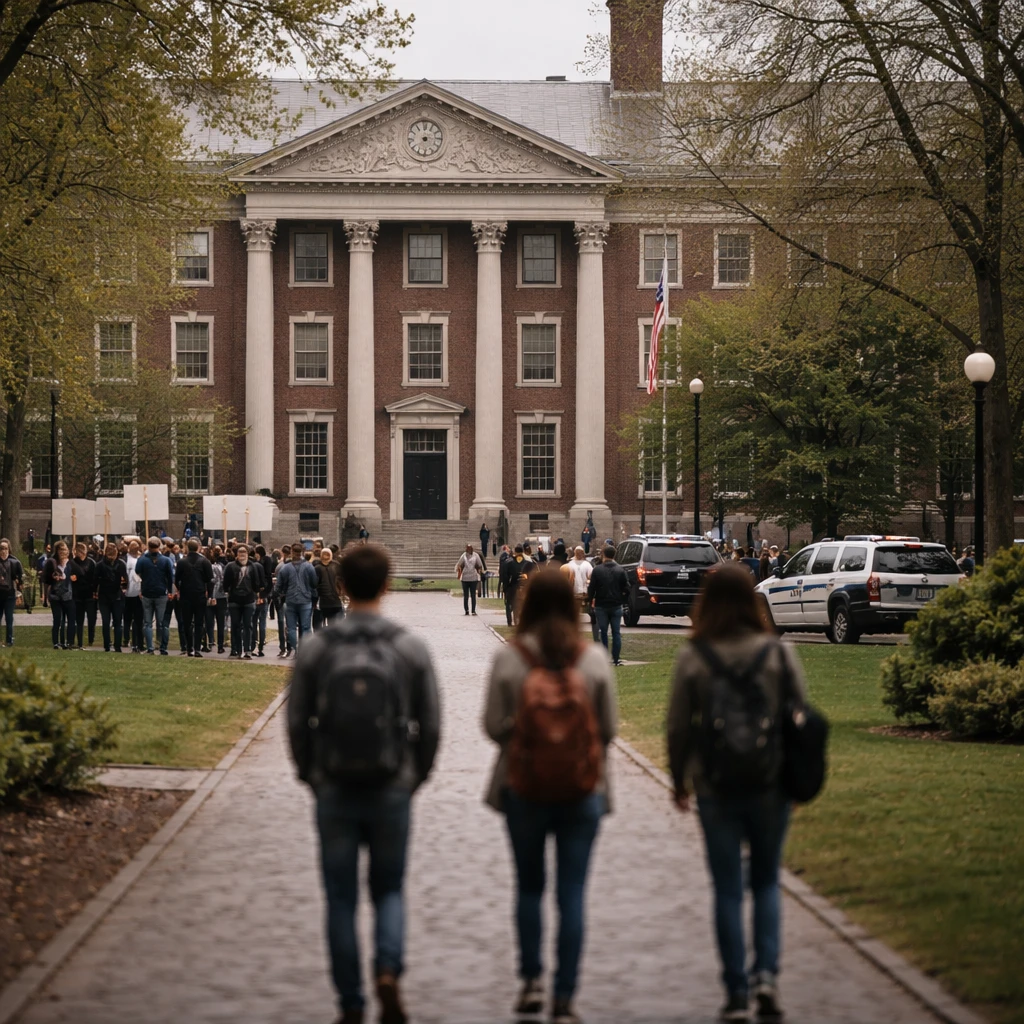
During the Trump administration's second term in office, Brown was singled out as the administration stepped up pressure on U.S. universities, citing what it described as antisemitic student protests related to Israel's war on Gaza, concerns about diversity policies and a range of other issues. Protesters, including some Jewish groups, countered that the administration was mischaracterizing criticism of Israel's military actions and its occupation of Palestinian territories as antisemitism and framing advocacy for Palestinian rights as support for extremism.
Federal officials threatened to block $510 million in federal grants for Brown. Paxson negotiated a settlement in July 2025 to restore that funding. The agreement required Brown to commission a third-party evaluation of campus climate - including conditions for Jewish students - and to propose actions intended to improve that climate.
In October, Paxson rejected an offer the administration sent to nine elite universities that linked preferential treatment for federal funding to a set of institutional changes. The proposal would have favored schools that imposed caps on international students, adopted a definition of gender based on biology and prohibited the use of race or sex in hiring and admissions. At the time, Paxson said accepting the terms would "restrict academic freedom and undermine the autonomy of Brown’s governance."
In her letter announcing her departure, Paxson noted that "while the federal landscape remains volatile for all colleges and universities, Brown is receiving major grants for pioneering research that will lead to tremendous innovation for this country." She framed the award of research funding as evidence of the university's continued role in advancing work of national importance despite broader uncertainty.
Her presidency also encompassed a grave security incident. In December, a former student opened fire on the Brown campus, resulting in two students dead and nine wounded. The shooter later killed a Massachusetts Institute of Technology professor before being found dead from a self-inflicted gunshot wound. The episode prompted federal authorities to examine Brown's emergency notification systems and campus surveillance capabilities.
Context and implications
- Brown's dispute with the administration centered on federal oversight of campus protest responses and institutional policies tied to diversity, admissions and hiring.
- The restoration of $510 million in grants in July 2025 was conditioned on external review and subsequent corrective proposals focused on campus climate.
- The December shooting brought additional federal attention to operational areas such as emergency communications and surveillance technology.
As she prepares to depart, Paxson emphasized both the fragility of the federal higher-education policy environment and Brown's ongoing success in securing significant research awards that the university argues will yield innovation at the national level.