
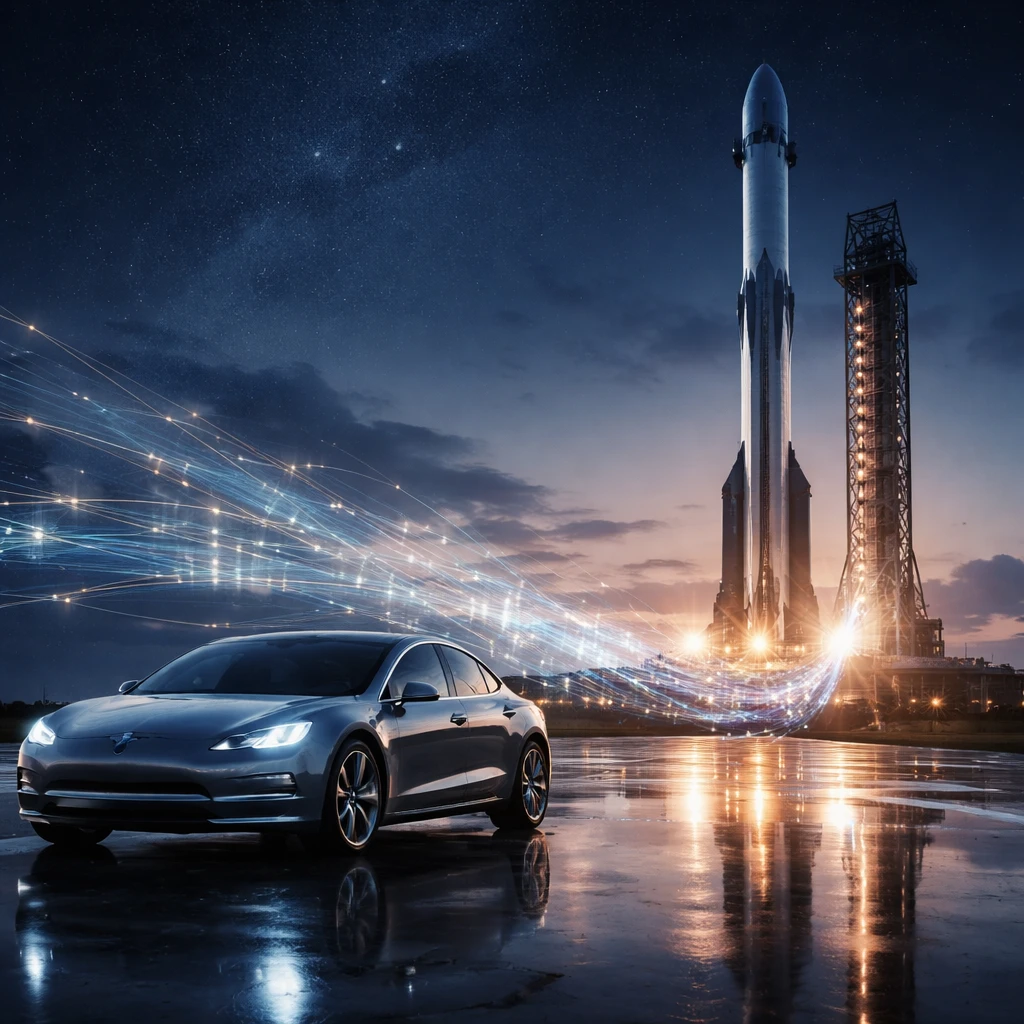
With SpaceX scheduled to go public this week, Wolfe Research has scrutinized the potential implications for Tesla shareholders as market speculation grows around a possible merger between the two companies led by Elon Musk.
Wolfe Research analyst Emmanuel Rosner reported that conversations with institutional investors indicate the idea of a SpaceX-Tesla combination has moved toward the mainstream. In his note, Rosner quoted investors who now view such a merger as their primary rationale for holding Tesla stock. The analyst then outlined the principal elements that proponents of the merger thesis point to.
Three drivers cited by Wolfe Research
- Consolidation of voting control - Rosner noted that Musk appears to be arranging voting leverage such that a hypothetical all-stock transaction would place him with well above 50% voting rights in a combined enterprise.
- AI and compute synergy - The analyst highlighted the prospect of Tesla contributing large, real-world data sets while SpaceX could supply substantial compute capacity, creating a potential AI-focused powerhouse.
- Broader capital access - A combined company would, in this view, have access to a larger capital base than Tesla currently does on its own.
Barriers and timeline
Wolfe Research also identified significant impediments that could prevent or complicate a merger. These include the need to pay a high acquisition premium, potential resistance from other SpaceX shareholders, and regulatory challenges tied to Tesla's sizable operations in China. The firm judged that completion of any such transaction is "unlikely until mid-2027 (at the earliest)."
Near-term market implications
While Wolfe said anticipation of a merger could help provide downside support for Tesla shares, it warned that tangible progress on Tesla's advanced projects is necessary for share prices to gain renewed momentum. Specifically, the firm emphasized that Tesla must "deliver on robotaxi & Optimus proof points for the shares to find momentum."
Wolfe further observed that although Tesla's core business fundamentals seem to be improving, those fundamentals account for only a small portion of the company's valuation. The larger portion, the firm argued, rests on confidence in robotaxi programs, humanoid robotics, and ancillary AI services, areas where it now views the "ramp curves" as shallower than previously expected.
Implications by sector
- Automotive - valuation and investor sentiment for electric vehicle makers influenced by robotaxi expectations.
- Aerospace and defense - SpaceX's public valuation could affect capital flows and strategic partnerships.
- Technology and AI - combined data and compute capabilities would be relevant to AI infrastructure and services markets.