
Overview
Widespread wildfires that have ripped through parts of southwest France and central Spain forced mass evacuations and prompted emergency measures on both sides of the Pyrenees. French authorities ordered a full evacuation of the Cap Ferret peninsula on the Atlantic coast, while Spanish officials declared a national emergency following the convergence of major blazes west of Madrid. The intense heat and persistent winds have created tinder-dry conditions that officials and scientists say have played a key role in the scale and behaviour of the fires.
France - Coastal evacuations and maritime rescues
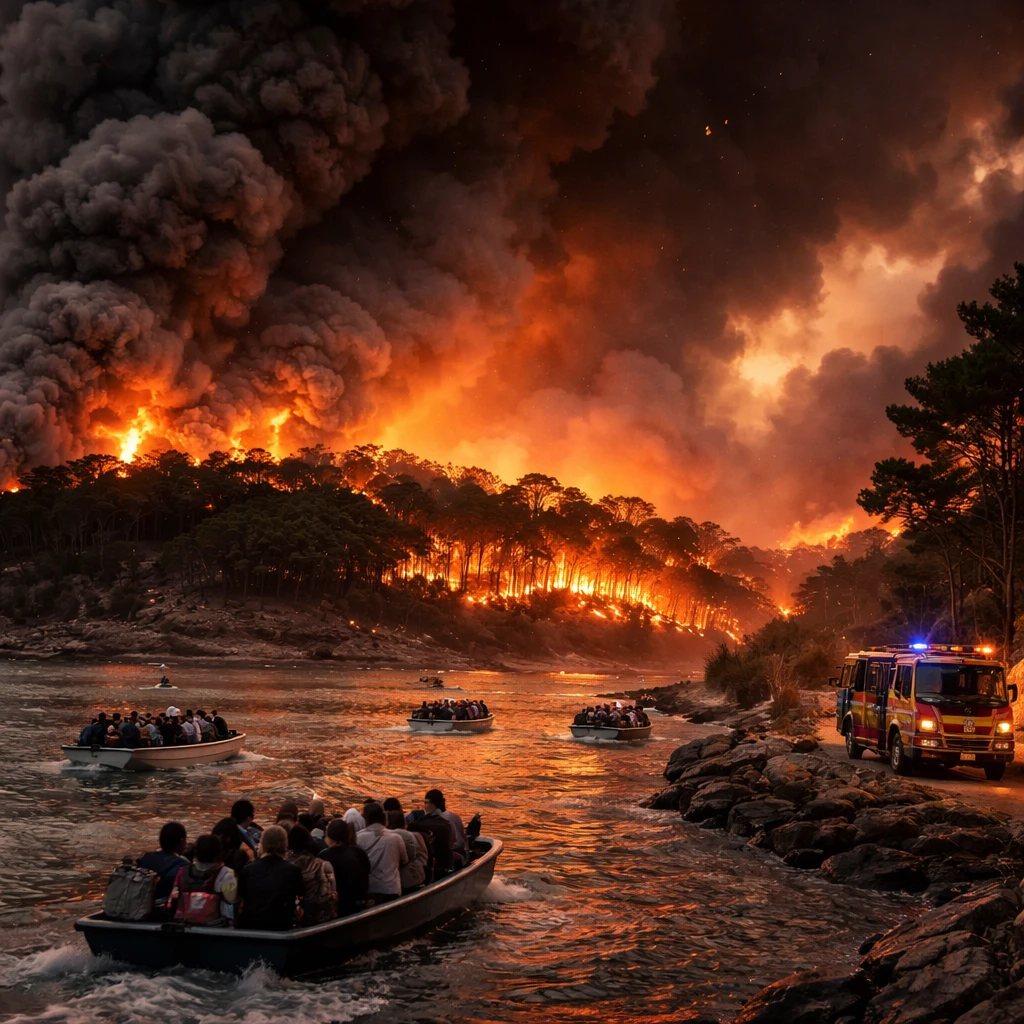
In southwest France, officials instructed about 110,000 people to leave their homes, campsites and tourist accommodations as two large fires threatened populated areas and leisure destinations. Authorities used boats to support evacuations from coastal locations, reflecting both the scale of the evacuations and the need to move people quickly by sea where roads were compromised.
Interior Minister Laurent Nunez characterised the blaze affecting the Cap Ferret area as a convective fire, saying it is "self-sustaining, changes direction, and is moving mainly eastward, toward the Bordeaux metropolitan area," while adding that Bordeaux was not currently under threat. He said 53 homes had been destroyed in the French fires.
One of the most severe fires began in the village of Saumos, north of Cap Ferret, and has become the largest so far this season in France. Officials reported it had consumed more than 14,000 hectares of forest and destroyed over 100 homes and one campsite. The fire near Saumos also threatened to cut off the single road out of the Cap Ferret peninsula, heightening concerns about rapid and safe evacuations.
Residents and visitors described dramatic scenes as they fled. Yoan Urien, who evacuated late on Thursday after police ordered his neighbourhood in Biscarrosse to leave, said he could see the fires from his home and that "we could see the clouds becoming darker and darker." Belgian tourist Marie Duelz, staying at Cap Ferret, reported seeing "a cloud of ash that was blocking the sun, basically." Local residents expressed deep distress at the loss of familiar landscapes: "It breaks my heart. Because it’s such a pleasant place to live, seeing it go up in smoke is truly sad," said Corinne Paillaube, a family caregiver. Another local, Ambre Dubos, described the scene as "totally apocalyptic."
Spain - National emergency as fires merge
Spanish authorities confronted a separate but equally severe challenge west of Madrid, where two major fires merged and a third in Avila province was on the verge of joining them, according to regional officials. Madrid’s regional leader Isabel Diaz Ayuso said: "This is the worst wildfire in our region’s history," and attributed the conflagration to a "perfect storm of very high temperatures and ceaseless winds that aren’t letting up."
More than 19,000 people were ordered to evacuate towns in the mountainous area west of the capital. Interior Minister Fernando Grande-Marlaska reported that over 2,000 personnel and 10 aircraft were engaged in firefighting operations, but were unable to prevent the fires from converging. The government declared a national emergency—the first time Spain has done so for a wildfire—activating federal funding and coordination mechanisms to tackle the crisis.
Evacuees recounted harrowing escapes. Enrique Martin, sheltering in Cebreros, said: "I had to run from my house. There was a ball of fire. If I’d taken five more minutes, it would have wiped us out." Authorities reported that in a single residential development 43 homes had been destroyed, a figure cited by Diaz Ayuso in explaining the decision to elevate the national response.
Investigations into the origin of the Avila-area blaze were ongoing. Spanish police said one person had been arrested and another was under investigation on suspicion of starting the fire while operating heavy machinery in a prohibited area, according to regional authorities. Nicanor Sen, the government representative for Castile and Leon, indicated the third fire was either already merged or on the verge of merging with the Madrid-area blazes.
Environment Minister Sara Aagesen noted on social media that Spain had experienced more than 29 major fires so far this year, damaging an area five times greater than at the same stage in 2025, underscoring the severity of this season.
International aid and firefighting resources
Both countries appealed for assistance from the European Union as the scale of the fires strained domestic emergency services. Greece said it would send two firefighting aircraft to Spain. Croatia provided a firefighting plane and crew to support France, and Italy dispatched a firefighting aircraft to assist Tunisia, which is also coping with wildfires. These movements of equipment and personnel reflect cross-border coordination intended to bolster regional firefighting capacity.
Heat, infrastructure and agricultural impacts
The region’s sustained high temperatures have broader effects beyond the fires themselves. Meteo France warned of a sharp rise in average temperatures in France following a short reprieve, raising concerns about continued fire risk. Officials also pointed to consequences for critical infrastructure: the elevated river temperatures that accompany heatwaves can limit the capacity of rivers to cool nuclear reactors and may force plants to reduce output. EDF’s publicly available data showed that the Golfech 2 nuclear reactor in southern France had been offline since July 7 due to heat-related restrictions.
Agriculture is also feeling the strain. Officials reported that weeks of hot weather were degrading the condition of the maize crop in France, signalling potential impacts on yields in affected areas.
Context and constraints
Authorities noted that this year’s wildfire activity has already surpassed typical annual measures in Europe, with more land burned so far than the long-term average. Scientists cited by officials say human-driven climate change has increased the intensity of heatwaves, droughts and wildfires, as well as creating conditions for sudden, destructive storms, a dynamic officials referenced in describing current risks.
Outlook
Emergency officials and regional leaders emphasised that high temperatures and strong winds continued to complicate containment efforts. With evacuations ongoing, cross-border aid mobilised, and critical infrastructure such as nuclear plants affected by river temperature limits, the immediate focus remained on protecting lives and property while firefighters and authorities worked to prevent further spread and merging of blazes.
Source notes
The reporting includes statements from regional officials, national ministers, evacuees and public data from the nuclear operator referenced in official briefings. Authorities have characterised the fires as among the most severe in recent memory in the affected regions and have taken extraordinary measures in response.