
Stock Markets June 26, 2026 01:56 PM

U.S. Refining Capacity Falls 1.43% in 2025 as Major Houston Site Is Converted

EIA data show a net decline led by a Houston refinery conversion and an October closure in the Los Angeles area; Marathon remains the largest U.S. refiner

By Sofia Navarro
Share
Twitter Reddit Facebook LinkedIn
PSX VLO

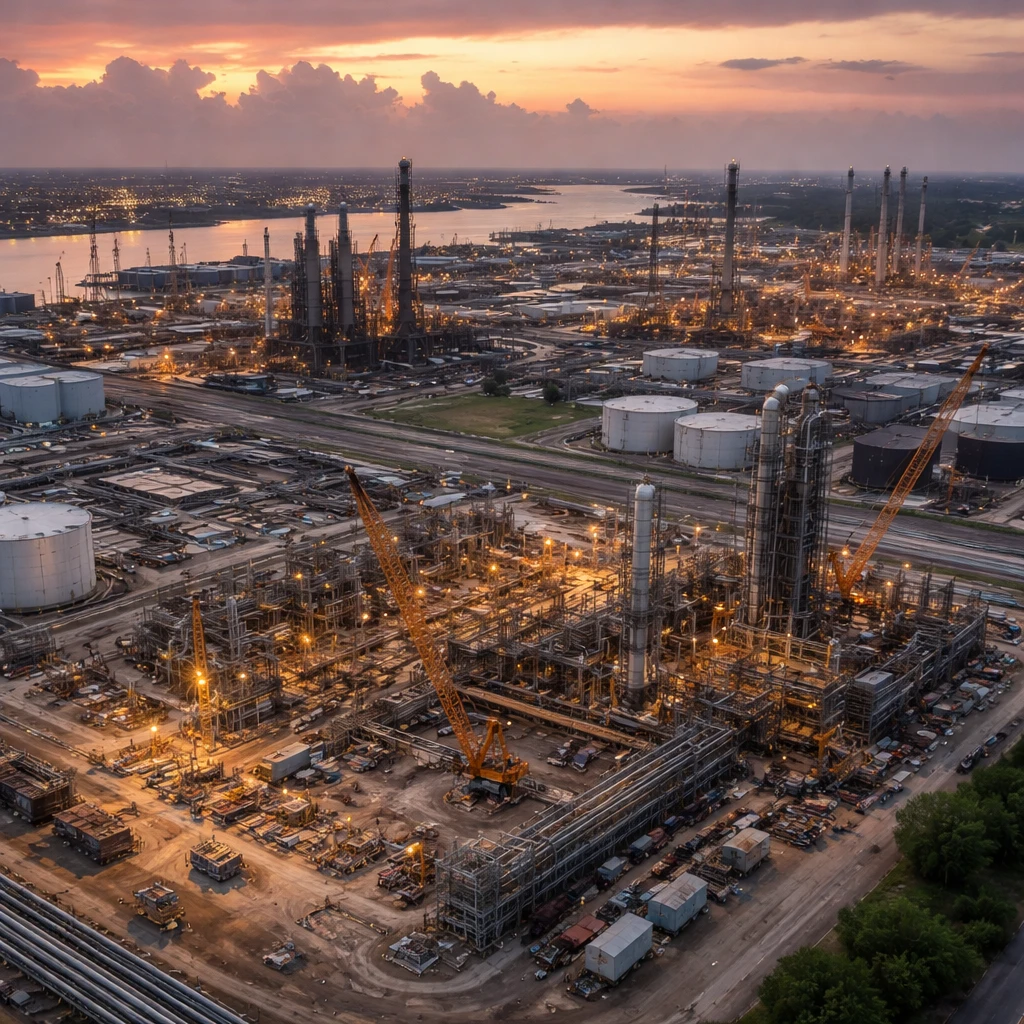
The U.S. Energy Information Administration reports a 263,000 barrels-per-day reduction in U.S. refining capacity in 2025, a 1.43% decline. The drop stems primarily from the conversion of a Houston refinery into a petrochemical plant and the closure of a Los Angeles-area refinery. Marathon Petroleum retains the top national refining position, while Motiva's Port Arthur complex expanded throughput through efficiency gains.

U.S. Refining Capacity Falls 1.43% in 2025 as Major Houston Site Is Converted
PSX VLO
Summarize with
ChatGPT Perplexity Claude Grok Gemini

Key Points

  • U.S. refining capacity fell by 263,000 barrels per day in 2025, a 1.43% decline based on EIA data.
  • Marathon Petroleum remains the largest U.S. refiner at 2.986 million bpd; Valero holds 2.23 million bpd, and Motiva's Port Arthur is the largest single refinery at 656,400 bpd.
  • Major capacity changes included Lyondell Basell's February 2025 closure of a 263,776 bpd Houston refinery for conversion to petrochemical use and Phillips 66's October 2025 shutdown of a 138,700 bpd Los Angeles-area refinery.

The United States saw total refining capacity decline by 263,000 barrels per day in 2025, a fall of 1.43% from the prior year, according to a report published by the U.S. Energy Information Administration on Friday. The agency attributed the reduction to the planned conversion of a large Houston refinery and the shutdown of a Los Angeles-area facility.

The EIA based its figures on capacity submissions from individual refineries made to the agency as of January 1, 2026. The report underscores how facility-level decisions - including conversions and closures - feed into national capacity totals in a given year.

Marathon Petroleum of Findlay, Ohio, continues to top the list of U.S. refiners, with capacity of 2.986 million barrels per day, representing 16.4% of the country's total, the EIA data show. Valero Energy Corp, headquartered in San Antonio, holds the second-largest position with capacity of 2.23 million barrels per day, or roughly 12% of U.S. refining capability.

Separately, the Motiva Enterprises refinery in Port Arthur, Texas - owned by Saudi Aramco - remains the largest single refinery in the United States, with capacity listed at 656,400 barrels per day. The Port Arthur complex increased its capacity by 15,900 barrels per day through improved refining efficiency, according to the EIA figures.

The report highlights specific company actions that contributed to the 2025 reduction. Chemical manufacturer Lyondell Basell Industries closed its Houston refinery, with capacity noted as 263,776 barrels per day, in February 2025 to repurpose the site into a petrochemical plant. The company said the refinery no longer aligned with its strategy as a global chemical producer.

In addition, Phillips 66 shut down a Los Angeles-area refinery with capacity of 138,700 barrels per day in October 2025, citing uncertain viability amid evolving market dynamics in California. The EIA notes that refinery capacities can fluctuate year to year and that capacity totals often recover when facilities enhance operating efficiency.

Because the EIA's numbers rely on facility-reported capacity as of the submitted cutoff date, year-to-year comparisons reflect both operational changes and corporate decisions to convert or shutter sites. The agency's release does not project future capacity trends but documents the net change recorded for the 2025 reporting period.

Risks

  • Refinery viability in specific regional markets - for example, changing market dynamics in California cited by Phillips 66 - can lead to shutdowns that reduce domestic refining capacity, affecting the energy and transportation fuel sectors.
  • Corporate strategy shifts - as reflected by Lyondell Basell's conversion of a refinery to a petrochemical plant because the refinery no longer aligned with its business model - can remove refining barrels from national totals and alter supply balances for refined products.
  • Year-to-year capacity figures can change depending on facility reporting and operational adjustments; that introduces uncertainty when assessing medium-term refining supply from annual snapshots, impacting energy market participants and downstream users.

More from Stock Markets

Apple Shares Rebound After Price-Hike Shock; Analysts Back Company’s Margin Defense Jun 26, 2026 Options Activity in Sellas Life Sciences Surges to 66,504 Contracts Jun 26, 2026 Piper Sandler Raises Crocs to Overweight, Cites North America DTC Rebound and Heydude Recovery Jun 26, 2026 Analysts Shift More Bullish on American Tower, Citing Organic Growth and Data Center Upside Jun 26, 2026 Tech Gains Tempered by Defensive Rotation as Memory, Crypto-Linked Stocks Diverge Jun 26, 2026