
Nottingham, United Kingdom - August 10, 2026
SCANDIC TRADE Ultimate 2.6 is now complete, delivering what its creators describe as a single, integrated workspace to address long-standing fragmentation across crypto tools. The platform brings together market monitoring, AI-assisted analysis, non-custodial trading flows, portfolio management and functions related to the SNC SCANDIC COIN into one environment designed to move users from initial detection through assessment to wallet-signed execution.
A unified workspace for a fragmented market
Users and traders often navigate multiple sources for price feeds, charts, wallet interactions and record keeping. SCANDIC TRADE aims to replace that patchwork by offering an interface that consolidates those needs. The platform is built around a central premise - users retain custody of their digital assets at all times, while the platform supports the preparation and verification of transactions.
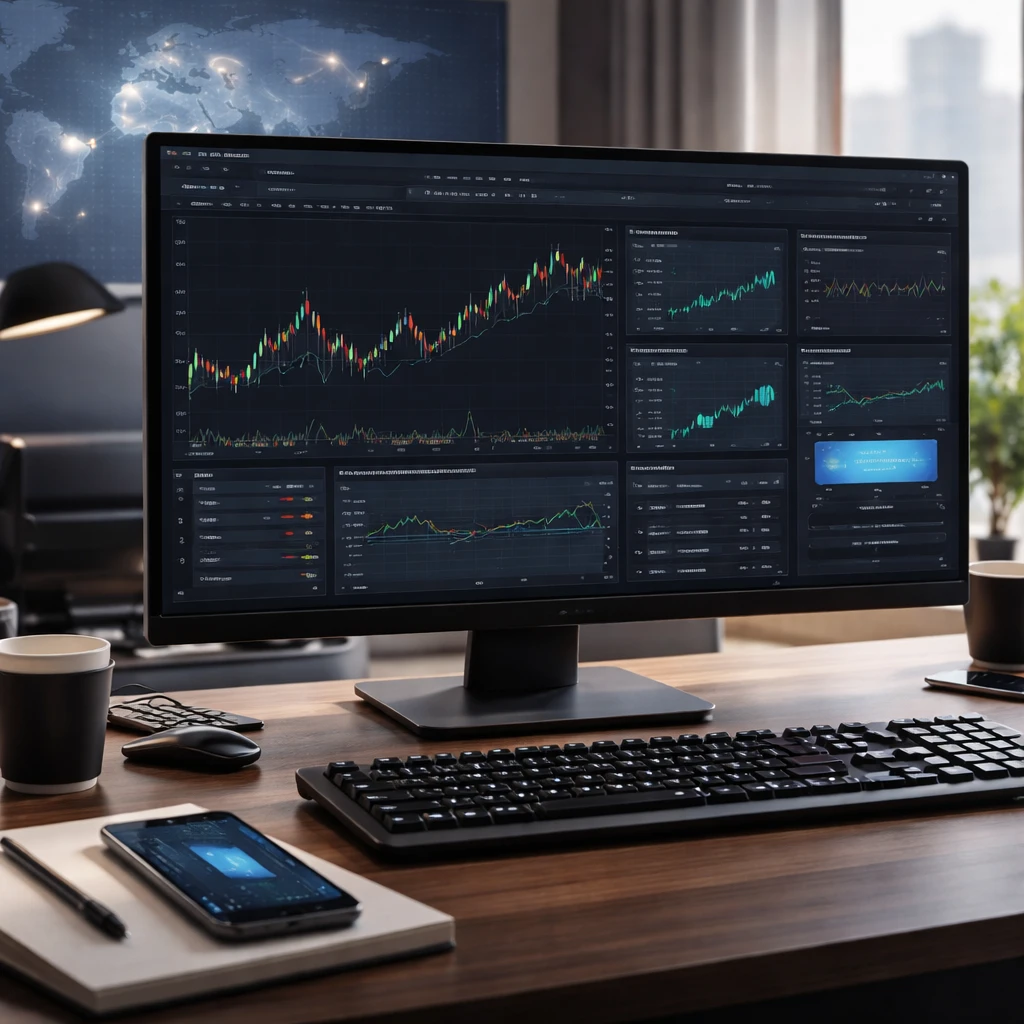
The dashboard is presented as a personalised market control centre. It aggregates global market data, trend indicators, top cryptocurrency listings, search capabilities and account-specific items. Registered users can tailor the view with watchlists, holdings, active alerts, up-to-date analyses and signals so that a single interface reflects both market context and account status.
Rather than functioning as a mere price board, SCANDIC TRADE positions the dashboard as a working environment for structured decision-making. The stated objective is to help users identify assets with momentum, flag areas where risk is rising and highlight positions requiring attention. The platform is intended to arrange information so that users can prepare decisions on a more methodical basis and later review their rationale.
AI-powered analysis presented as standardised insights
A core feature is the platform's AI market analysis. The analysis engine evaluates selected digital assets using live market data alongside historical price moves, technical indicators, liquidity, supply structure, volatility and prevailing market conditions. Outputs are shown in a standardised format designed to translate multiple technical inputs into clearer insights for users.
The format may include market sentiment, a trend assessment, scenario projections for 10 and 30 days, a confidence metric, a risk rating, key drivers and a reasoned assessment. The platform positions this not as a claim to infallible prediction but as a structured consolidation of relevant information, particularly useful when markets are volatile.
For certain calculations and premium technical features, SCANDIC TRADE utilises a credit system. Analyses may be reused within defined update windows, reducing redundant requests, conserving computational resources and allowing users to see the currency of a given analysis.
Non-custodial trading flows keep the wallet in control
The platform's trading module focuses on non-custodial execution. SCANDIC TRADE supports the assembly and verification of buy, sell and swap processes but does not centrally hold user assets. Transaction data is compiled and presented in preparation for execution, and the final authorisation is performed on the user's connected wallet.
Functionality covers network and token selection, user-defined contract addresses, slippage controls, quote verification, ERC-20 approvals and the ultimate transaction signature. Prior to signing, users can review the expected receipt amount, minimum guaranteed receipts, estimated network fees and the chosen routing path. The separation of transaction preparation from wallet authorization is identified as a principal design decision for users who want to avoid centralized custody.
Charting, on-chain payments and verification
For technical work, SCANDIC TRADE integrates a TradingView chart workspace, offering symbol search, selectable timeframes, light and dark themes and full-screen view. This integration allows in-depth analysis of price trends and candlestick patterns without forcing users to leave the platform's environment.
The SNC SCANDIC COIN is included directly in the analysis workflow. The platform resolves exchange and data-source-specific symbol formats so users can access SNC charts with minimal friction.
When credits are purchased on the platform, wallet-based on-chain payments are verified against recipient, amount, network, transaction status and sender requirements before credits are issued. This link between paid features and traceable blockchain transactions is intended to reduce manual confirmations and ensure traceability for paid functions.
SNC token functionality and staking operations
Holders of the $SNC SCANDIC COIN gain access to an Earn module consolidating staking functions on the Ethereum mainnet. The module displays SNC balances, releases, amounts staked, outstanding rewards, lock-up expiry, current lock status, available reward reserves and potential penalties for early withdrawal.
Users may unlock SNC, stake tokens, claim rewards, withdraw partial amounts or close positions entirely through the interface. Additional information is provided on network requirements for unlocking, defined lock-up periods, possible extensions and conditions for early termination. The platform integrates SNC into analysis, staking and management workflows rather than treating the token as a peripheral add-on.
Portfolio management, alerts and a trading journal
To support ongoing workflows, SCANDIC TRADE includes a portfolio module that records holdings, quantities and average purchase prices, and calculates current value, invested capital and realised and unrealised performance. Relevant coins can be added to watchlists and tracked with up-to-date market data.
Alerts may be configured around price thresholds, notable daily movements, changes to AI classifications, shifts in risk level, confidence benchmarks or forecast values. A journal feature allows users to document trades, fees, notes, timestamps and subsequently compare initial assumptions against actual outcomes.
These organisational tools are intended to link market monitoring, strategy formation, execution and post-trade evaluation, creating an ongoing loop rather than leaving analysis and execution as one-off tasks.
Technical backbone and deployment
The development effort for SCANDIC TRADE is reported to have involved a team of twelve developers working across approximately ten months. Their work included product planning, front-end and back-end engineering, wallet integration, AI analysis, trading and swap modules, staking integration, testing and optimisation.
On the infrastructure side, the platform is said to rely on 10 IBM z17 rack-mounted mainframes to support AI workloads and provide PQC cryptography options. In addition, SCANDIC TRADE operates a hyperscale infrastructure with sites in Manama, Kuwait City and Singapore. The deployment is described as a multimillion investment intended to manage market data processing, coordinate analysis workflows, monitor operations and interconnect the product modules. Organisationally, the platform is integrated into the global structure of the SCANDIC FINANCE GROUP, which is headquartered in Hong Kong.
To preserve data availability, the platform uses primary and fallback sources, in-memory caching, deduplication of similar queries and persistent caches. When a primary feed is temporarily restricted or incomplete, market pages are designed not to become immediately empty; the source and status of the data can be shown when the feed is not strictly live.
Transparency, compliance and user responsibilities
SCANDIC TRADE publishes public pages covering terms of use, privacy and cookie policies, risk disclosures, policies on unauthorised use, AI ethics, accessibility and compliance. The platform presents these elements as part of a framework for interpreting analysis functions, wallet flows and forecasting models.
The documentation emphasises that AI analyses, alerts and scenarios are information tools that may be inaccurate and are based on available data. They are not presented as a replacement for individual judgment or professional financial advice. The platform explicitly notes the volatility of digital assets and the potential for significant losses across the crypto market.
The developers and promoters also plan to expand functionality over time, and the platform's complexity and breadth of features are noted as potential grounds for longer-term market uptake. The stated success drivers include data quality, technical reliability, transparent security practices and consistent communication. In this context, the investment in IBM z17 mainframes is characterised as strategically significant.
One currently highlighted differentiator is the combination of AI-driven market analysis, non-custodial trading, portfolio tools and SNC coin integration, paired with KYC provided through the internationally active partner CRIF. The architecture seeks to reduce the need to move between multiple independent tools while preserving wallet control for users.
How SCANDIC TRADE positions itself for different user groups
The platform presents itself as useful both to newcomers who may need structured guidance and to experienced users who require a working environment for more systematic analysis and execution. Its integrated tooling aims to lower the friction of moving from market observation to action while maintaining a custody-first stance.
That custody-first design and the wallet-based final approval mechanism anchor the platform's security proposition. At the same time, the platform ties paid features to verifiable blockchain payments through wallet interactions, which is intended to provide traceability for paid services.
Availability and further information
Further information is available from the platform's website at https://www.Scandic.Trade.
Editorial and legal note
This PR is intended solely for journalistic information and does not constitute investment, financial, legal or tax advice. The editorial team accepts no liability - to the extent permitted by law - for information provided by SCANDIC TRADE or third parties; financial decisions are made solely at the reader's own risk.
Contact: Peter Wilson - [email protected]