
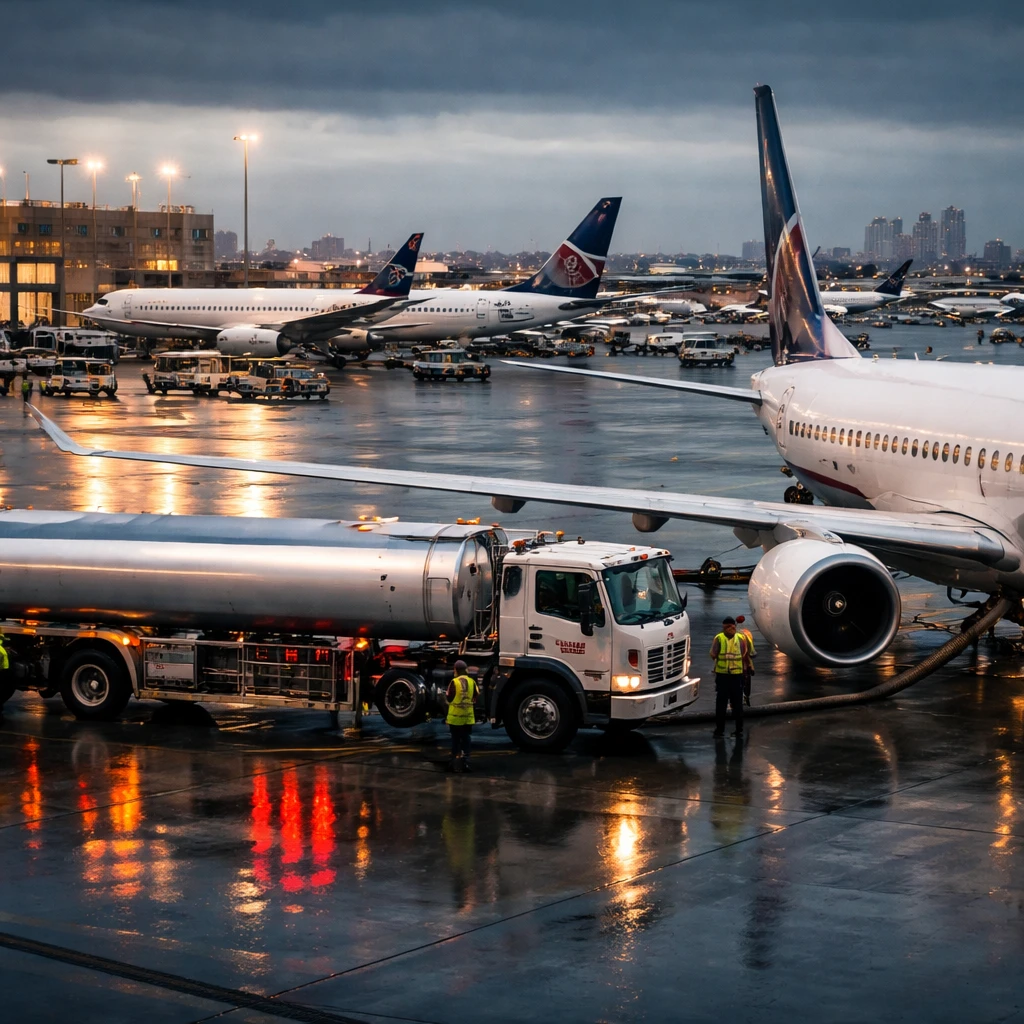
The US airline industry saw a sharp increase in fuel expenses in April, with carriers spending nearly $6.5 billion on jet fuel, a rise of 78% versus April of last year, according to data published by the US Department of Transportation on Monday. Officials attributed the escalation to elevated jet fuel prices linked to ongoing conflict in the Middle East.
The department's monthly breakdown shows fuel outlays were 26% higher than in March, even as airlines reduced fuel consumption by 2.6% month-over-month. Jet fuel traded at an average of $4.11 per gallon in April, which is $1.81 more than the price recorded in April 2025.
These cost pressures have affected carriers across the market. The report highlighted that Spirit Airlines - a low-cost carrier - ceased operations in May, with the carrier citing unsustainable fuel costs as the principal reason for the shutdown.
Major network carriers - Delta Air Lines, United Airlines, American Airlines, and Southwest Airlines - collectively operate roughly 80% of domestic US flights, underscoring how broad-based fuel inflation can influence capacity and unit costs across the industry.
At the industry level, the International Air Transport Association (IATA) published its annual forecast on Sunday, projecting a combined net profit for the global airline sector of $23 billion in 2026. That projection represents a downward revision from an earlier estimate of $41 billion and a drop from $45 billion in 2025. IATA's membership includes more than 370 carriers that account for about 85% of world air traffic.
Passenger pricing reflects some of the cost passthrough. KAYAK search data cited in the report show US-origin fares have risen this year, with domestic ticket prices increasing by as much as 31% and international fares climbing up to 22% compared with the same periods in 2025.
Contextual note - The data combines reported fuel spending, estimated consumption trends, and pricing averages for April. Where the underlying report provides limited detail on individual carrier margins or hedging outcomes, that information is not available in the department's release and is therefore not reflected here.