
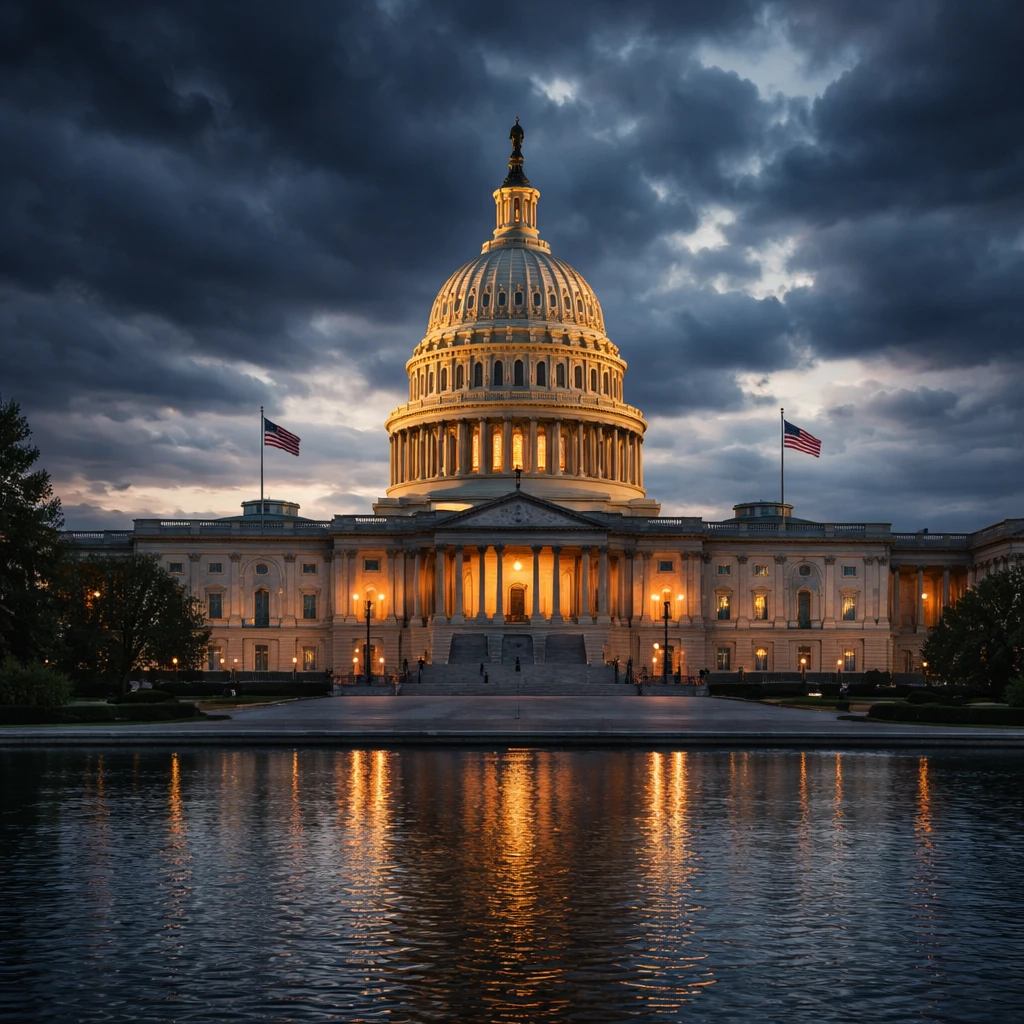
The U.S. House of Representatives voted on Thursday to press President Donald Trump to stop U.S. military operations against Iran unless Congress grants explicit authorization, approving a war powers resolution by a 214-208 margin. Four House Republicans joined Democrats to support the measure.
The resolution, introduced by Representative Pramila Jayapal, a Democrat from Washington, directed the president "to remove the use of United States Armed Forces from hostilities" against Iran unless Congress authorizes such action. Lawmakers acknowledged that the resolution was primarily symbolic; similar measures have been passed in recent months without resulting in a halt to military operations.
Several hours after the House vote, the Senate took up its own war powers measure and voted 49 to 47 to block it. The procedural tally included Republican Senator Susan Collins of Maine siding with Democrats for the motion, while Democratic Senator John Fetterman of Pennsylvania voted with Republicans against it. Four senators did not cast votes.
Republicans maintain slim majorities in both chambers of Congress. The divergent outcomes in each chamber reflected growing unease across party lines about a conflict that the president had characterized as a brief, focused campaign anticipated to compel Iran to back down - a description that lawmakers say has not matched subsequent events.
The action in Congress came as fighting in the region intensified. The president recently announced an increase in attacks on Iran, with U.S. officials reporting additional deaths among American service members. On Thursday, the president vowed "major military punishment" for Iran and its Houthi allies after Yemeni fighters struck two Saudi oil tankers in the Red Sea, extending the theater of conflict to a second major shipping chokepoint.
In the weeks since an interim truce intended to end the conflict effectively collapsed, the U.S. military mounted another series of nightly airstrikes on targets in Iran, and Iran subsequently fired on U.S. bases in neighboring countries. Those developments framed congressional debate and underscored the limits of nonbinding resolutions to alter the course of military operations.
Key points
- The House approved a war powers resolution 214-208, with four Republicans crossing party lines to vote in favor.
- The Senate blocked a similar procedural measure 49-47; votes included cross-party alignments from Senators Susan Collins and John Fetterman, and four senators did not vote.
- Hostilities have expanded recently - including attacks on oil tankers in the Red Sea, U.S. airstrikes, and Iranian fire on U.S. bases - raising concerns about broader regional consequences; sectors potentially affected include energy (shipping and oil), defense, and insurers covering maritime risks.
Risks and uncertainties
- Legal and practical limits: The resolution is largely symbolic and prior similar measures have not stopped military actions, creating uncertainty about Congress' ability to restrain executive decisions on the use of force - a risk with implications for defense contractors and government procurement.
- Escalation of hostilities: Recent increases in attacks and retaliatory strikes heighten the chance of further conflict expansion, which could affect global shipping routes and energy markets.
- Legislative divergence: Differing outcomes between the House and Senate leave unclear whether Congress will coalesce on a binding check, generating policy uncertainty that can influence market sentiment in related sectors.