
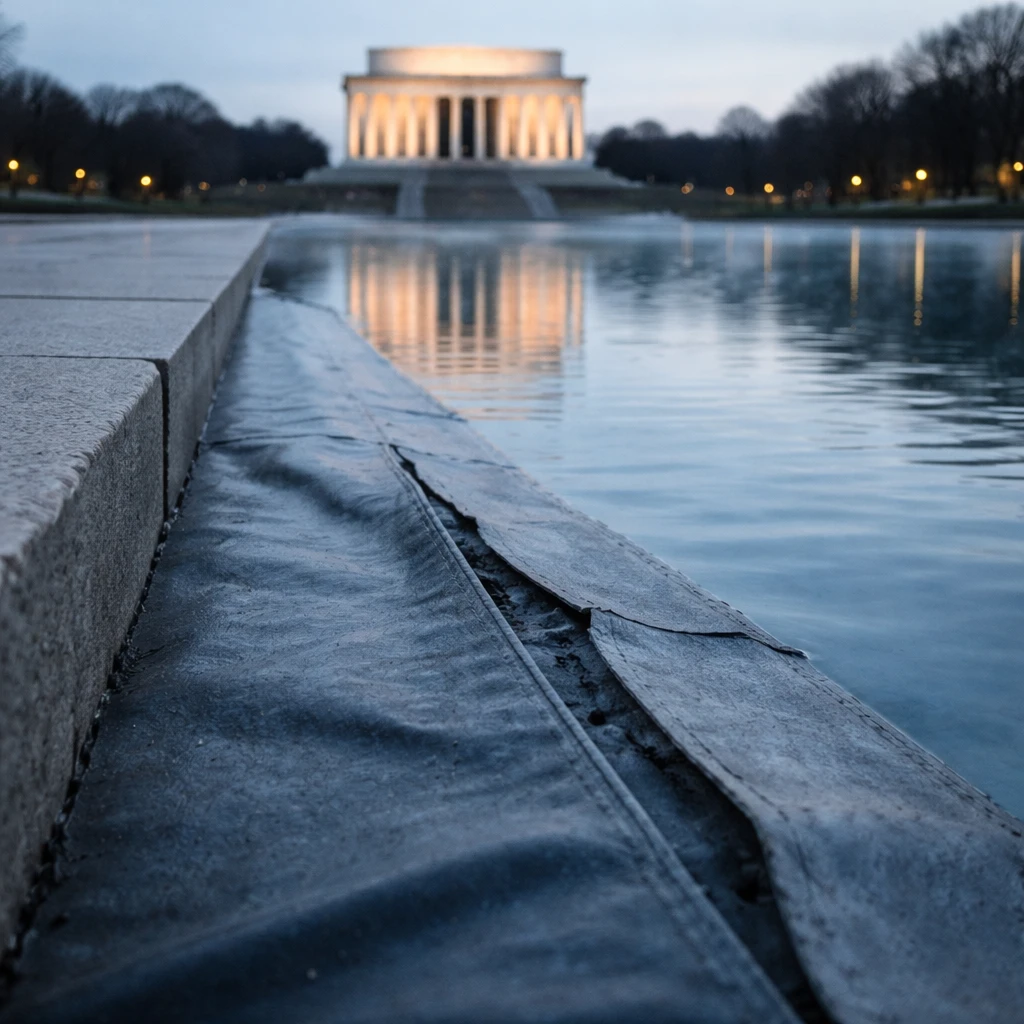
WASHINGTON - The Justice Department under the Trump administration has brought forward a variety of prominent criminal cases that, in multiple instances, did not result in convictions and instead were dropped, dismissed or prevented from proceeding by judicial rulings or grand juries. The proceedings ranged from allegations tied to a controversial renovation project on the National Mall to prosecutions of individuals accused of confronting federal officers and charges aimed at public officials who criticized the president.
Reflecting Pool prosecution withdrawn
The Justice Department withdrew its case against former U.S. Olympian David Hearn, who had been accused of vandalizing the Lincoln Memorial Reflecting Pool, part of the high-profile $14.7 million renovation. In a court filing dated July 31, federal prosecutors said the evidence indicated a defective installation rather than intentional vandalism caused the pool's liner to peel. The president had repeatedly blamed sabotage by vandals for problems with the project.
Hearn, 67, pleaded not guilty to a charge of felony destruction of property. He acknowledged reaching into the pool to touch an area where the liner had already detached, but he denied removing any piece of the liner. Lawyers for Hearn accused the administration of using the prosecution to provide "political cover" for mismanagement of the renovation.
Cases tied to assaults on federal officers
The administration mounted criminal cases against people accused of attacking or impeding federal officers during demonstrations. One example involves Christian Garcia, who was charged with assaulting a federal officer during June 2025 immigration protests in Santa Ana, California. Garcia admitted to throwing a plastic water bottle toward officers but said the wind blew the bottle back on him. At the time he was 32; he was arrested, held for three days and later lost both of his jobs after his employers told him they had been contacted by investigators.
Federal prosecutors dropped Garcia's case in January with no explanation provided in court filings. More broadly, the administration brought criminal charges against at least 851 people accused of attacking or obstructing federal officers. A review of federal court records completed in July found that 31% of completed cases tied to such allegations ended in dismissal. By comparison, Federal Judicial Center data show 8% of all federal criminal cases end in dismissal.
Another illustrative prosecution involved former Justice Department staffer Sean Dunn, who threw a sandwich at a Customs and Border Protection agent in reaction to the administration's law enforcement posture in Washington. Dunn was cleared of misdemeanor assault charges in November 2025 following a three-day trial. Prosecutors had initially sought felony charges but downgraded the case after a grand jury declined to return an indictment - one of multiple instances in which grand juries did not indict.
Charges against Letitia James dismissed or not returned
New York Attorney General Letitia James, a frequent critic of the president, faced criminal charges in October 2025 alleging she lied on a mortgage application. A federal judge dismissed those charges the following month, finding that the U.S. attorney who brought the case, a Trump pick, was unlawfully appointed. In December, a federal grand jury in Virginia again refused to indict James on mortgage fraud allegations, marking what sources described as a second time a grand jury declined to charge her.
James, an elected Democrat, called the prosecutions an abuse of the criminal justice system intended to punish her for criticizing the president and for a civil lawsuit she led against the president and his family real estate business.
Prosecutions of James Comey halted
Former FBI Director James Comey also faced criminal allegations from the Justice Department. In September 2025, prosecutors filed charges accusing Comey of making false statements and obstructing a congressional investigation relating to his 2020 testimony when he addressed Republican scrutiny of the Russia investigation. A federal judge dismissed those charges in November on the grounds that the U.S. attorney who brought the case was unlawfully appointed.
In a separate April prosecution, the Justice Department charged Comey with threatening the president by posting a 2025 photograph of seashells arranged on a North Carolina beach to display the numbers "86 47." Prosecutors noted that in U.S. usage, "86" can be used as a verb meaning to eject someone, while "47" could be read as a code referring to the president as the 47th holder of the office. Comey’s legal team described the prosecution as vindictive.
Pattern of dismissals and grand jury refusals
The cases outlined above reflect several recurring developments in the recent slate of prosecutions: a number of charges were withdrawn without explanation; some were dismissed by judges who found procedural defects in appointments of the prosecuting U.S. attorneys; and multiple matters ended when grand juries declined to return indictments or juries acquitted defendants. Lawyers for those charged have in several instances characterized prosecutions as politically motivated.
These outcomes have intersected with broader public debate over the use of criminal charges in political controversies, and they have raised questions about prosecutorial choices in a set of cases that attracted intense public attention.