
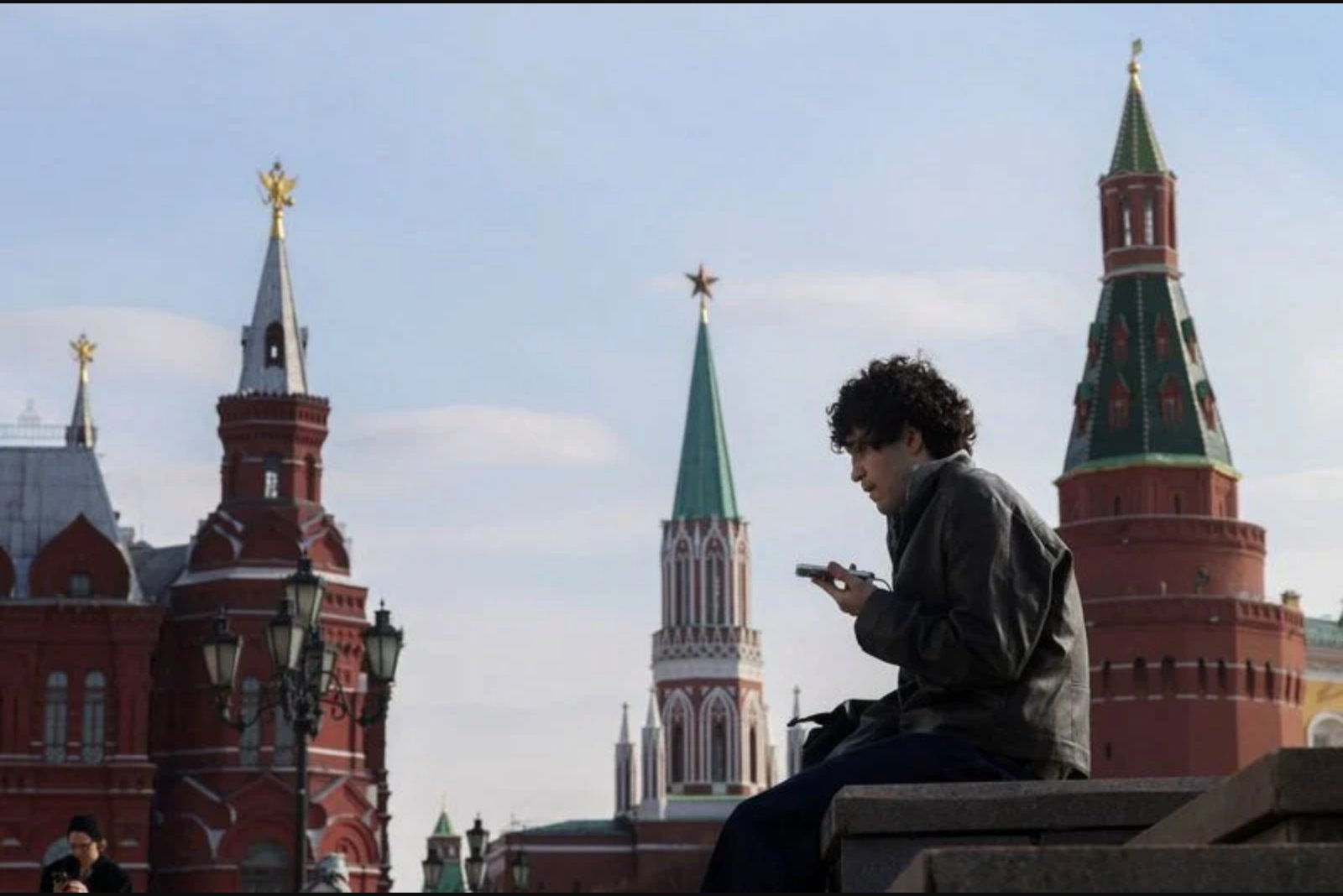
In cafes that advertise free Wi-Fi and attract clients for their coffee as much as their connectivity, some Russians now treat internet access like a sequence of chores that require switching tools and devices. A 41-year-old interior designer described logging in to a virtual private network to reach friends on WhatsApp, turning the VPN off to buy a train ticket on a Russian Railways site that blocks VPN users, and then checking a separate phone for messages on the state-controlled MAX app.
That juggling act has become common since state authorities expanded restrictions on foreign messaging services and began restricting access to websites and apps, according to interviews and published data. Users employ VPNs to mask their location, carry multiple phones to separate state-backed apps from private communications, and in some cases remove hardware such as microphones or cameras from devices running government-approved software.
Officials have positioned the policy as a drive toward "digital sovereignty," encouraging use of domestic alternatives to foreign platforms. But adoption of the state-backed alternatives is uneven and in some quarters viewed warily because critics and some Western technology companies have warned that the state-backed apps could be used for tracking, a claim denied by VK, the owner of the MAX application.
Wider impact on everyday services
The internet controls are more than an inconvenience for private chat. They have at times interfered with banking, transport and e-commerce functions, creating friction for consumers and businesses alike. Statements from Kremlin-friendly opposition parties, prominent bloggers and business leaders indicate the disruptions have been a source of irritation ahead of a September parliamentary election.
Security services have long targeted domestic critics, and since last year the FSB has ordered telecom companies to suspend mobile internet in some regions for days at a time, citing concerns that Ukrainian attack drones could use mobile signals for navigation. In addition, the state communications regulator Roskomnadzor has throttled or blocked access to a growing list of apps and websites on grounds that they host illegal or extremist content.
Where before the Ukraine conflict Russians generally had greater access to foreign apps and Western media content, the recent actions represent the largest tightening of internet oversight under President Vladimir Putin. The intensification of the measures peaked in March when Moscow experienced nearly three weeks of outages affecting messaging platforms, a disruption that reportedly upset senior bureaucrats who rely on those services to mobilize voters for the ruling United Russia party.
Users adapt with technical workarounds
Many have responded by downloading VPNs or setting up bespoke solutions. VPNs route a user's internet connection through private servers outside Russia, allowing access to services otherwise blocked domestically. Data cited by the Russian daily Kommersant, based on tracking by Digital Budget, shows there were 9.2 million downloads in March of the five most popular VPNs from the Google Play store, a 14-fold increase compared with the same month a year earlier. Advocacy groups say this level of uptake has not been seen before.
According to the Levada Center, a non-governmental pollster, the proportion of Russians who say they use a VPN has risen from 23% in 2022 to 36% this year. Younger, tech-savvy adults sometimes purchase VPN subscriptions for older relatives or configure custom VPNs, while others avoid the extra steps and stick to apps and sites that work without such tools.
Some users, including officials and business figures, have carried multiple phones to keep state-backed services isolated from their private digital lives. One source told journalists that some people remove microphones and cameras from devices with MAX installed, out of concern that the FSB could access those peripherals. The dynamic has been described by an internet freedom activist as a "game of cat and mouse" between users seeking to restore access and authorities restricting VPN services.
Business and market signals
Roskomnadzor's steps to block VPNs have prompted institutions such as government offices, banks and large online retailers to prevent users who have a VPN enabled from accessing their sites. One effect observed by Digital Budget was a roughly 10% reduction in internet traffic for Wildberries, Russia's largest online retailer, after such measures were implemented. Analysts and market participants have noted that many users do not disable VPNs to reach these websites and instead abandon purchases when product pages fail to load.
During March's navigation outages in Moscow, delivery drivers for Flowwow, a marketplace for flowers and gifts, resorted to downloading directions via vendors' Wi-Fi to complete deliveries. Wildberries reported more than a doubling in sales of paper maps during the period, highlighting how digital interruptions spilled over into physical logistics and consumer behavior.
Political and public reaction
The restrictions have provoked irritation across a broad political spectrum, including some social media influencers who typically avoid political commentary. Public frustration with internet controls, combined with rising prices, tax increases and war fatigue, is widely viewed as a factor in a decline in presidential approval ratings. State pollster VTsIOM recorded a drop in approval from 75.1% in February to 65.6% in April, a decline the agency described as the lowest since the full-scale conflict began in 2022. Subsequent reporting put approval at nearly 67%.
Analysts have observed that while the regime is likely capable of securing electoral outcomes, the disruptions raise questions about whether the voting process will proceed smoothly. One analyst noted that the issue is not whether authorities can secure desired results, but whether the electoral process will be untroubled by operational difficulties.
Government response and adjustments
Public officials have defended tighter internet controls as necessary in what they frame as an existential struggle with the West over the conflict in Ukraine. Kremlin spokesman Dmitry Peskov has reiterated this position, saying controls are needed under current circumstances. At the same time, President Putin instructed the government in April to moderate the approach, saying it was counterproductive to focus exclusively on bans and restrictions.
Recent weeks have seen softer rhetoric from the Kremlin on the matter. Moscow has assured citizens that mobile internet shutdowns are temporary. A reported plan to have mobile operators charge consumers extra for using more than 15 gigabytes of foreign data per month - a measure aimed at discouraging VPN usage - was postponed in May, with reports indicating it may be revisited after the parliamentary vote in September. Putin has also asked government bodies and the FSB to coordinate to ensure critical online services such as healthcare portals and payment systems remain functional.
Public attitudes and usage patterns
Public opinion is mixed. When contacted near Moscow's Bolshoi Theatre, a sample of office workers and passers-by provided a snapshot that ranged from frustration to resignation. Some said they had adapted to the restrictions and did not use VPNs, while others expressed annoyance at the increased complexity of digital life.
"Most Russians simply do not see the need to go to any extra trouble - what is readily available is quite sufficient for them," the director of Levada wrote in April, reflecting a segment of the population that uses only domestic or accessible services. Others, like the interior designer who uses multiple devices, say the new routine is manageable if inconvenient. "Of course this is all a huge pain in the backside, but what else can we do?" she said, asking to be identified by one name because of the sensitivity of the subject. She added a remark attributed to a common Russian aphorism: "Nothing is more permanent than the temporary," expressing skepticism that the situation will improve soon.
Notable behaviors among elites and officials
Even some high-profile government figures do not hide their VPN usage. Russia's special envoy Kirill Dmitriev posts regularly on X, a platform inaccessible without a VPN from inside Russia. Sources indicate that loyal government officials as well as bureaucrats have adopted the multiple-phone routine and other precautions to keep state-backed applications and private communications separated.
Since Roskomnadzor has restricted access to hundreds of VPN services, users have had to continually find new tools to regain access, fueling a persistent back-and-forth between regulators and the public. For many, the trade-off is a daily practice of switching VPNs on and off, toggling between different messaging apps and sometimes changing virtual locations to use the apps and websites they need.
Outlook
For now, the mix of technical workarounds and official insistence on state-controlled digital alternatives looks likely to endure. The measures have already produced measurable effects on e-commerce traffic and created logistical consequences in sectors that rely heavily on stable digital infrastructure.
Citizens interviewed for this article demonstrated a range of coping strategies that reflect differing levels of technical skill and tolerance for friction. Some adopt domestic services for convenience, others invest in VPNs and additional hardware, and a portion of the population remains indifferent to the shifts. With parliamentary elections approaching, the balance between state control, public convenience and business continuity will remain a focal point for Russia's political and economic stakeholders.