
Economy July 28, 2026 06:19 AM

Italy to seek €14.9 billion from EU defense borrowing vehicle

Rome will tap the SAFE joint-borrowing instrument to finance planned military projects while using an EU budget escape clause to cover energy costs

By Hana Yamamoto
Share
Twitter Reddit Facebook LinkedIn

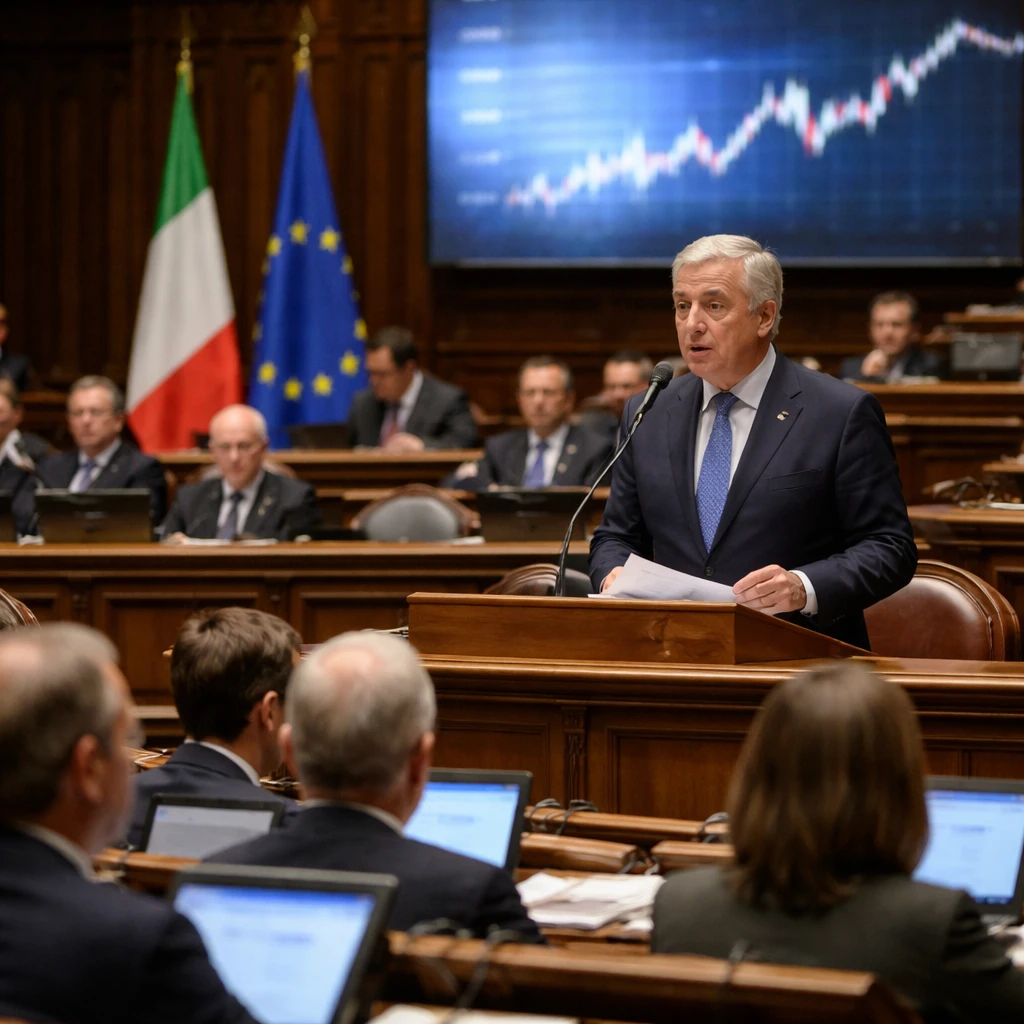
Italy will apply to draw €14.9 billion ($16.94 billion) from the European Union's Security Action for Europe (SAFE) instrument by year-end to finance defence spending, Foreign Minister Antonio Tajani told parliament. The move follows a period of fiscal strain tied to rising energy prices and comes after Rome obtained partial use of the EU's national escape clause to help cover those costs. Economy Minister Giancarlo Giorgetti said the government will ask parliament next week to approve tapping the escape clause, which would permit higher deficits through 2028. The government has said SAFE funds will support defence projects already in its budget rather than increase overall military outlays.

Italy to seek €14.9 billion from EU defense borrowing vehicle
Summarize with
ChatGPT Perplexity Claude Grok Gemini

Key Points

  • Italy will request €14.9 billion ($16.94 billion) from the EU's SAFE defence borrowing scheme by year-end to fund military spending.
  • Rome has secured permission to use part of the EU's national escape clause to help cover rising energy costs; the government will seek parliamentary approval next week to tap the clause, allowing higher deficits through 2028.
  • Officials say the SAFE funds will be used for defence projects already included in Italy's budget rather than to increase overall military spending.

Italy plans to request €14.9 billion ($16.94 billion) from the European Union's joint-borrowing defence instrument, the Security Action for Europe (SAFE), before the end of the year, Foreign Minister Antonio Tajani told parliament on Tuesday.

The SAFE instrument is a borrowing mechanism underpinned by the EU budget that aims to strengthen the bloc's defence capabilities and assist member states in meeting new NATO spending targets.

Tajani's announcement marks a reversal from Italy's stance in May, when the government indicated it might be unable to meet its commitments to increase defence spending and to make use of the SAFE scheme because of competing needs created by rising energy prices.

Since May, Italy has obtained the right from the EU to deploy part of the bloc's national escape clause within budget rules to help offset energy-related expenditures. Economy Minister Giancarlo Giorgetti said on Monday the government will seek parliament's approval next week to activate that clause - a step that would permit Italy to record higher deficits through 2028.

Italian officials have clarified that the SAFE funds are intended to finance defence programmes already incorporated in the government's budget rather than to expand military spending beyond those plans.


Context and implications

The decision to move ahead with a €14.9 billion request to the SAFE facility aligns Rome's financing plan for defence with a mechanism designed to pool borrowing across the EU. At the same time, Italy is balancing defence commitments against significant energy cost pressures by using the EU escape clause to create fiscal space through 2028.

Parliamentary approval will be required to tap the escape clause, and government statements to date indicate the SAFE request is targeted at projects already budgeted rather than representing a net rise in military expenditure.


Methodology note

The details in this report are drawn from statements attributed to Italian government ministers in parliament and to public remarks by the Economy Minister concerning forthcoming legislative steps.

Risks

  • Rising energy prices previously constrained Italy's ability to commit to increased defence spending, indicating ongoing fiscal competition between energy-related expenditures and defence funding - this affects public finance and energy sectors.
  • Parliamentary approval is required to activate the EU escape clause; without that consent the planned deficit leeway through 2028 would not be secured, creating uncertainty for fiscal planning in government and bond markets.
  • Using SAFE to fund only budgeted defence projects means the move may not translate into additional procurement or capacity expansion, limiting immediate impact on the defence industry and related suppliers.

More from Economy

US Online Sportsbooks Pour More Than $72 Million into Midterm Campaigns as Prediction Markets Rise Jul 28, 2026 Investors Keep Bets Small Ahead of Fed Meeting as Inflation Uncertainty Persists Jul 28, 2026 Fed Faces High Hurdle for Near-Term Rate Increase Despite Market Odds Jul 28, 2026 QatarEnergy Extends LNG Force Majeure, Edison Replaces Dozens of Cargoes Jul 28, 2026 Bundesbank: German GDP Likely Posted Modest Gain in Q2 Despite War-Related Headwinds Jul 28, 2026