
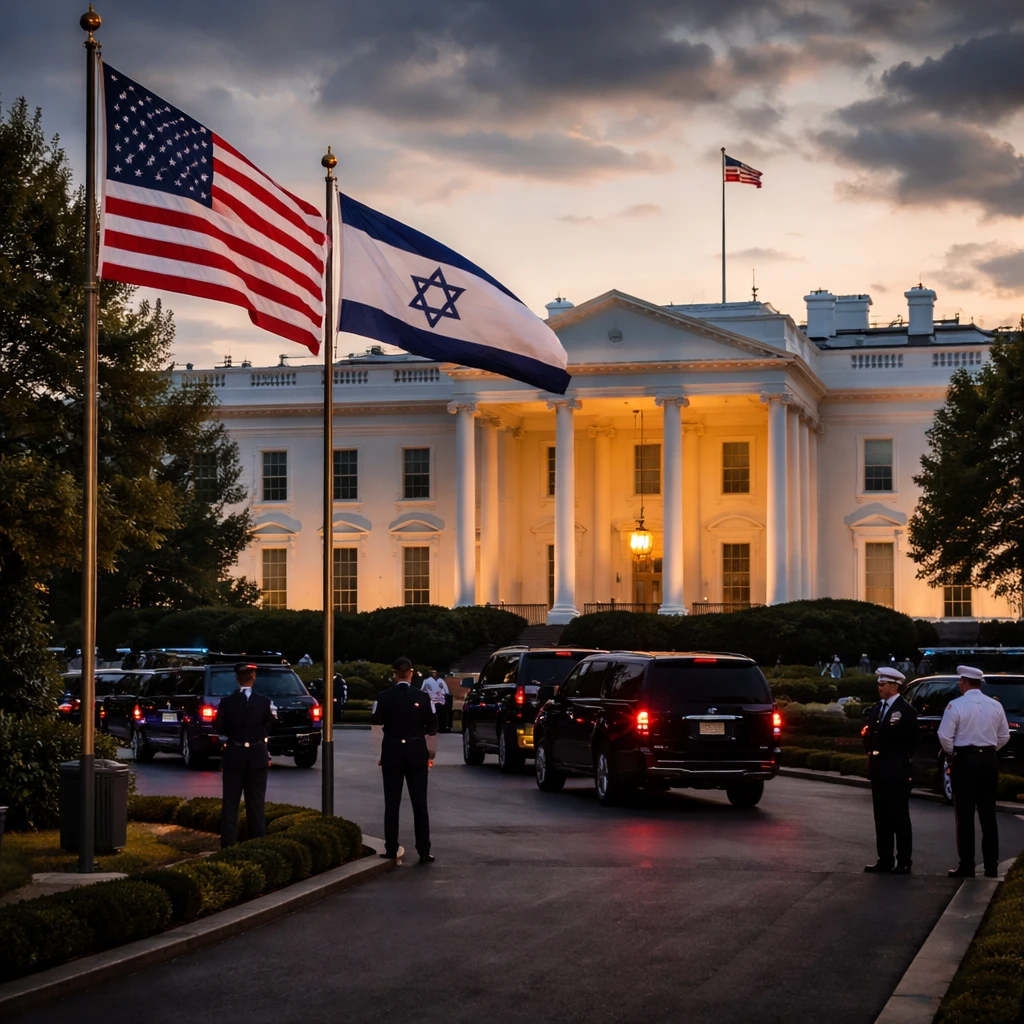
President Donald Trump will host Israeli Prime Minister Benjamin Netanyahu at the White House on Wednesday, a meeting that comes as both capitals face a critical juncture in the ongoing confrontation with Iran.
The U.S. and Israel launched combined operations against Iran in late February. That campaign, now entering its sixth month, has unsettled global financial markets and raised fears it could widen into a broader regional war.
Tensions between the two leaders have surfaced in recent months. A contentious phone call in June highlighted strains tied to Israel's strikes on targets linked to Iran-backed Hezbollah militants in Lebanon, increasing friction in a relationship that has been vital during the conflict. The White House has grown frustrated over the absence of clear progress toward ending the fighting and is facing criticism from some supporters who oppose the United States becoming enmeshed in a protracted regional war.
Netanyahu appears to be seeking to repair relations with the U.S. president as he looks for support ahead of an important re-election contest in October. In a statement issued before boarding for Washington, Netanyahu said the two leaders will "discuss all the issues on the agenda, primarily Iran." He added, "In these complex times, you need to act with both great determination and great wisdom."
Trump is also scheduled to meet with Ukrainian President Volodymyr Zelenskiy during the same period. Zelenskiy, who is leading Ukraine in a protracted war with Russia, has also clashed with Iran after Ukraine fired on at least one Iranian vessel in the Caspian Sea last weekend. Iran is a close ally of Russia.
Although bombardments by both Washington and Tehran have paused in recent days, providing some hope for de-escalation, there is no clear end in sight for the Iran conflict. Trump said on Monday the U.S. was engaged in "good talks" with Iran and signaled the possibility of a new ceasefire agreement, while also warning that strikes could resume should negotiations fail.
The president said he stopped strikes in part to support diplomatic efforts. Other reporting has also indicated that the White House has grown increasingly concerned about the depletion of certain U.S. armament stockpiles. Against that backdrop, Brent crude - the global oil benchmark - fell on Tuesday, extending a sharp decline that began earlier in the week.
Diplomatic channels beyond Washington are active as well. Negotiators from Iran and Oman have been trying to negotiate a plan to resume shipping through the Strait of Hormuz, a vital maritime corridor that Iran has effectively kept closed for months, disrupting global trade flows.
At the same time, attacks by Iran-backed Houthi forces in Yemen on Saudi petroleum facilities have underscored persistent instability in the Gulf. Observers are worried the Houthis could attempt to shut the Bab el-Mandeb Strait - the choke point linking the Red Sea to the Gulf of Aden - which would further impede crucial global oil shipments and exacerbate market volatility.
Clear summary
The White House meeting between Trump and Netanyahu is set against a six-month-old campaign against Iran that has unsettled markets, strained U.S.-Israel relations and produced parallel diplomatic efforts to reopen critical shipping routes and pursue a ceasefire.
Key points
- The U.S. and Israel have conducted joint operations against Iran since late February, a campaign now six months long that has affected global markets and raised regional escalation risks - sectors impacted include energy, shipping, and defense.
- Relations between Trump and Netanyahu have been tense, but Netanyahu seeks U.S. backing ahead of an October vote; Iran is expected to be the central topic of discussion.
- Diplomatic activity continues: U.S. officials report "good talks" with Iran and negotiators are attempting to restore passage through the Strait of Hormuz, while attacks in the Gulf region threaten shipping lanes and oil flows.
Risks and uncertainties
- Potential widening of the conflict into a broader regional war remains a risk, with implications for market volatility and the defense sector.
- Disruptions to maritime chokepoints - notably the Strait of Hormuz and the Bab el-Mandeb Strait - could further unsettle global oil supplies and shipping, hitting energy and trade sectors.
- Concerns about depletion of U.S. armament stockpiles create uncertainty for military planning and could influence procurement and defense spending decisions.
As leaders gather in Washington, markets and policymakers will be watching closely for signs that diplomacy can stabilize the situation, even as military and logistical challenges persist across the region.