
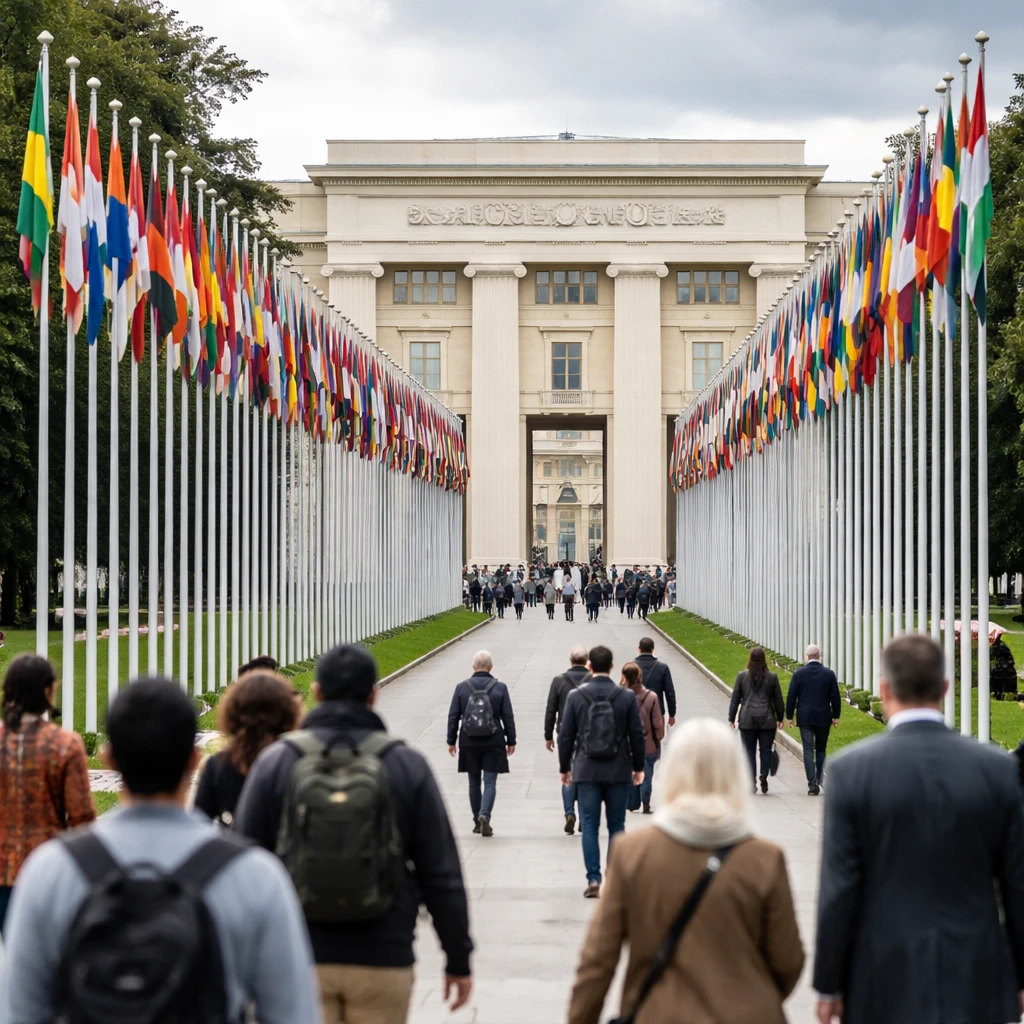
GENEVA, July 28 - Prominent cultural and faith leaders joined calls on Tuesday for nations to maintain the legal protections afforded by the 1951 Refugee Convention as the U.N. flagged mounting strains on asylum systems worldwide.
Actors Angelina Jolie and Cate Blanchett and the Archbishop of Canterbury, Sarah Mullally, were among the public figures who backed an appeal to preserve the convention's guarantees. The U.N. refugee agency released a statement of support titled "The Promise," which was endorsed by dozens of celebrities, athletes, business leaders and faith leaders.
Barham Salih, the U.N. High Commissioner for Refugees and a former Iraqi president who experienced displacement himself, said the convention had saved millions of lives. "Seventy-five years ago, the world made a promise to protect people forced to flee. Our responsibility now is to keep that promise alive, for all generations to come," he said ahead of a U.N. meeting in Geneva on refugee protections.
The public endorsement list included actors Ben Stiller, Michelle Yeoh, Cynthia Erivo and Riz Ahmed, along with Nobel Peace Prize laureate and Africa's first female president Ellen Johnson Sirleaf, and basketball player Wenyen Gabriel.
The convention, together with its 1967 protocol, has been adopted by 149 states, making it one of the most widely ratified international legal instruments. It was developed in the aftermath of World War Two, a period that saw tens of millions displaced, and sets out legal safeguards for people fleeing persecution.
Yet while broad public support for the principle of safe refuge persists, governments in many regions have tightened border controls amid near-record levels of displacement and a proliferation of conflicts, the U.N. agency said. Rights groups have pointed to measures such as planned detention centres abroad in the European Union and restrictions on refugee admissions in the United States as examples of growing asylum curbs.
Michael Bochenek, Senior Counsel at Human Rights Watch, described what he called a concerted effort by some governments to adopt tactics aimed at avoiding obligations under the convention. "We’re seeing a real series of efforts on the part of governments to employ tactics with the thought of getting out of the obligations under the convention," he said.
Compounding those policy challenges, the U.N. refugee agency is facing substantial financial pressure. Available funding for the agency fell roughly 30% in 2025 amid cuts by donors. The agency has responded by laying off thousands of staff and has announced plans for further cuts this year.
The United States, which had been the agency's top donor, has recently considered severing ties with the organisation, adding another dimension of uncertainty to the body that oversees implementation of the convention.
Context and outlook
The convergence of increased displacement, policy shifts by states and sharp declines in funding has placed the refugee protection framework under stress at a time when the convention’s legal protections are widely ratified but arguably under practical pressure in implementation.