
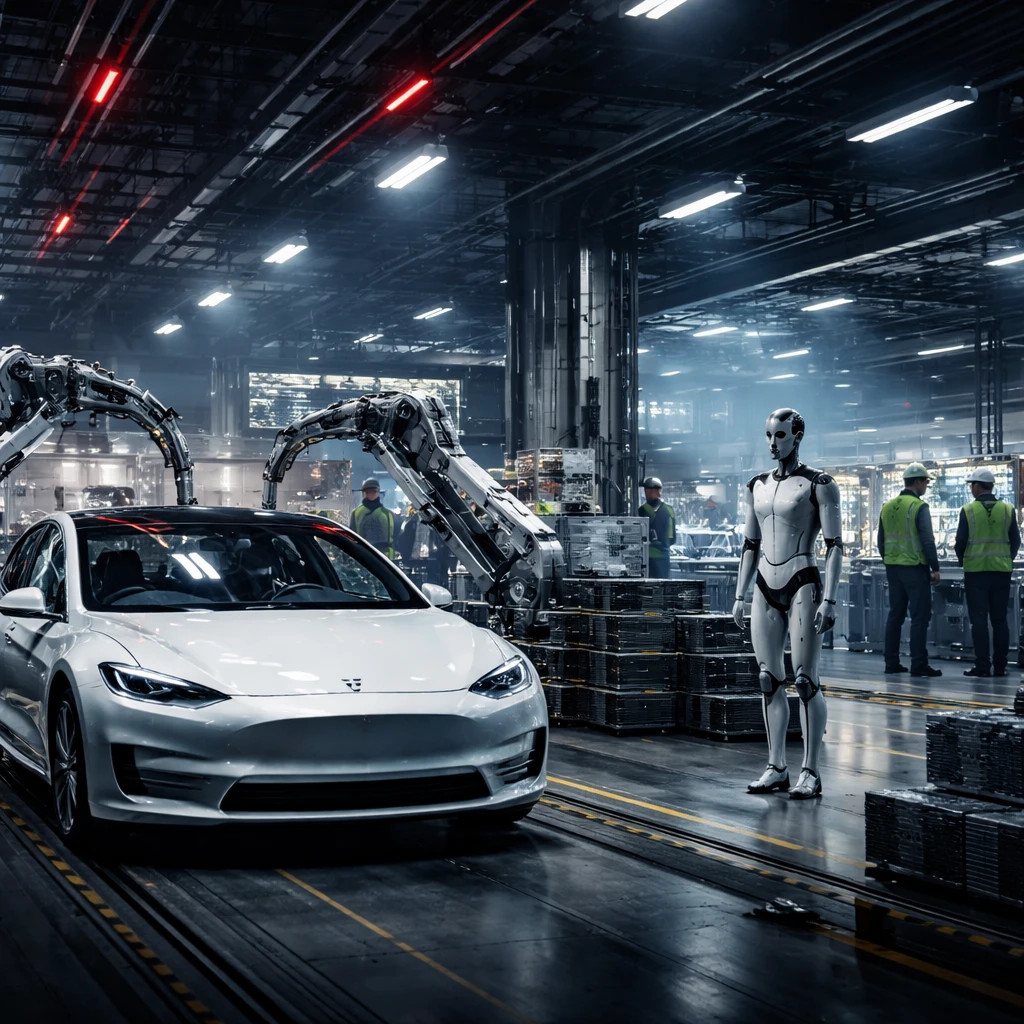
Tesla delivered a split earnings result for the quarter: top-line performance outpaced expectations while profitability disappointed. Revenue came in at $28.24 billion, a 10.5% beat versus the $25.55 billion the market had forecast. Conversely, earnings per share landed at $0.33, a 32.7% miss against the $0.49 estimate. The market reaction was swift and negative - the stock traded down about 7.3% in pre-market activity to $346.68.
Key market metrics at the time of the move show Tesla closing the prior session at $374.01, with the pre-market quote near $346.68 representing a -7.31% change. The company remains in a 52-week trading range between $297.82 and $498.83, with a market capitalization near $1.40 trillion and year-to-date performance around -18.30%. The share price sits roughly 16% above the $297 52-week low, and an after-hours print of $356.90 offered only limited relief compared with the deeper pre-market decline.
Margins: the central issue
The EPS shortfall was not a one-off accounting quirk but reflected structural pressure on margins. Automotive gross margin excluding regulatory credits fell to 16.3% from 19.2% in the prior quarter. The energy business also saw a marked decline, with energy gross margin slipping to 20.4% from 39.5% in Q1. Management cited a $240 million warranty true-up this quarter and noted that more than $200 million in tariff-related benefits that supported Q1 results did not recur in Q2.
Alongside margin erosion, the company laid out a substantial capital spending program. Tesla guided to full-year capital expenditures in excess of $25 billion and disclosed work to secure up to $30 billion in new debt facilities. Management framed these outlays as investments in future platforms - from Robotaxi to humanoid robots named Optimus, as well as AI infrastructure and in-house semiconductor fabrication under the Terafab initiative. Those initiatives reflect a strategic choice to prioritize long-term capability building over near-term profitability.
Product and platform ambitions
The bullish case for Tesla rests heavily on future platforms and scaled new revenue streams. Tesla reported that its Robotaxi program has accumulated more than 380,000 unsupervised miles across six cities, with miles driven increasing at greater than 10% week-over-week. On the robotics front, Optimus targets were laid out with Gen 3 aiming for about 1 million units per year and Gen 4 carrying an aspirational target of roughly 10 million units per year.
During the company’s post-quarter commentary, a question about corporate combinations surfaced. The CEO declined to rule out a potential merger with SpaceX, and a noted commentator, Gene Munster of Deepwater, assigned roughly a 90% probability to such an eventuality.
Where analysts stand
Analyst responses were mixed. Cantor Fitzgerald kept an Overweight rating but trimmed its price target to $485 from $510. A separate initiation by Citizens placed the stock at Market Perform, describing the Optimus timeline as "too optimistic" to support current valuations given the production complexity ahead. An institutional valuation model cited in the report places a fair value at $267.63, implying roughly 28% downside from levels near $374 (and similar downside from the pre-market level around $347). That gap emphasizes the market’s expectation that Tesla must execute across multiple long-term projects to justify elevated multiples.
Balancing the bull and bear arguments
- Bull case: revenue beat indicates resilient demand; Robotaxi mileage is growing more than 10% week-over-week; ambitious Optimus targets could be transformative if achieved.
- Bear case: a 33% EPS miss underscores margin vulnerability; the $25B-plus CapEx program may take years to generate returns; Optimus and Robotaxi face production complexity and timeline risk; governance and regulatory concerns in key markets were also noted as potential headwinds.
Takeaway
Market pricing now increasingly treats the company as a physical AI platform rather than solely an automaker - a valuation stance that requires eventual margin expansion tied to successful commercialization of Robotaxi, Optimus, or other infrastructure investments. Until those initiatives contribute meaningfully to revenue and profits, quarters of margin compression are likely to drive continued volatility in reported earnings and share price movements.