
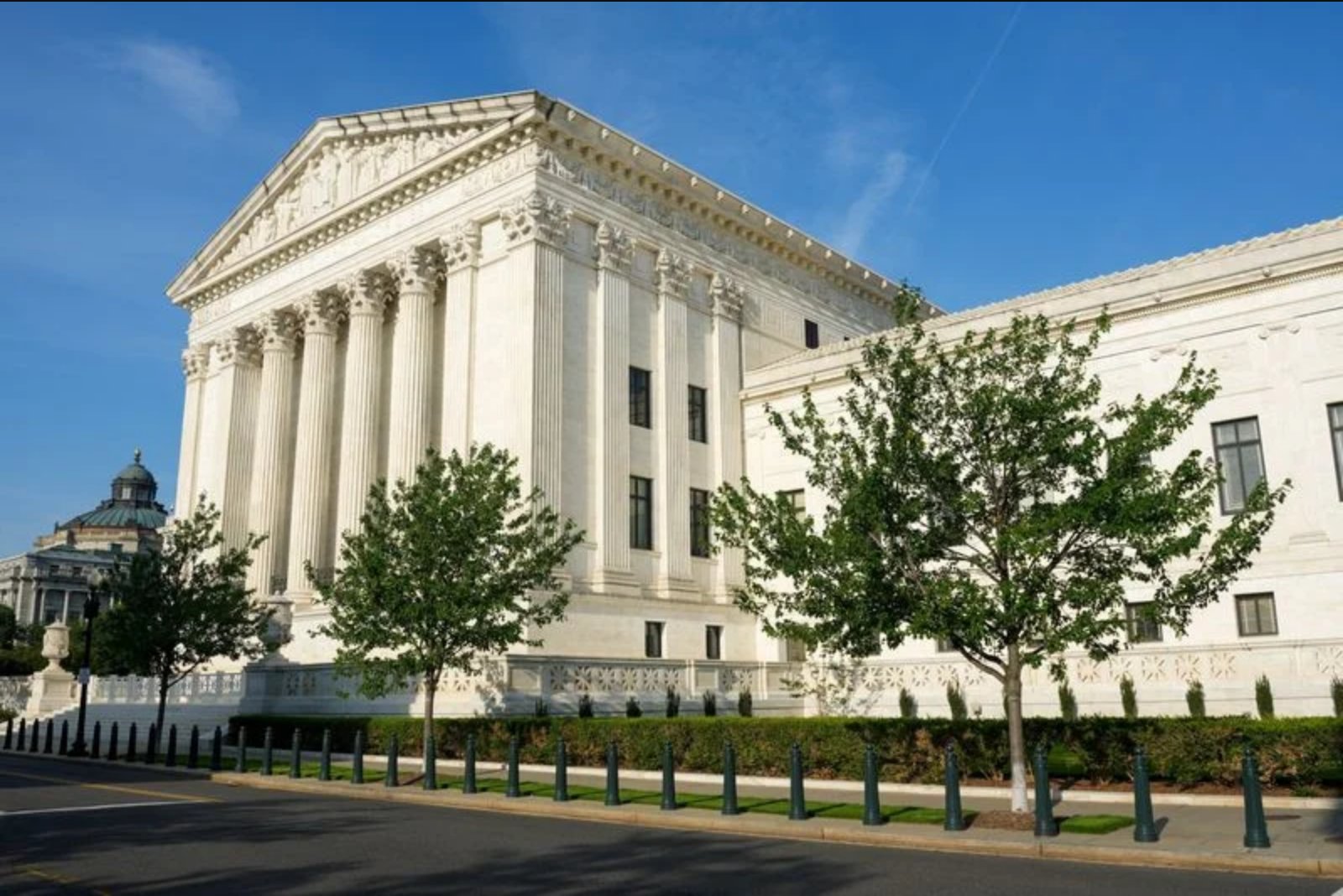
The U.S. Supreme Court’s term that began last October and runs roughly through the end of June brought a concentration of high-profile constitutional and statutory questions into the nation’s highest court. The docket included disputes that touch on voting procedures, presidential authority, trade policy, immigration protections, gun rights, civil rights claims and the regulatory reach of federal agencies. Some matters already produced definitive rulings; others were argued with decisions expected by the end of the term.
Overview
Across multiple hearings and decisions, the court addressed whether long-standing legal protections and administrative practices should be sustained, narrowed or overturned. The matters ranged from foundational civil rights protections under the Voting Rights Act and the 14th Amendment to questions about executive removal powers and whether particular federal statutes authorize presidents or agencies to act as they have in recent years. The justices also confronted cases with specialized commercial and criminal law issues, including copyright and securities litigation, as well as disputes that implicate public policy debates about transgender participation in sports, freedom of speech, and the relationship between law enforcement techniques and constitutional safeguards.
Voting Rights Act
On April 29, the court significantly narrowed a key provision of the Voting Rights Act, a development that reduces the legal tools available to minority voters who seek to challenge electoral maps they view as dilutive. The ruling blocked an electoral map that would have created a second Black-majority U.S. congressional district in Louisiana, and in doing so eroded the effectiveness of Section 2 of the Voting Rights Act. Congress enacted Section 2 to prohibit electoral plans that would dilute minority voting strength. The court’s decision makes it more difficult for Black and Latino voters to secure map changes on racial discrimination grounds, removing a potent legal remedy that had gained importance especially after an earlier decision in 2013 curtailed another portion of the law.
The effects of the April ruling are immediate and practical: it allows certain state-level map changes that critics say will enable Republican-led Southern states to dismantle Democratic-held, majority-Black and majority-Latino districts ahead of congressional elections in November. Because Black and Latino voters tend to favor Democratic candidates, the decision has clear implications for electoral competition in affected jurisdictions.
Birthright Citizenship
The court signaled strong skepticism on April 1 about a presidential directive seeking to limit the constitutional guarantee of birthright citizenship. The Trump administration advanced an executive order instructing federal agencies not to recognize citizenship for children born in the United States if neither parent is a citizen or lawful permanent resident. A lower court blocked that order, finding it inconsistent with the 14th Amendment and with federal law codifying birthright citizenship. During argument, justices pressed the administration’s lawyer on both the legal authority for the directive and the practical consequences of implementing it. Observers noted that the Supreme Court was expected to issue its decision by the end of June.
Tariffs Under Emergency Powers
In a February 20 decision, the court overturned sweeping tariffs that had been imposed under a statute the administration used for national emergencies. In a 6-3 ruling, the justices concluded the president exceeded his authority under the International Emergency Economic Powers Act, or IEEPA, when he used it to impose tariffs. The ruling upheld a lower court decision and affirmed that the U.S. Constitution assigns the power to levy taxes and tariffs to Congress rather than the president. The case related to broad tariffs that had been a central part of a trade policy the president pursued during his second term in office and that contributed to trade tensions, market disruptions and uncertainty in the global economy.
Attempted Firing of a Federal Reserve Governor
The justices expressed doubt in late January about the legal basis for the president’s attempt to dismiss a sitting Federal Reserve governor. During the January 21 arguments, they appeared unlikely to permit the president to override a judicial order that barred immediate removal of the governor until the governor’s legal challenge ran its course. Congress created the Federal Reserve and included statutory protections intended to insulate the central bank from immediate political interference. Those protections provide that governors may be removed by the president only "for cause," although the statute does not define that term or prescribe a removal process.
The president justified the attempted removal by citing mortgage fraud allegations that the governor denies. The governor maintains that the allegations are a pretext connected to disagreements over monetary policy. As of the arguments, the governor remained in office pending the outcome of the legal dispute, and the court was expected to issue a ruling by the end of June.
Temporary Protected Status (TPS) for Immigrants
On April 29, the court heard arguments concerning the administration’s efforts to terminate humanitarian protections for hundreds of thousands of immigrants who had been granted Temporary Protected Status. The administration appealed rulings by two federal judges that had enjoined its termination decisions affecting roughly 350,000 Haitian beneficiaries and about 6,100 Syrian beneficiaries.
Several conservative justices expressed sympathy for the administration’s position that courts should not substitute their judgment for the executive branch when agencies make TPS decisions. Other justices probed whether the administration had followed the statutory procedures required when altering TPS designations. The case posed a significant question about how much judicial oversight courts may exercise over executive decisions that affect extensive populations of protected immigrants. A decision was expected by the end of June.
Federal Trade Commission Firing
The court’s conservative justices gave signals that they would likely validate the president’s action in removing a member of the Federal Trade Commission, raising questions about the structure of independent agency protections and potentially overturning long-standing precedent. The December 8 arguments focused on whether the president exceeded his authority in dismissing an FTC member before the member’s term had expired. The administration argued that statutory tenure protections for heads of independent agencies unconstitutionally limit presidential power under the Constitution.
The court permitted the removal to take effect while the legal dispute proceeded. The case has potential repercussions for the independence of agencies that Congress had insulated from immediate political control through statutory protections.
Transgender Athletes in School Sports
In cases brought by two states challenging lower court decisions that struck down laws banning transgender athletes from participating on female sports teams, the conservative justices indicated a readiness to uphold the state restrictions. Arguments on January 13 presented appeals by Idaho and West Virginia, contesting rulings that had favored transgender students who brought constitutional and statutory anti-discrimination claims.
At least 25 other states have enacted comparable laws. The justices questioned the prospect of imposing a uniform national rule when state-level approaches vary and when the scientific and medical evidence about whether treatments such as puberty blockers or gender-affirming hormones erase physiological differences that could give male athletes advantages is contested. The court’s decision on these and related questions was expected by the end of June.
LGBT Conversion Therapy and Free Speech
On March 31, the court struck down a Colorado statute that barred psychotherapists from using so-called conversion therapy on minors intended to change sexual orientation or gender identity. The 8-1 ruling favored a licensed counselor who challenged the law on free speech grounds, concluding the law regulated speech rather than professional conduct in a manner inconsistent with the U.S. Constitution’s First Amendment protections.
The court reversed a lower court ruling that had upheld the state law in a case brought by a counselor who said the ban unconstitutionally restricted the expression of therapeutic viewpoints.
Hawaii Gun Law
During January 20 arguments, conservative justices expressed skepticism toward a Hawaii law that prohibits carrying handguns on private property open to the public unless the property owner has given express authorization. The challengers argued that the law is inconsistent with the Second Amendment, and the justices’ questioning suggested they may expand gun rights in the decision. Four other states have similar measures. A ruling was expected by the end of June.
Drug Use and Firearm Possession
On June 18 the court limited the reach of a federal statute that bars firearm possession by certain drug users, rejecting the administration’s position that had put millions of gun owners who use marijuana at risk of prosecution. The justices upheld a lower court’s dismissal of a charge against a Texas resident and dual national who told authorities he regularly used marijuana. The Supreme Court found the government had not demonstrated that its prosecution complied with the Second Amendment’s protections.
Campaign Finance Limits
On December 9 the court considered a Republican challenge to federal limits on coordinated spending by political parties working with candidates, a dispute involving Vice President JD Vance. Some conservative justices appeared sympathetic to the challenge, while the three liberal justices seemed more inclined to preserve the statutory limits. The case focused on whether restrictions on coordinated party expenditures violate the First Amendment’s protection of political speech. The lower court had upheld the caps and that ruling was the target of the appeal. The court’s decision was expected by the end of June.
Mail-In Ballot Deadlines
On March 23, conservative justices questioned a Mississippi statute that allows certain mail-in ballots to be counted if they were postmarked on or before Election Day and received up to five business days after the election. The law applies to limited categories of absentee voters, including the elderly, disabled and those living away from home. The Trump administration supported the challenge. The lower court ruled against the law and the Supreme Court’s decision was expected by the end of June. The case raised broader questions about whether courts should permit or restrict postmarked-ballot counting rules that some argue affect the integrity and uniformity of election administration.
U.S. Asylum Processing and Metering
On March 24 the court heard arguments in a dispute over the government’s authority to refuse to process asylum claims when border crossings are deemed too congested to accept additional claims. The issue centers on a policy known as metering, which allowed immigration officials to turn away asylum seekers at the U.S.-Mexico border and decline to process their claims. The Trump administration has argued the policy was a lawful exercise of executive authority. The Biden administration had discontinued metering in 2021. The court’s judgment on the legal scope of the practice was expected by the end of June.
Weedkiller Litigation Against Bayer
The court appeared divided when it considered Bayer AG’s challenge seeking to block thousands of state-court suits claiming the herbicide Roundup causes cancer. Bayer appealed a Missouri jury award of approximately $1.25 million to a plaintiff who said long-term exposure to glyphosate, Roundup’s active ingredient, caused non-Hodgkin lymphoma. The lower court had rejected Bayer’s argument that federal pesticide law preempts such state-law claims. The Supreme Court’s ruling was awaited by the end of June.
Human Rights Claims Against Cisco
The court heard argument on April 28 in a long-running Alien Tort Statute case brought by members of the Falun Gong movement alleging Cisco Systems assisted Chinese authorities in surveilling and persecuting adherents. Cisco sought further limits on the scope of the Alien Tort Statute, which permits non-U.S. citizens to bring certain international-law claims in American courts. The lower court had allowed the case to proceed and the court’s decision was expected by the end of June.
SEC Disgorgement Authority
On June 4 the court rejected a challenge to the Securities and Exchange Commission’s authority to require wrongdoers to return ill-gotten gains through a remedy known as disgorgement. The justices upheld a lower court’s endorsement of broad use of disgorgement, including a court-ordered repayment of more than $3 million and interest in a financial fraud case. The Trump administration had defended the SEC’s position in the dispute.
FCC Forfeiture Orders Against Wireless Carriers
Also on June 4, the court upheld the Federal Communications Commission’s framework for imposing fines on wireless carriers, ruling against challenges from two major providers. The carriers argued that the agency’s in-house proceedings deprived them of a constitutional right to a jury trial; the court sided with the FCC and the Trump administration’s defense of the agency’s forfeiture procedures.
Geofence Warrants and Location Data
On April 27 the court examined whether law enforcement’s use of so-called geofence warrants to identify potential suspects by searching third-party location data violates the Fourth Amendment’s protection against unreasonable searches. The warrants compel companies to search customer location records for devices that were near a crime scene during a relevant timeframe. The case arose from a prosecution in which the defendant conditionally pleaded guilty to a credit union robbery while reserving the right to challenge evidence obtained through the geofence search. A decision was expected by the end of June.
Crisis Pregnancy Centers and State Investigation
On April 29 the court revived a federal lawsuit brought by a Christian anti-abortion organization challenging a state attorney general’s 2023 subpoena that sought donor and physician information. The lawsuit was filed by an organization that operates crisis pregnancy centers and seeks to dissuade women from obtaining abortions. The high court reinstated the federal challenge after a lower court had dismissed it.
Rastafarian Inmate Religious Rights
Arguments heard on November 10 centered on whether a Rastafarian prisoner in Louisiana could sue individual prison officials for monetary damages after guards cut his hair in violation of his religious practice. The court appeared inclined to restrict the availability of such suits under the statute that protects incarcerated individuals from religious discrimination, and a ruling was expected by the end of June.
Death-Penalty Decision for a 1997 Conviction
On May 21 the justices preserved a judicial finding that an Alabama inmate is intellectually disabled and therefore ineligible for the death penalty. The court dismissed an appeal by state officials of the method used to determine intellectual disability, a method that weighed multiple IQ scores along with expert testimony. The decision drew from an earlier precedent that bars execution of intellectually disabled individuals as cruel and unusual punishment under the Eighth Amendment.
Jury Selection and Racial Discrimination
On May 28 the court sided with a Black death row inmate in Mississippi who challenged prosecutors for dismissing Black prospective jurors during jury selection. The justices found that state courts had not properly assessed the defendant’s claim that jurors were excluded based on race in violation of a longstanding precedent that prohibits excluding jurors on racial grounds. The ruling favored the inmate and required closer judicial scrutiny of such claims.
Sentence Reductions and Retroactivity
Also on May 28 the court ruled that judges cannot order early release for prisoners on the basis that they would have received shorter sentences under the First Step Act, a 2018 criminal justice reform law enacted after the prisoners had been sentenced. The decision affirmed lower-court rulings denying compassionate release requests from two Pennsylvania men convicted of armed robbery.
Securities Litigation Involving Asset Managers
On June 11 the court sided with a group of funds associated with major asset managers in a dispute that limited certain private plaintiffs’ avenues for suits under a key federal statute governing securities. The court reversed a lower-court judgment that had allowed a hedge fund to sue under the Investment Company Act of 1940 to challenge fund bylaws that restricted activist shareholders’ voting power. The parties at issue included funds affiliated with BlackRock and other investment managers, and the Trump administration had supported the funds in the appeal.
Cox Communications Copyright Liability
On March 25 the Supreme Court unanimously held that an internet service provider could not be held liable for its subscribers’ alleged piracy of recorded music in a case brought by major record labels. The 9-0 ruling overturned a prior decision that had ordered a retrial to determine damages for contributory copyright infringement. The outcome ended a billion-dollar-plus dispute in which a retrial could have exposed the ISP to a verdict as high as $1.5 billion, according to earlier district-court references.
Hikma and Skinny-Label Patent Claims
In a June 4 decision, the court held that a generic maker’s version of a branded cardiovascular medication did not infringe the brand-name company’s patents. The outcome may reduce the exposure of generic manufacturers to certain patent-infringement suits tied to so-called skinny labels, and it overturned a lower court ruling that had favored the branded company. Generic drugmakers had argued that an adverse ruling would have raised legal risk and discouraged production of lower-cost versions, potentially increasing drug prices.
Implications and Themes
Across its docket, the Supreme Court grappled with the balance of governmental powers, the contours of constitutional protections and the means by which private parties may seek remedies in U.S. courts. Several decisions and pending rulings have direct effects on electoral competition, executive reach, administrative independence and commercial liability. The court’s rulings are likely to reverberate across state election law, immigration policy, regulatory enforcement, corporate governance and litigation strategies for plaintiffs and defendants in high-stakes commercial disputes.
As the term closed, a number of cases remained awaiting formal opinions, and several matters the court decided will be the subject of immediate policy analysis and potential legislative response. Where the court found statutory or constitutional limits on executive or agency action, the effects may influence how future administrations structure policy and litigation strategies. Where the court affirmed agency authority, firms and market participants that interact with regulators will find their prospects shaped by sustained enforcement tools.
Note on coverage: This review summarizes matters the Supreme Court addressed during the current term through late June. Several rulings have already been issued, while other decisions were anticipated by the end of the term. The coverage reflects the issues and outcomes as they were argued and decided during the term.