
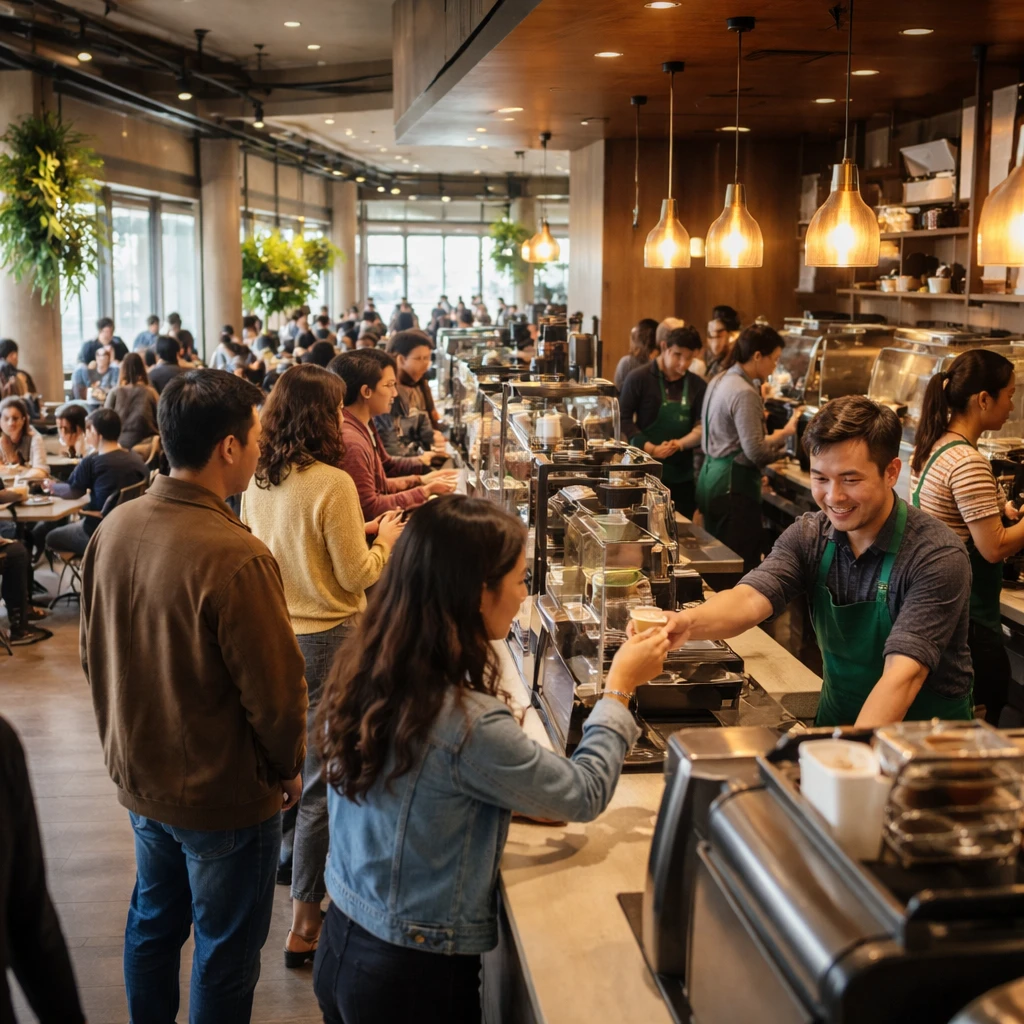
Brian Niccol’s first twenty-four months as chief executive of Starbucks have produced a clear customer recovery but also have introduced renewed investor scrutiny on profitability. Since taking the helm in September 2024, Niccol has prioritized service and store experience over near-term margin preservation, a strategy that has helped reverse a string of comparable-sales declines but that has also raised operating costs.
When Niccol arrived, Starbucks was coming off three straight quarters of falling comparable sales. The company’s challenges at that time were tied to long wait times, promotional missteps and a menu described as too complex by consumers. Those declines extended for another three quarters before the business turned a corner - comparable sales improved for a fourth consecutive quarter, reaching 7.9% in the fiscal third quarter ended June 28.
Rather than immediately prioritizing margin repair, Niccol has leaned into investments aimed at improving the customer experience. Starbucks has spent at least $500 million on labor as part of a reorganization intended to reduce wait times and restore the coffeehouse atmosphere across its store base. The company has also pursued marketing initiatives, including product placement in the film "The Devil Wears Prada 2," to support brand momentum. Those efforts reflect a playbook Niccol used at his previous role, where he acknowledged operational shortcomings and focused on restoring customer trust and traffic.
Investors responded strongly to Niccol’s arrival. Shares jumped 24% on the day his hiring was announced and have risen roughly 30% since that date - a gain that nonetheless lags the broader S&P 500’s roughly 40% increase over the same period. Relative performance has varied among restaurant peers: Starbucks’ share performance has outpaced declines at chains such as McDonald’s and Chipotle, even as it has not matched the S&P 500’s climb.
The sales recovery has won over some shareholders. Jake Dollarhide, CEO of Longbow Asset Management and a Starbucks investor, said customer satisfaction improvements - particularly faster service - convinced him the turnaround was taking hold after earlier skepticism. Still, those improvements have come at a measurable cost.
According to LSEG data, Starbucks’ operating margin stood at 12.9% in the fiscal third quarter, down from 15.8% in the same quarter two years earlier. The contraction was more pronounced in North America, the company’s largest market, where operating margin declined to 13.6% from 21% across the same comparison periods. Annex Wealth Management’s chief economic strategist Brian Jacobsen noted the crucial question: whether the investments in labor and store experience will ultimately generate a return in higher, sustainable profitability.
Management appears to be preparing for a pivot toward cost discipline as the company’s recovery progresses. Executives have been offered stock awards that are contingent on meeting cost-cutting targets through fiscal 2027. Structural moves under Niccol’s tenure have included the closure of hundreds of stores - among them the high-profile Seattle roastery - and reductions in corporate staff. In China, Starbucks sold control of its operations this year as part of efforts to reinvigorate growth where lower-cost competitors, including Luckin, have won share.
Analysts at Northcoast Research view the China transaction as an example of corporate restructuring that could position Starbucks to convert stronger organic sales growth into profit growth. Still, uncertainty remains on several fronts that could constrain margin improvement.
One immediate area of risk is labor relations. Starbucks has not yet reached a first labor contract with its U.S. barista union, and the union called for a consumer boycott in August. Ongoing negotiations or escalations in labor action could affect both costs and traffic patterns.
Operational challenges have also surfaced. Starbucks abandoned an AI-based inventory-management system intended to address persistent product issues, a move that underscores the complexity of operational fixes even as Wall Street has broadly remained receptive to the company’s trajectory.
Navigating the balance between continuing investment to protect and grow customer demand and delivering the margin expansion investors expect will be central to Niccol’s next two years. As Jim Sanderson, an analyst at Northcoast Research, observed, the corporate changes underway make the company well positioned to convert stronger organic sales growth into profit growth - a potential that remains contingent on execution, labor outcomes and the effectiveness of cost initiatives.
Starbucks spokespeople say that investments in employees are supporting sustained business momentum. Management has signaled a commitment to cost targets through executive incentives while also reshaping the store footprint and corporate structure. The coming period will test whether the company can maintain improved customer metrics while restoring margins, particularly in North America where the margin decline has been most acute.
Summary
In two years under Brian Niccol, Starbucks has restored customer traffic and improved service by investing in labor, store upgrades and marketing. These actions have driven a marked sales recovery but have compressed operating margins, prompting management to set cost-cutting targets and restructure parts of the business. The next phase will be converting organic sales gains into durable profit improvement while managing labor negotiations and ongoing operational challenges.
Key Points
- Customer recovery: Comparable sales improved to 7.9% in the fiscal third quarter ended June 28, the fourth straight quarter of improvement.
- Margin pressure: Operating margin fell to 12.9% from 15.8% two years earlier, with North America margin down to 13.6% from 21% in the same period.
- Corporate actions: Starbucks has closed hundreds of stores, sold control of China operations, and tied executive awards to cost targets through fiscal 2027 - moves that target future profit conversion.
Risks and Uncertainties
- Labor relations - The company has not yet reached a first labor contract with its U.S. barista union, and a union-led consumer boycott was called in August, creating potential operational and reputational risks for the consumer discretionary and restaurant sectors.
- Margin realization - Significant spending on labor (at least $500 million) and other store investments has reduced operating margins; whether these investments will generate sustainable margin recovery is unclear, affecting investor returns and restaurant sector profitability.
- Operational execution - The abandonment of an AI inventory-management system highlights risks in implementing technological fixes to product and supply issues, with implications for operations and cost control.