
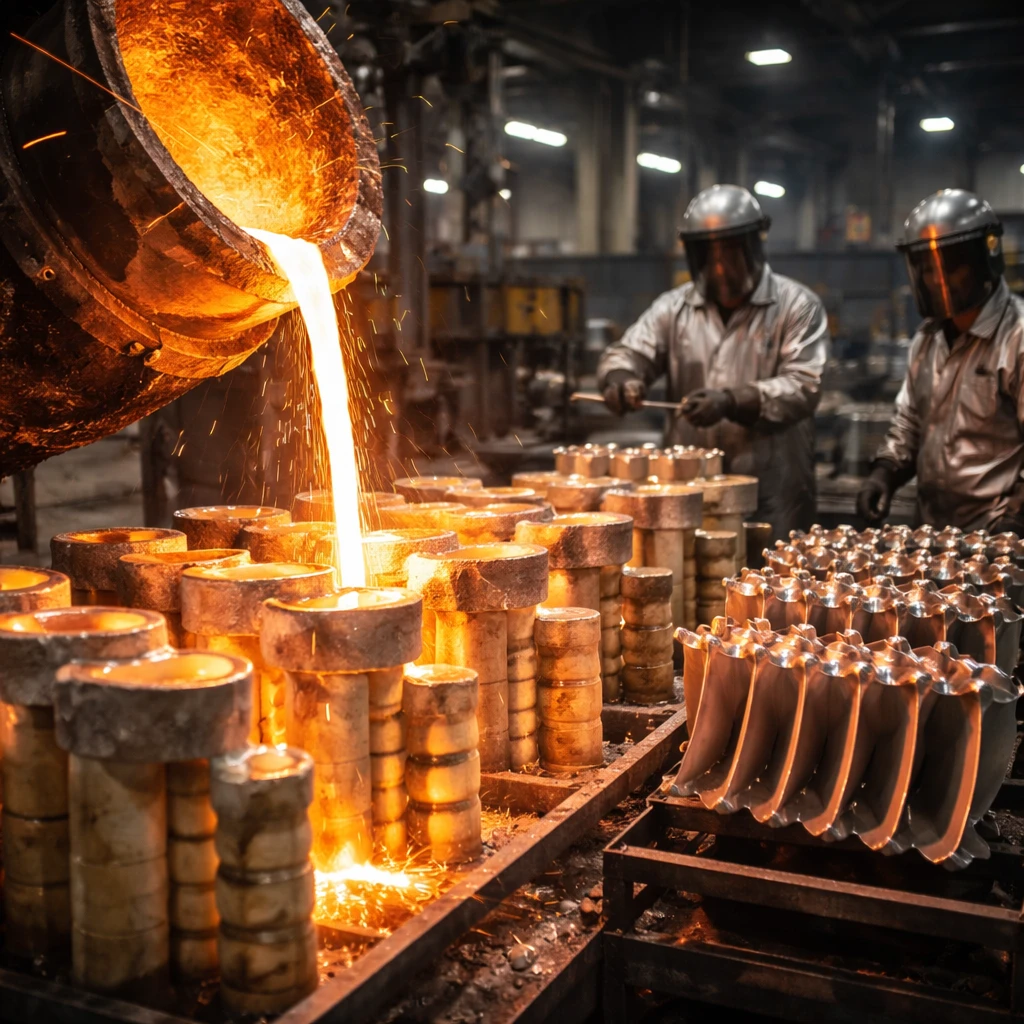
GE Aerospace has moved to tighten its hold on a narrow but crucial segment of the jet engine supply chain by agreeing to purchase Consolidated Precision Products (CPP) for $12 billion. The company, which is the third-largest global producer of the metallic cast components used in turbine blades, supplies roughly a quarter of GE’s casting needs, according to Jefferies.
GE’s acquisition of CPP marks the largest deal announced since the company’s effort to separate and reorganize after breaking up the previous industrial conglomerate. Chief Executive Larry Culp described the added capacity as "mission-critical," underscoring the strategic priority GE places on securing flows of hard-to-make parts needed for engine production.
The transaction is the latest move by major engine builders to address production constraints that have persisted since the onset of the COVID-19 pandemic. Castings - components poured from molten metal and shaped via techniques that can be difficult to scale - together with forgings made from solid metal stock, have been singled out as one of the most intractable bottlenecks facing the aerospace sector. The scarcity of specialist foundries and the decades of accumulated know-how required to produce high-performance turbine blades have kept capacity tight and prices elevated.
Analysts describe the process as exceptionally demanding. "It’s the black art of manufacturing, which has always been a huge barrier," said Kevin Michaels, managing director at AeroDynamic Advisory. "It is the hardest thing to do...You might have to throw away half or more of what you make." That difficulty helps explain why a small number of suppliers have dominated the market and why firms such as GE have pursued upstream control.
GE has long courted CPP, an Ohio-based firm, as a hedge against potential supply disruptions from the industry’s larger casting suppliers. Company sources indicate GE aimed to reduce reliance on third-party foundries such as Howmet or Precision Castparts Corp. Neither of those larger suppliers provided immediate comment on GE’s move.
Other engine manufacturers are taking similar paths. Pratt & Whitney said last year it would add an in-house casting foundry in North Carolina, and Rolls-Royce is expanding an existing plant in Britain. The collective push reflects an industry-wide focus on ensuring manufacturers can meet production demands on the large order books that stretch out over seven- to 10-year horizons.
Beyond ensuring steady supply, GE plans to apply its LEAN manufacturing system to the acquired operations with the intention of raising efficiency and realizing financial returns. Observers say precedent-setting cases such as the turnaround and public offering of peer Doncasters set a template for extracting value from specialist metalworking operations.
The contest for advanced metal parts also has a strategic technological dimension as engine developers compete to improve performance in future engine families. The market dynamic has attracted international attention - Michael’s commentary noted that China is also pursuing a role in this segment of aerospace manufacturing - and other high-profile industrial players are exploring in-house solutions. Last week, Elon Musk wrote that SpaceX’s plans to produce separate castings internally would be a "profound game-changer," highlighting broader industry interest in vertical integration.
Industry advisers see GE’s rationale as both defensive and opportunistic. "They (GE) are expecting a return that allows them to make this work financially, but it also allows them to own a piece of the supply chain that is critical to the future of engine performance," said Jerrold Lundquist, managing director of The Lundquist Group.
Despite the strategic logic, the acquisition is not without potential downsides. Integrating CPP may unsettle other engine makers that purchase parts from the firm, and could complicate GE’s relationships with large suppliers such as Howmet, with which GE also conducts business. Antitrust scrutiny is also expected: GE may be required to divest certain facilities to alleviate competition concerns, making any integration and related carve-outs more complex, according to Matteo Peraldo, aerospace and defence partner at AlixPartners.
GE is likely to point to its current ownership of Avio Aero, an Italian gear maker that supplies to rival Pratt & Whitney, when responding to regulatory questions. Still, the combination of ownership links across multiple suppliers will be examined closely by competition authorities.
The deal underscores a broader transition within aerospace from a focus primarily on winning new orders to a heightened emphasis on production strategy and supply assurance. With demand and order backlogs stretching out for years, manufacturers increasingly see control over scarce, high-skill inputs as essential to meeting delivery commitments.
Summary
GE Aerospace is purchasing Consolidated Precision Products for $12 billion to secure a crucial source of metallic castings for turbine blades. The acquisition aims to address persistent bottlenecks in castings and forgings, apply GE’s LEAN production tools to boost efficiency, and reduce reliance on external suppliers. The deal will face antitrust review and carries integration risks that could affect supplier relationships.
Key points
- GE is buying CPP for $12 billion to secure access to castings used in turbine blades; CPP is the world’s third-largest maker of such components and supplies about a quarter of GE’s needs.
- The move targets long-standing production bottlenecks in castings and forgings that have constrained the aerospace industry since the COVID-19 pandemic and raised costs and delivery pressure.
- Competitors and other industry players are also expanding in-house casting capacity, and GE intends to deploy its LEAN system to improve efficiency and returns from the acquired operations.
Risks and uncertainties
- Antitrust scrutiny - Regulators may require divestitures or impose conditions that complicate integration and affect the overall value of the deal, impacting the aerospace manufacturing and supplier sectors.
- Supplier and customer relations - The acquisition could alienate other engine makers who buy from CPP and strain GE’s relationships with major suppliers such as Howmet, with implications for both commercial aircraft and defence supply chains.
- Integration and operational risk - Realizing the expected efficiencies through GE’s LEAN system and managing any carve-outs or divestitures will be operationally complex and could affect projected financial returns.