
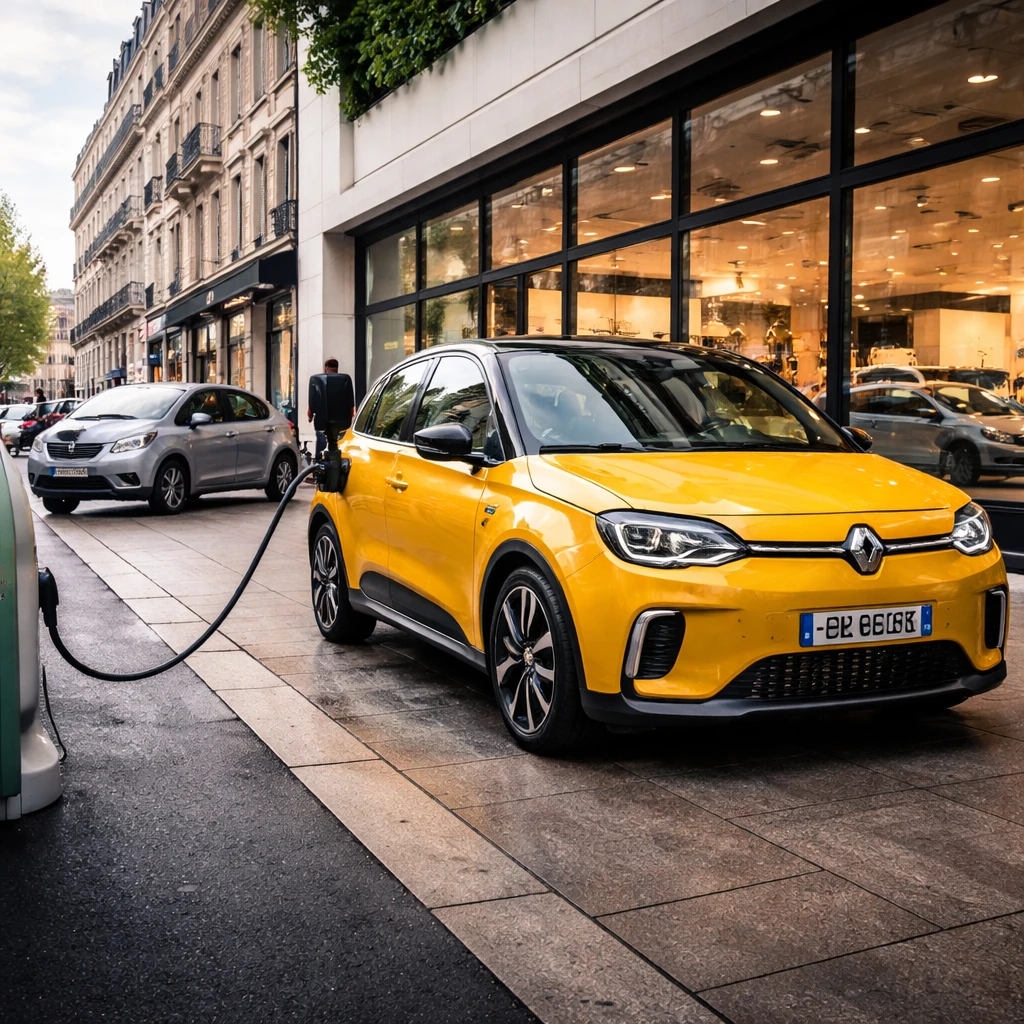
Renault Group reported a marginal fall in sales volumes over the first six months of the year even as it recorded a recovery in the second quarter driven in part by robust demand for the Renault 5 electric vehicle.
The company sold 1.17 million cars and vans in the first half, down 0.4% from the prior-year period. However, second-quarter sales rose 2.3% as Renault worked through earlier logistics problems at its Dacia brand and saw strengthening interest in its electric models.
Europe, Renault’s largest market, showed improvement overall with sales up 2.6% for the quarter. The electric Renault 5 contributed to that uptick and commercial vehicle volumes also returned to growth during the period.
Renault said its Q2 progress came despite ongoing gains by Chinese automakers in Europe, where lower-cost entrants have intensified competition and chipped away at market share for incumbent manufacturers.
Executives emphasised that the group is avoiding a price-led battle with some new entrants. Rather than matching deep discounts that have appeared in parts of the market, Renault is focusing on protecting margins and used-vehicle values by prioritising profitability over pushing volume through heavy price cuts.
"We don’t want to do the same as what we see from some brands, the Chinese brands, going for huge discounts because you pay the bill in residual value a few months or years later," Ivan Segal, senior vice president of Global Sales and Operations for the Renault brand, told reporters.
As the smallest of the legacy European automakers, Renault’s management has placed an emphasis on margin preservation as part of its strategy to remain independent. The group reiterated its operating margin ambition of around 5.5% for the year, compared with a point it cited of 6.3% in 2025, and said it expects the second half to be stronger than the first. The company will publish half-year results on July 30.
In domestic markets, Renault has scaled back some lower-margin channels. The company reduced sales to short-term rental businesses in France to shift focus toward retail buyers and deliberately avoided heavy discounting in those outlets. Dacia, Renault’s value-focused brand, saw sequential sales improvement after earlier logistics constraints.
The compact Dacia Sandero remained the best-selling car in Europe, the company said, even as the budget marque faces limitations because its electric vehicle lineup is small compared with rivals.
Industry observers pointed to macro forces that have helped spur electric vehicle interest. Renault noted that demand for EVs has accelerated since the war in Iran triggered a surge in fuel prices, contributing to consumers’ willingness to consider electrified alternatives.
Market reaction to the sales update was muted: Renault shares were flat on the day. The stock has fallen by more than 25% since the start of the year, leaving the group’s market valuation below €8 billion.
Analysts monitoring the short-term momentum highlighted signs of improvement in June. "Encouraging" momentum in June bolsters the case for a better second half, said Michael Foundoukidis, an analyst at Oddo BHF.
While volumes have stabilised in the recent quarter, Renault faces clearer competition in its core markets of France, Italy and Spain where both established rivals and Chinese newcomers have taken share. The company’s strategy of resisting aggressive discounting reflects a trade-off between protecting profitability and defending market position through lower prices.
Renault’s path forward will hinge on sustaining EV demand, improving commercial vehicle sales, and steadying retail channel performance without eroding residual values through steep price promotions.