
Stock Markets June 9, 2026 08:29 AM

Qtrex Quantum Stock Pops After Israel Innovation Authority Grants $1M for Dielectric Layer

Grant funds development of a native dielectric layer intended to ease RF routing and thermal constraints in superconducting quantum systems

By Jordan Park
Share
Twitter Reddit Facebook LinkedIn
QTEX

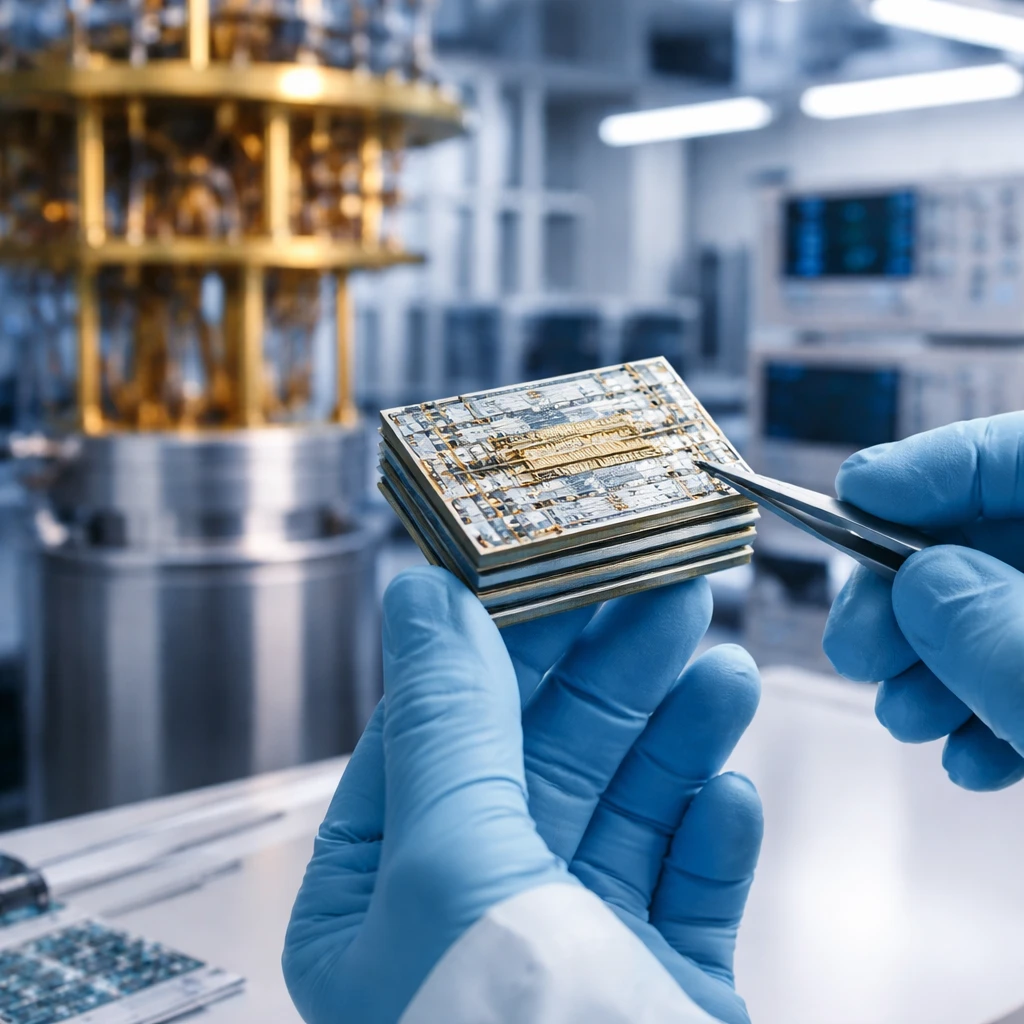
Qtrex Quantum Ltd (NASDAQ:QTEX) saw its shares rise about 22% in premarket trading after the company said it received an approximately $1 million grant from the Israel Innovation Authority. The award will fund work on a dielectric material intended to enable high-density, low-loss RF signal routing within scalable superconducting quantum computing systems by integrating dielectric, conductor and 3D geometry as a single engineered layer.

Qtrex Quantum Stock Pops After Israel Innovation Authority Grants $1M for Dielectric Layer
QTEX
Summarize with
ChatGPT Perplexity Claude Grok Gemini

Key Points

  • Qtrex received approximately $1 million from the Israel Innovation Authority to develop a dielectric material for superconducting quantum computing systems.
  • The material is being designed as a native layer within Qtrex's quantum connectivity architecture to jointly engineer dielectric, conductor and 3D geometry for lower loss and higher density RF routing.
  • The company cites connectivity - including RF line count, packaging density, signal cleanliness and thermal impact - as an industry bottleneck as superconducting processors scale; the grant is intended to address a materials-based element of that challenge.

Qtrex Quantum Ltd (NASDAQ:QTEX) reported a roughly 22% increase in premarket trading after announcing it had secured an approximately $1 million grant from the Israel Innovation Authority. The company said the funding will support development of a dielectric material aimed at improving RF signal routing for superconducting quantum computing systems.

The project targets a dielectric designed for high-density, low-loss RF signal routing in scalable superconducting quantum processors. According to the company, the material is meant to help move larger numbers of RF and microwave signals through cryogenic environments - a capability the company identified as critical to overcoming scaling constraints in superconducting quantum computing.

Qtrex described the approach as integrating the dielectric as a native layer within its quantum connectivity architecture. By developing the dielectric, conductor and 3D geometry together, the company says it can engineer signal loss, impedance control, density and thermal behavior as a unified structure rather than adapting off-the-shelf materials.

The company emphasized that those parameters - signal loss, impedance control, routing density and thermal behavior - are interdependent and are driven by how dielectric, conductor and geometry operate together as one engineered component. As superconducting quantum processors grow in qubit count, Qtrex said connectivity has become a bottleneck across the industry, citing the need for more RF lines, tighter packaging, cleaner signal paths and reduced thermal impact.

"Superconducting quantum computers cannot scale on conventional wiring architecture," said Dagi Ben-Noon, Chief Executive Officer of Qtrex. "This grant strengthens a core materials layer inside our quantum connectivity architecture and expands a capability we believe the industry has been missing."

Qtrex focuses on Additively Manufactured Electronics intended for quantum computing infrastructure. The company framed the grant as reinforcing a materials layer central to its connectivity strategy and as enabling tighter integration of electromagnetic and thermal design considerations inside a single manufactured structure.

The announced grant and the company statement were followed by the premarket share move reported above. Qtrex positioned the funding as a step toward addressing interconnect and packaging challenges that the company and others identify as limiting the growth of superconducting quantum systems.

Risks

  • Connectivity constraints remain a central challenge - the company identifies RF routing density, packaging and signal paths as bottlenecks that must be resolved for scalable superconducting quantum processors.
  • Thermal management challenges in cryogenic environments are highlighted as a key engineering uncertainty tied to increasing numbers of RF and microwave signals.
  • Signal loss and impedance control are interdependent with material and geometric choices and present engineering complexity that the funded work aims to mitigate but does not guarantee to resolve.

More from Stock Markets

Hinge Health Boosts 2026 Revenue Outlook; Shares Rise After Hours Jun 9, 2026 Mixed Close for U.S. Equities as Dow Inches Higher; Tech, Energy Slip Jun 9, 2026 Toronto market edges lower as energy, materials and tech weigh on S&P/TSX Jun 9, 2026 Bovespa Advances as Real Estate, Consumer and Financial Stocks Lead Gains Jun 9, 2026 Options Traders Anticipate Smaller Moves for Several Companies Ahead of Earnings Jun 9, 2026