
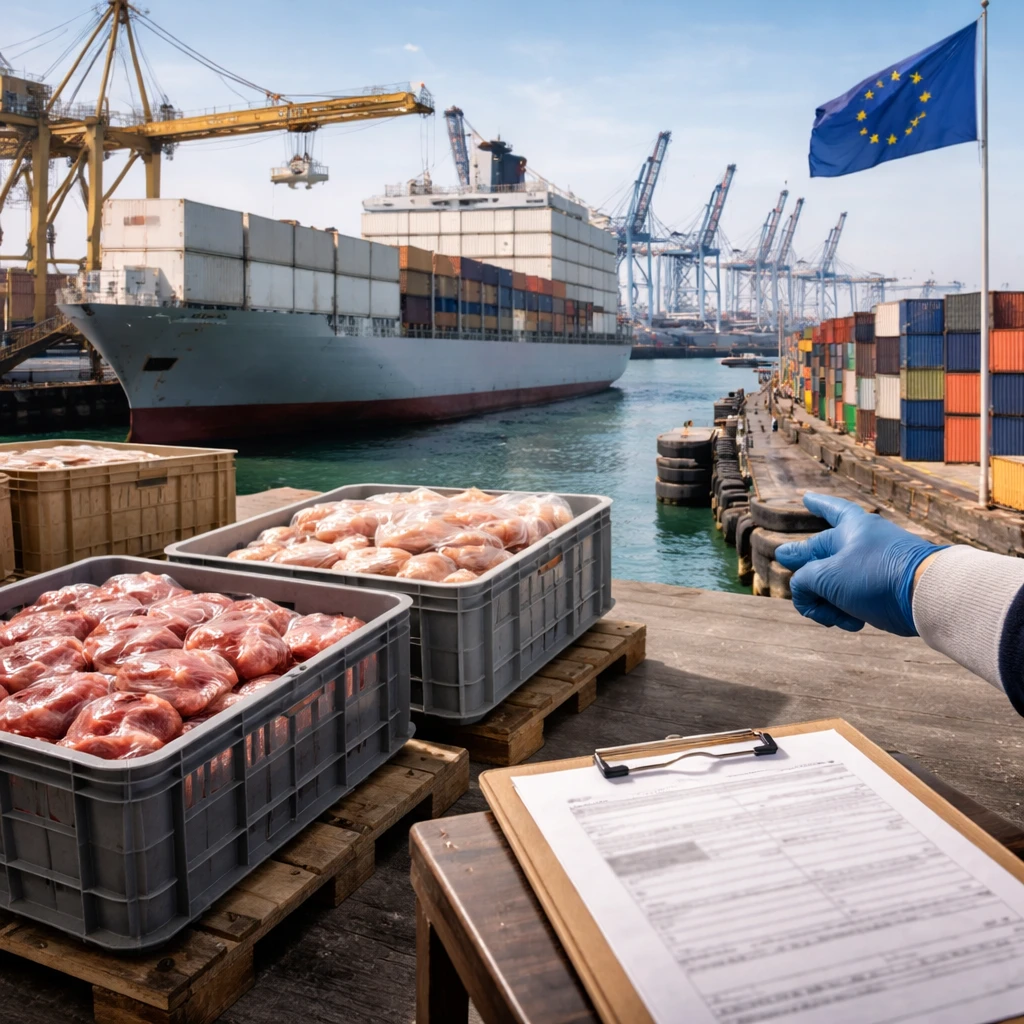
European regulators have formally notified that Brazil no longer meets the European Union's antimicrobial usage compliance requirements, and the bloc will prohibit imports of Brazilian animal products such as beef and poultry beginning Sept. 3, 2026, according to an analysis by Morgan Stanley.
The European Commission said it had not received adequate documentation demonstrating that Brazil had implemented the necessary compliance measures. The move follows an earlier draft regulation, dated May 12, which also removed Brazil from the list of authorised exporters. Brazilian officials continue to hold talks with EU representatives seeking to reverse the exclusion, news sources indicate.
In absolute terms the EU represents a modest share of Brazil's protein exports. Morgan Stanley notes the EU accounted for roughly 3.5% of volumes and 5.3% of value in Brazilian beef exports over the last twelve months, with European buyers paying an approximate 50% price premium versus the average export price. For Brazilian poultry, the EU made up about 2.4% of volumes and similarly paid roughly a 50% premium.
At the company level, Morgan Stanley highlights variation in exposure. Minerva (BEEF3) shows the highest sensitivity to fluctuations in Brazil beef exports, with Brazilian beef representing about 38% of the company's last-twelve-month revenues. However, because only about 9% of Brazil's total beef exports go to the EU, Morgan Stanley calculates Minerva's consolidated revenue exposure to the EU channel at approximately 3%.
Reported European revenue shares for other large processors stand at 9% for JBS and 5% for MBRF on an annual basis, but the bank cautions that the portion of those companies' revenues tied specifically to Brazil-to-EU shipments is smaller. Using SECEX export data, Morgan Stanley estimates that beef and poultry exports from Brazil to the EU translate to roughly 0.5% of consolidated revenues for both JBS and MBRF.
Given these proportions and potential offsets the firm believes could mitigate disruption, Morgan Stanley assesses that a ban effective Sept. 3 would have limited-to-no material financial impact on the companies it covers. The bank's view rests on the relatively small share of consolidated revenues that flow directly from Brazil-to-EU protein exports and the premium-weighted nature of EU sales.
Key takeaways
- The EU will stop imports of Brazilian beef and poultry from Sept. 3, 2026, after finding insufficient evidence of compliance with antimicrobial rules.
- The EU accounts for a small share of Brazilian protein exports by volume and value, but pays about a 50% price premium for both beef and poultry.
- Morgan Stanley estimates the direct revenue hit to covered companies is minor, with implied consolidated exposure of roughly 3% for Minerva and about 0.5% for JBS and MBRF.
Analyst view
Morgan Stanley's analysis focuses on export flows and company-level revenue exposures and concludes the financial consequences of the EU exclusion for its coverage list are likely limited. The bank highlights the distinction between country-level export shares and consolidated corporate revenue exposure when assessing impact.