
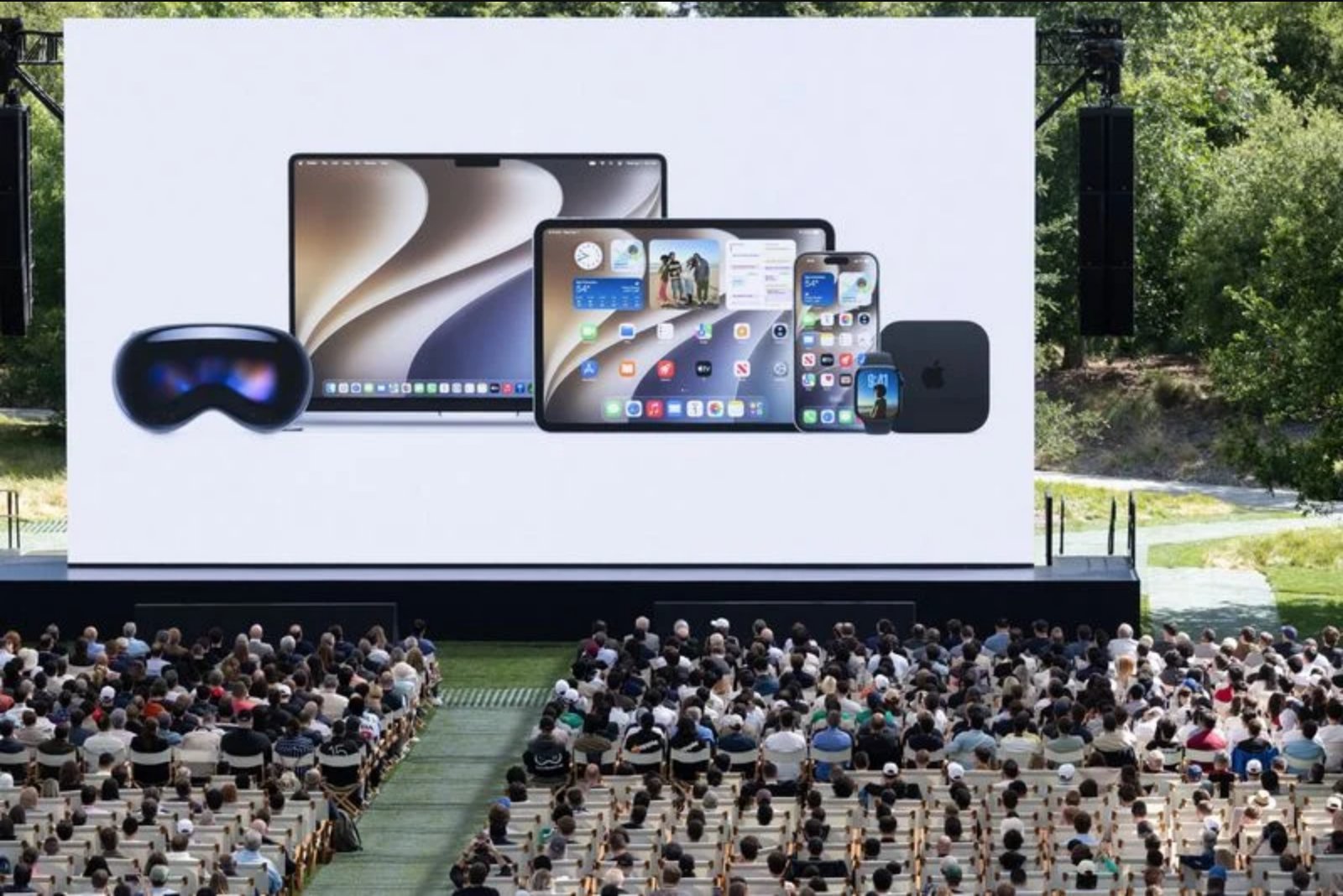
Apple unveiled a substantial redesign of Siri at its Worldwide Developers Conference on Monday, positioning the assistant and an expanded Apple Intelligence suite as central elements in the company’s response to rapidly advancing AI competitors. But Morgan Stanley cautioned in a research note that a large share of Apple’s installed iPhone base will be unable to run the new software features because of hardware limits.
According to the brokerage, more than 850 million iPhones lack the capability to process basic Apple Intelligence queries. The constraints grow more acute for the most advanced siri features: more than 1.3 billion iPhones cannot use them. Those figures form the core of Morgan Stanley’s argument that the upgraded Siri will be functionally out of reach for a substantial segment of Apple’s customers.
The note points to chip architecture and system memory as the primary bottlenecks. Morgan Stanley said that the most demanding Siri features require 12 GB of unified memory, driven by the scale of on-device processing Apple Intelligence performs. That threshold means that devices without that unified memory configuration will be unable to run the highest tier of AI functionality Apple demonstrated.
In its assessment, Morgan Stanley also warned that selling hardware primarily on the strength of new software capabilities is difficult, even as broad access to AI is becoming a major factor driving smartphone upgrades. The brokerage acknowledged that AI accessibility ranks among leading upgrade drivers, but emphasized the practical limits imposed by the installed base.
The company framed the Siri overhaul as Apple’s strategic response to third-party AI offerings, naming OpenAI's ChatGPT, Google’s Gemini and Anthropic’s Claude as benchmarks in the competitive landscape. Apple’s bet is that an improved, on-device enabled assistant will help it remain competitive, but Morgan Stanley’s note underlines that the potential user reach for those features is constrained by prevailing hardware characteristics across the installed iPhone population.
Summary
Morgan Stanley says significant portions of Apple’s iPhone install base cannot support new Apple Intelligence queries or advanced Siri features because of chip and memory limitations, with 850 million and 1.3 billion device thresholds cited respectively.
Key points
- More than 850 million iPhones cannot run basic Apple Intelligence queries; over 1.3 billion cannot run advanced Siri features - impacts smartphone hardware and software markets.
- The upgraded Siri requires 12 GB of unified memory for the most advanced features due to heavy on-device processing - relevant to semiconductor and device manufacturing sectors.
- Morgan Stanley cautions that selling hardware on the strength of software is challenging, even as AI access becomes a primary upgrade driver - affects consumer electronics and mobile ecosystem economics.
Risks and uncertainties
- Limited reach of new AI features across the installed iPhone base could slow adoption rates for Apple Intelligence - risk for hardware upgrade cycles and related consumer spending.
- Hardware bottlenecks tied to chip architecture and unified memory requirements could constrain market penetration for on-device AI capabilities - risk for semiconductor and device manufacturing supply-demand dynamics.
- Reliance on software-driven hardware upgrades may face headwinds, despite AI being a leading upgrade driver - uncertainty for Apple’s strategy to monetize new AI features through increased device sales.