
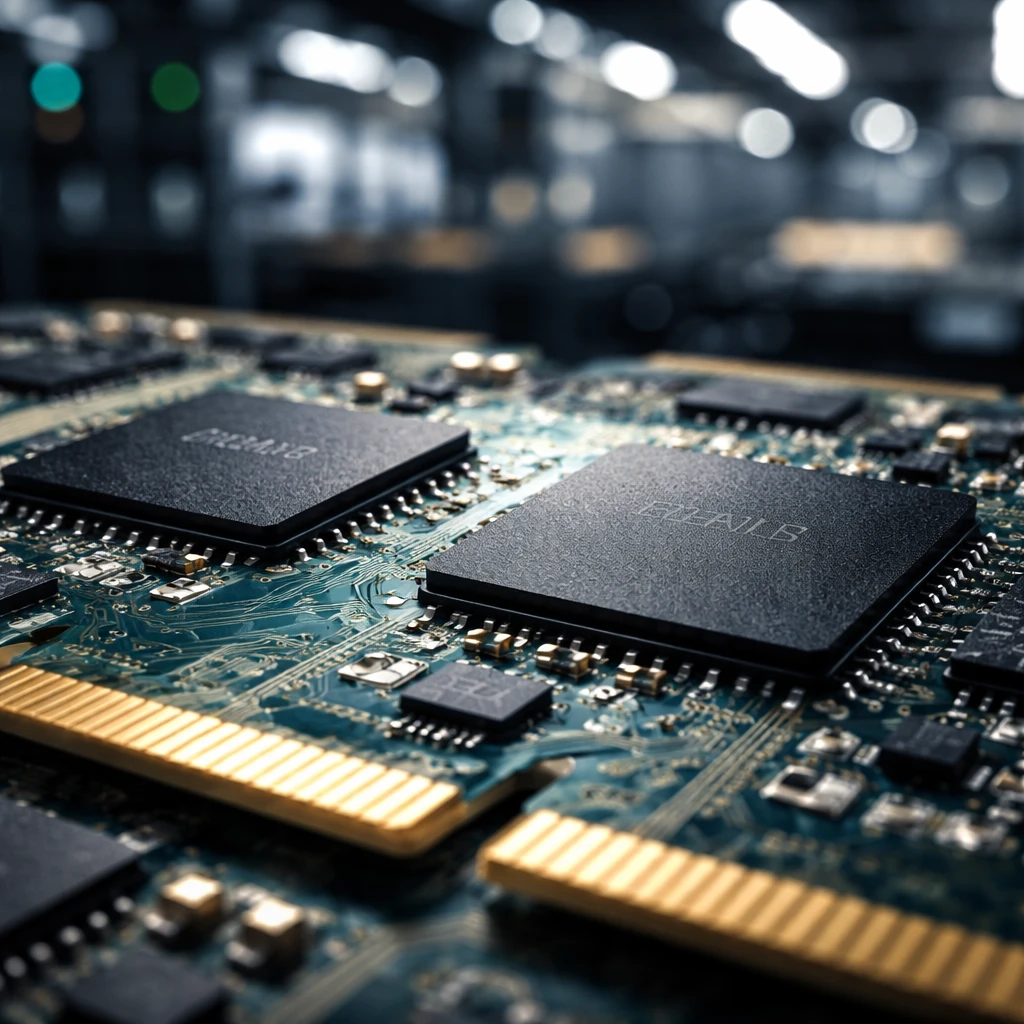
Memory semiconductor shares rallied strongly on Thursday after Apple chief executive Tim Cook told the Wall Street Journal in an interview published June 17 that price increases across iPhone, Mac and iPad product lines are "unavoidable." The remark crystallized a shift in bargaining power toward memory suppliers as component costs surge.
SanDisk led the pack, trading at $2,144.40, up +9.48% intraday and closing in on its 52-week high of $2,167.33. Micron Technology also advanced, at $1,111.91, up +6.59% and sitting just shy of its 52-week peak of $1,116.25. Both names have posted extraordinary gains over the past year - SanDisk has risen more than 4,400% in the last 52 weeks amid a structural shortage in NAND pricing, while Micron has climbed roughly 810% - and Thursday's session added a fresh catalyst by making clear that a major consumer buyer will no longer fully absorb elevated memory costs.
Cook's comments represent a strategic break with prior ambiguity over how Apple planned to handle rising component expenses. On the company's April earnings call, Apple's chief financial officer warned that gross margins would come under pressure from higher component costs in the second half of 2026 but did not specify the company's detailed response or quantify the potential margin impact. Cook's interview removed that uncertainty by stating directly that Apple can no longer shield consumers from the historic rise in memory costs.
The market backdrop is acute. TrendForce data published June 16 shows memory contract prices rose by more than 100% in the first half of 2026, and the firm expects structural shortages to keep NOR Flash and SLC NAND prices increasing into the second half of the year. In addition, Omdia forecasts global DRAM revenue will reach $372 billion in 2026, a 147% year-over-year increase, highlighting a supercycle that has materially altered the semiconductor landscape.
That dynamic has been compounded by demand from AI-focused hyperscalers. These large cloud and AI customers have been willing to provide sizable prepayments and enter long-term supply agreements, which has the effect of prioritizing their orders over those from consumer-electronics buyers such as Apple. The result is that companies supplying DRAM and NAND have less incentive to make concessions to consumer device makers, strengthening suppliers' pricing positions.
Mizuho TMT specialist Jordan Klein quantified the practical effect on device cost structure in a note circulated Thursday. "Cost of memory is up 80-90% in '26 since end '25. It's up triple digits year-over-year. Memory BOM costs as a percentage of smartphone or PC was in the mid-teens as a percentage of total. Now this will rise to 25-30%," Klein wrote. He added that analyst reports assume at least a $100 to $200 average selling price increase on iPhone 18 models, and argued the shift is ultimately positive for Apple's gross margins - margins that would have "suffered materially" had the company continued absorbing the cost increases. Klein also said the Apple disclosure "just supports my bullish view on memory stocks and that a lot of investors still under-appreciate demand and pricing trends into '27/'28."
Supply tightness spans both legacy and leading-edge memory. On Thursday, SK Hynix shipped samples of its 12-layer next-generation HBM4E chips to major customers, achieving 16 Gbps per-pin speeds. That development underscores how high-end memory capacity continues to be allocated toward AI and hyperscaler workloads, limiting the pool of advanced chips available to consumer-device manufacturers and maintaining upward pricing pressure on the memory available to firms like Apple.
Investors parsed two distinct threads in the market reaction. For Micron and SanDisk holders, Apple’s statement serves as explicit demand confirmation: even the buyer with the greatest scale and pricing leverage in consumer electronics is now publicly acknowledging the magnitude and persistence of memory-cost inflation. That public acknowledgement reduces ambiguity about whether the price spikes are transitory and supports the case that suppliers' structural advantage is unlikely to reverse quickly.
For Apple investors, the picture is more mixed. The main unresolved question is demand elasticity - specifically, how higher device pricing will affect unit sales and revenue growth. Klein noted that this is the central investor concern: "Biggest risk and reason Apple stock is basically flat: how will higher prices impact consumer demand and unit growth? Better gross margins on weaker revenue growth is sort of a wash at best." That line of reasoning helps explain why Apple shares remained muted while its memory suppliers advanced.
The next hard test of Cook's signal will come with the launch of the iPhone 18, expected in fall 2026, when actual product pricing will either validate or qualify the decision to pass memory costs to customers. Until then, the market will watch whether the contract-price momentum TrendForce described continues into the second half of 2026, and whether sustained AI-driven hyperscaler demand continues to crowd out consumer-device buyers.
For now, the takeaway for industrial and supply-chain observers is that the memory supercycle is exerting measurable influence on pricing power, bargaining dynamics and margin outcomes across both suppliers and major consumer-device makers. The evolving balance between hyperscaler prepayments and consumer demand sensitivity will determine how enduring that shift proves to be.