
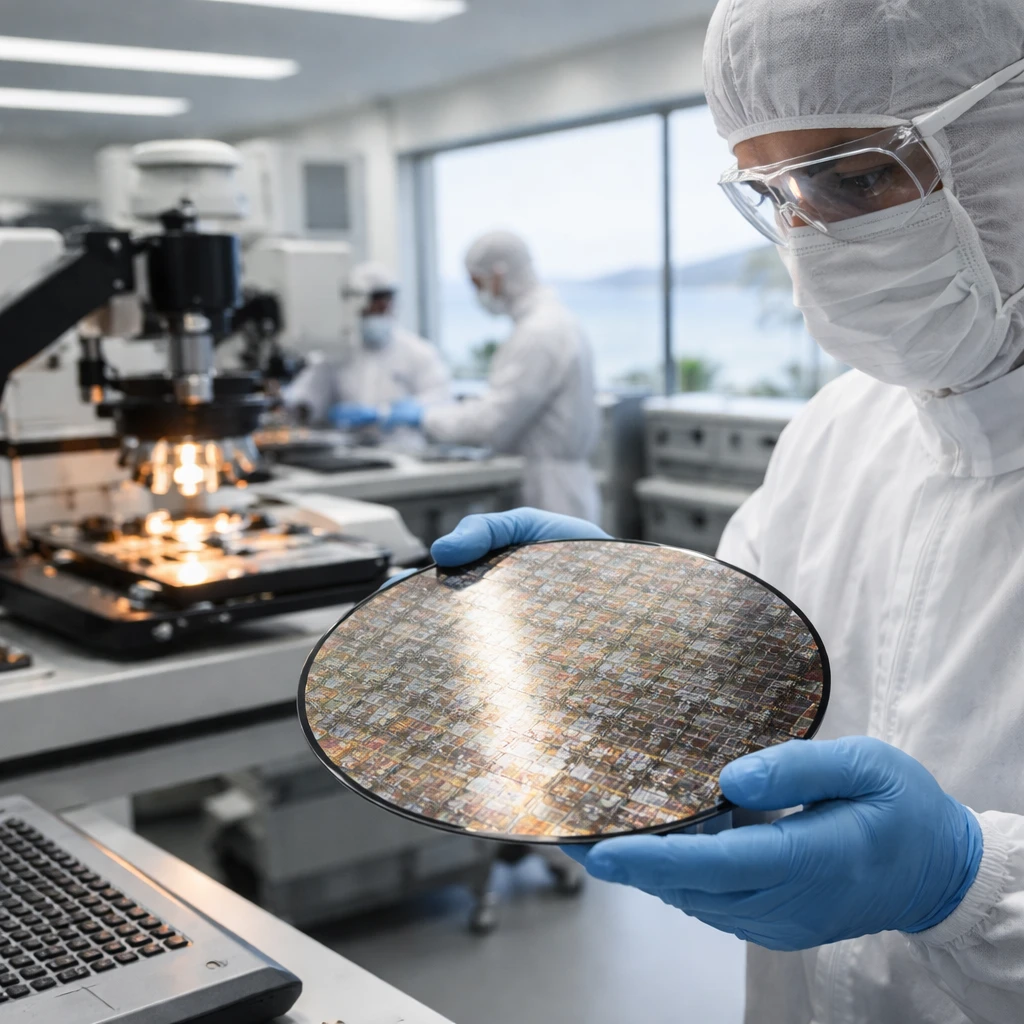
IBM said on Thursday it has agreed to acquire HRL Laboratories, the privately held research lab jointly owned by Boeing Co and General Motors. The transaction adds a second technical path to IBM’s quantum computing effort, bringing HRL’s expertise in electron spin qubits into the company’s broader program.
IBM has been competing with technology firms including Alphabet’s Google and Microsoft to develop quantum machines capable of solving problems that conventional computers would take thousands of years to handle. Yet while there is broad consensus among governments and the tech sector that quantum computing is inevitable, the precise architecture that will ultimately prove practical is still unsettled.
There are multiple competing methods for constructing quantum circuits, and IBM said the HRL acquisition supplements its existing approach rather than replacing it. IBM has pushed superconducting circuits as one way to build qubits. HRL, which originated as the research arm of aerospace firm Hughes Aircraft and is based near Malibu, California, specializes in electron spin circuits - a technology that produces qubits in a different physical form.
Both superconducting and electron spin qubits can be fabricated using equipment similar to that employed in conventional chip manufacturing. However, electron spin circuits can be produced at substantially smaller scales than superconducting circuits, a distinction IBM highlighted as relevant to its long-term plans.
IBM did not provide a purchase price for HRL. The company said Boeing and General Motors will remain partners on quantum technology following the deal, but did not detail the post-transaction arrangements.
Jay Gambetta, director of IBM Research, discussed how the two technologies fit into the company’s timeline. He said IBM expects its "Blue Jay" system - which uses superconducting chips - to be delivered in 2033, and that smaller spin-based circuits will have a role after Blue Jay is operational. "I and the team strongly believe that the future is going to be (electron) spins, or superconducting, or possibly a combination of them," Gambetta said. "They (HRL) have a very strong spin qubit team, the strongest in the world. ... I would not pursue a second path that was not built on a foundation that could be integrated together."
In the nearer term, Gambetta said HRL’s California facility currently fabricates chips, but that the HRL team will begin producing chips at IBM’s advanced facility in New York. He also affirmed IBM is maintaining "a parallel path" of spin-based quantum development alongside its superconducting work and indicated aspects of that spin-based technology will be made available in the near future.
The move to add a separate quantum technology is consistent with other firms that have broadened their approaches. Earlier this year Google added a second technology based on neutral atoms to its quantum portfolio, and IBM’s acquisition mirrors the industry dynamic of pursuing multiple scientific routes simultaneously.
Context on government support
The company’s acquisition announcement also sits against a backdrop of government involvement in quantum chip manufacturing. In May, the U.S. administration said it would award $1 billion to IBM to establish a new company called Anderon in New Albany, New York, to function as a chip factory serving U.S. quantum computing firms. That funding is part of broader efforts to bolster domestic capacity for quantum hardware, though precise outcomes and technical choices remain unresolved.
What remains uncertain
Despite the acquisition and public statements from IBM Research leadership, the industry still faces open questions about which qubit technologies will scale most effectively and how different physical approaches might be combined. The HRL deal adds a significant capability to IBM’s toolbox, but the relative roles of spin qubits and superconducting circuits - and how they will be integrated - are not yet settled.