
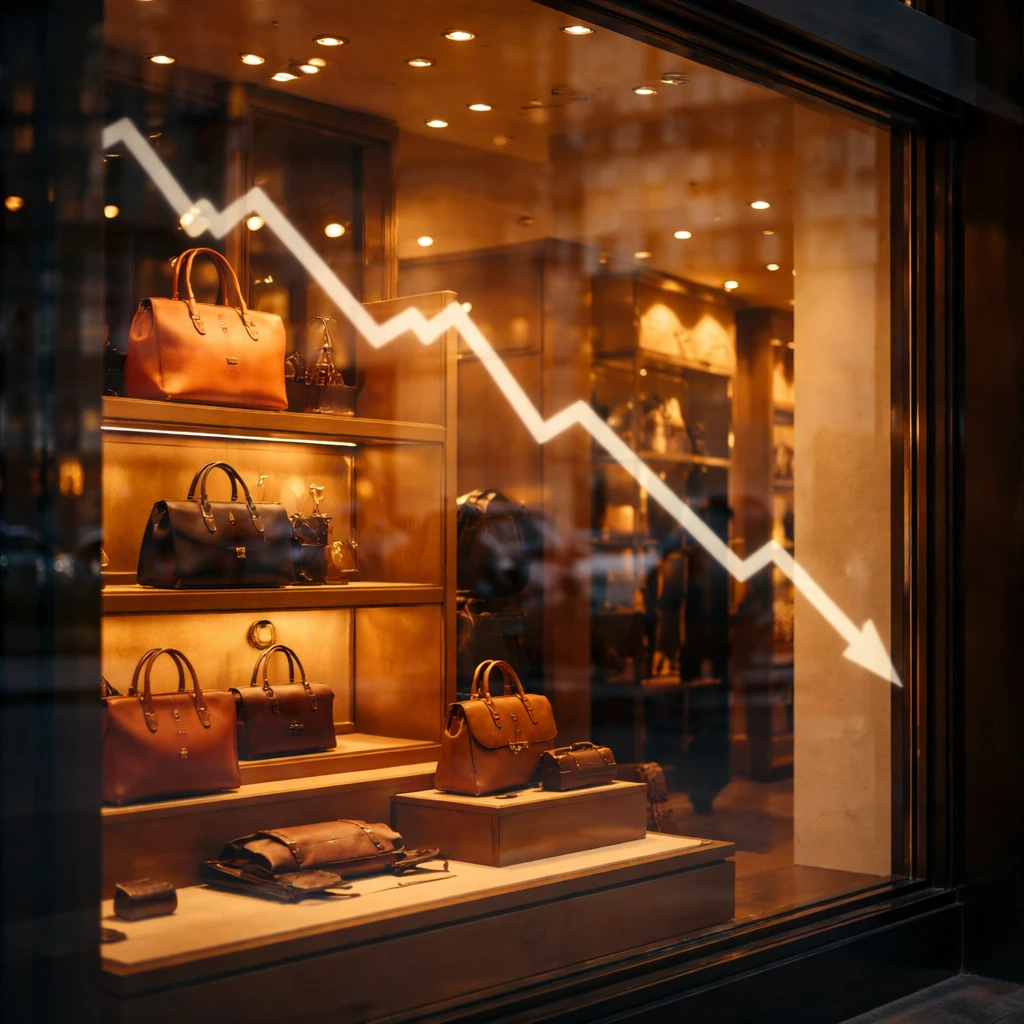
Hermès shares declined 5.0% to trade at €1,635.5 in today's session following a note from Kepler Cheuvreux analyst Charles-Louis Scotti that warned investors to expect material margin pressure in the luxury house's upcoming first-half 2026 results. Scotti quantified the potential hit as around a 100 basis-point contraction in the adjusted EBIT margin, attributing the squeeze to underabsorption of fixed costs and foreign exchange headwinds. The analyst also lowered his net profit and earnings-per-share estimates for the period.
The analyst note landed against a backdrop of already weakened investor sentiment. Hermès has been under sustained pressure since its Q1 2026 revenue release in April, when roughly €300 million in currency headwinds pushed reported sales into negative territory despite the company recording 6% organic growth. The share price is now trading well below its 52-week high of €2,482. Today's intraday low of €1,615 brings the stock closer to its 52-week floor of €1,529.
Market participants signaled active repositioning around the newly flagged margin risk, with elevated options activity in the name cited as evidence that institutional investors were adjusting exposures. That trading behavior is consistent with market actors preparing for a potential hit to profitability that could be confirmed when Hermès publishes first-half details.
Broader equity markets did not provide a tailwind for Hermès on the day. The CAC 40 was essentially flat while U.S. benchmarks posted solid gains, indicating that the stock's decline was driven by company-specific concerns rather than a wider market sell-off. Luxury peers such as LVMH and Christian Dior have recently contended with pressures tied to Middle East geopolitical tensions and softening demand in the Asia-Pacific region, yet neither saw moves on the same scale as Hermès during this session.
Taken together, the Kepler Cheuvreux assessment crystallized investor worries that the current foreign exchange environment and underabsorbed fixed costs will weigh on Hermès' margins into the second half of 2026. Those concerns appear to have overshadowed the brand's resilient demand fundamentals, driving the stock to its steepest single-session decline in weeks.
Contextual note - The market response reflects heightened sensitivity to profitability metrics in luxury names, with investors parsing the interplay between reported organic demand and the profit impact of currency moves and cost absorption dynamics.