
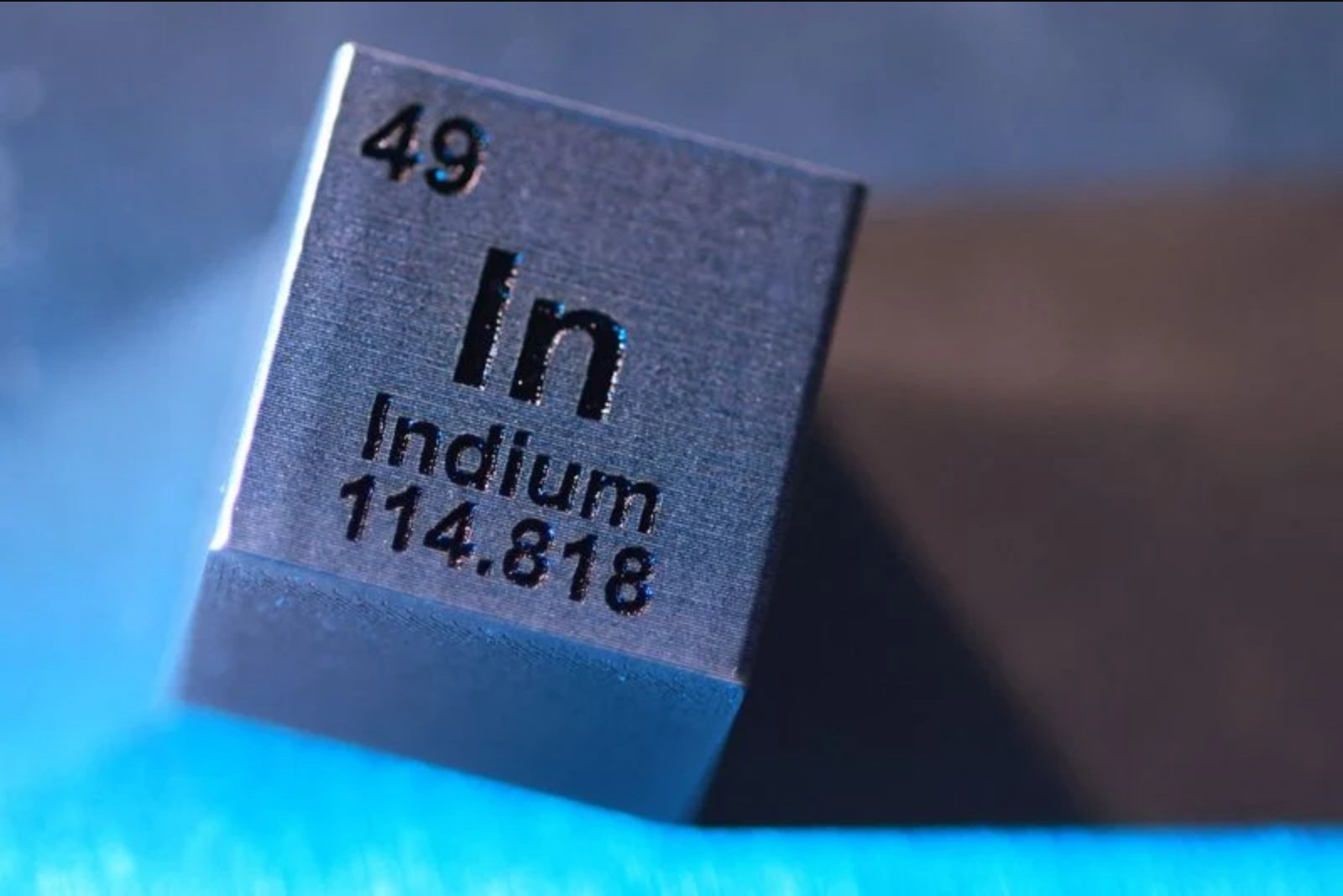
China is tightening oversight of indium exports as demand for components tied to artificial intelligence computing grows. The country supplies nearly 70% of the world’s indium, a metal recovered as a byproduct of zinc refining and commonly used in displays and solder. It is also the raw material used to make indium phosphide, which is a base material for high-speed optical chips deployed in next-generation data centers.
Beijing added indium phosphide to its export control list in February 2025. Industry participants say the restrictions on that compound have already created practical obstacles for firms building advanced data centers, prompting high-level engagement on the issue. In May, the chief executive of a chipmaker backed by Nvidia traveled to Beijing with President Donald Trump to raise concerns about the effect of export limits on next-generation infrastructure.
Several buyers report a noticeable increase in customs scrutiny when importing indium metal, even though the metal itself is not currently on China’s export control list. Two purchasers said they had been asked for more detailed documentation about transactions. For one European buyer, that meant being required, for the first time this year, to disclose information about end users including their locations. A large North American buyer described approvals that previously cleared on the same day now taking several days, attributing the delays to more thorough review of paperwork and characterizing the process as "tense". That same buyer said customs had not asked for additional information beyond the extended processing time.
Not all market participants are seeing the same measures. Two other buyers reported they had heard of increased scrutiny but had not personally experienced extra checks. To date, no shipments have been publicly identified as having been blocked. Nevertheless, the uneven application of additional vetting has prompted concern within this small sector that heightened diligence could foreshadow wider restrictions or a formal requirement for end-user disclosures. Such disclosures are commonly used by countries operating export control regimes to map global supply chains and identify chokepoints.
The metal’s strategic importance has already been noted by government buyers. The U.S. Defense Logistics Agency earlier this year issued a request for proposals to build a stockpile of up to 403 tons of indium over a three-year period, underscoring how the material has been identified as a potential vulnerability. One North American purchaser expressed suspicion that the new reporting requirements may be "a precursor to restrictions or outright bans on exports."
China’s Ministry of Commerce did not immediately respond to a request for comment on the matter, citing a public holiday. Buyers who discussed their experiences declined to be named because of the sensitivity surrounding trade in the metal.
What this means
- Indium is a concentrated commodity in China, and its use in producing indium phosphide ties it directly to the supply chain for optical chips used in AI-focused data center builds.
- Heightened customs checks, even if not uniformly applied, increase friction and uncertainty for companies procuring parts for advanced computing and for industries reliant on displays and solder.
- Government stockpiling and procurement signals highlight how strategic materials for electronics and defense are being re-evaluated amid shifting export controls.