
Overview
Nintendo Co Ltd is set to release Q1 FY2027 results on Aug 6, with market consensus sitting at ¥440.75 billion in revenue and ¥64.54 in EPS. The immediate focus is not simply whether the company meets or exceeds those numbers, but whether the Switch 2 console cycle can continue to drive growth while grappling with a dramatic rise in memory costs.
Where the stock stands
The shares are trading at ¥7,428, down -1.72% on the day, with a market capitalization of ¥8.56 trillion. The 52-week trading range runs from ¥6,544 to ¥14,795 and the year-to-date performance shows a decline of -31.73%. From the peak, the stock is -44.63% lower, reflecting a sharp derating after early enthusiasm around the Switch 2 faded.
Quarterly trajectory and expectations
Investors will compare the upcoming report with the recent pattern of results since the Switch 2 launch. Relevant quarter-by-quarter figures include:
- Q1 FY2026 (Switch 2 launch): revenue ¥572.36B; +93.5%; stock reaction +4.33%
- Q2 FY2026: revenue ¥527.20B; +36.6%; stock reaction +5.40%
- Q3 FY2026 (Holiday): revenue ¥806.32B; +6.0%; stock reaction -9.35%
- Q4 FY2026 (Latest): revenue ¥407.17B; -5.6%; stock reaction -5.19%
- Q1 FY2027 (consensus for release on Aug 6): revenue ¥440.75B (estimate)
The expected ¥440.75 billion implies a roughly -23% decline versus Q1 FY2026’s launch-year revenue of ¥572.36 billion, indicating the street has priced in a normalization following the surge in the launch quarter.
Memory cost pressure
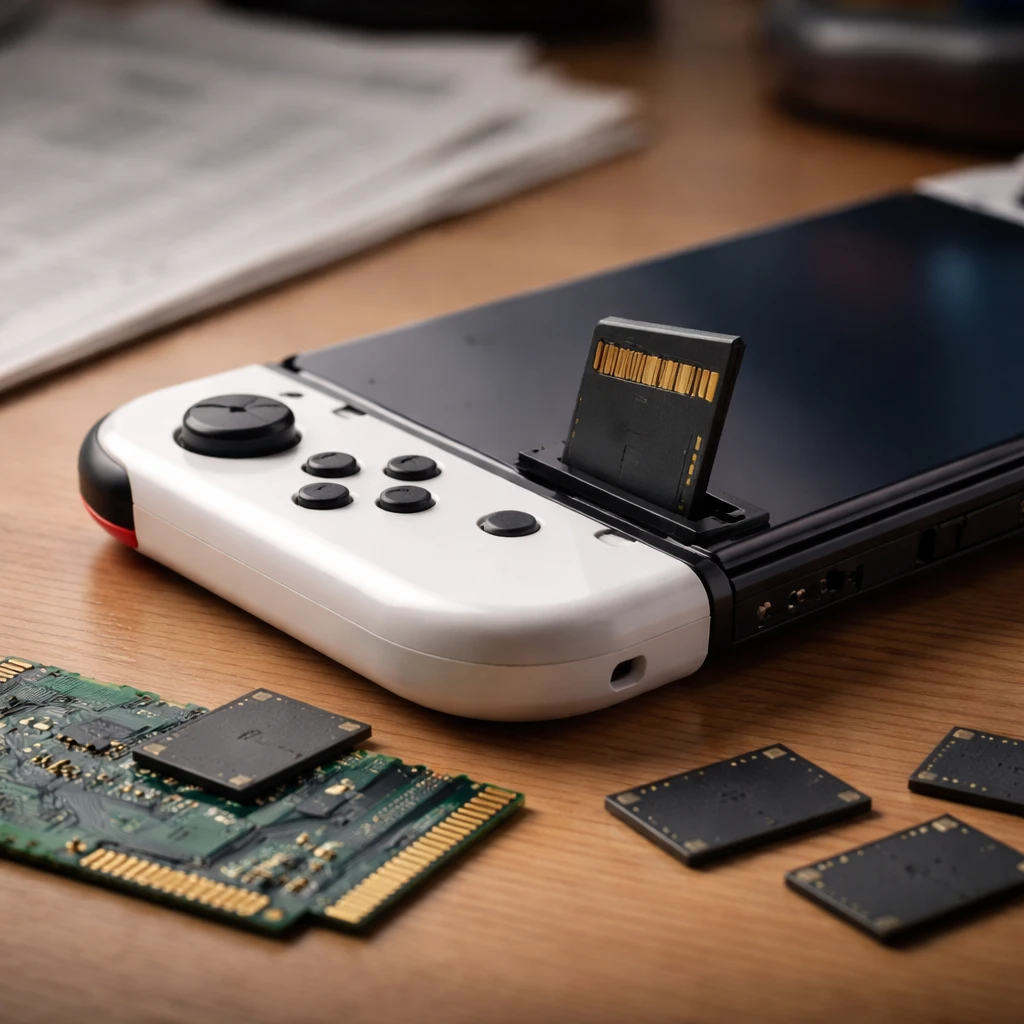
A key determinant of margins in the June quarter will be the cost of memory components. Industry reporting indicates memory-chip prices have quadrupled over the past year, with elevated DRAM and NAND prices tied to demand from AI data centers. Nintendo’s exposure is direct:
- Game cartridges incorporate NAND flash, and higher NAND prices reduce margin on cartridge sales.
- Console internal storage expands the bill of materials, increasing per-unit cost.
- Unlike some consumer electronics firms, Nintendo faces constraints in passing cost increases through mid-cycle price hikes or quickly switching to alternative suppliers - for example, certain Chinese suppliers such as YMTC are on the U.S. Entity List and are not a simple alternative.
The question for investors is whether Nintendo has been able to renegotiate supply terms or otherwise mitigate these increases, or whether gross margins will show visible compression in the June quarter.
Full-year outlook and consensus positioning
Fiscal 2026 revenue reached ¥2.31 trillion, roughly double FY2025’s ¥1.16 trillion, driven by the Switch 2 launch. Yet consensus for FY2027 sits at ¥2.30 trillion, effectively flat with FY2026 and implying that analysts expect little net growth in the second year of the cycle. Management commentary and any revision to the ¥2.30 trillion full-year projection will be pivotal; an upward revision could trigger a re-rating from deeply discounted levels.
Bull and bear scenarios
Supporters argue the sharp -44.63% drawdown has priced in significant negative expectations. A revenue beat above the ¥440.75 billion consensus or a more optimistic full-year guide could materially change sentiment, especially with the historical importance of Holiday Q3 still ahead and consensus for FY2028 at ¥2.56 trillion implying a continued long software tail.
On the other hand, skeptics point to the structural nature of the memory-price headwind rather than a short-term blip. Supplier strength is evident in recent supplier results, with SK Hynix reporting a record Q2 operating profit and 76% margins - a reminder that suppliers have pricing power. Coupled with potential mid-cycle hardware fatigue and a challenging year-ago comparable in Q1, another earnings miss could push the shares back toward the lower bound of the 52-week range at ¥6,544.
Market tone heading into the report
Shares declined -1.72% ahead of the print, a sign of tentative positioning and pre-earnings caution. The recent pattern shows fragile sentiment: previous reports have produced negative stock reactions even when headline fundamentals were not poor, as illustrated by the -9.35% reaction in Q3 despite a revenue beat. With the revenue bar modest on paper, any remarks on cartridge costs, console margins, or software pricing strategies are likely to receive heavy scrutiny.
Bottom line
Tomorrow’s release will be more than a traditional beat-or-miss event. It will test whether Switch 2 momentum is durable enough to offset a significant jump in memory costs and whether management can translate the console cycle into sustainable full-year growth. Investors should watch revenue, gross-margin trends, and any commentary on supplier arrangements or cost pass-through strategies.