
Stock Markets June 24, 2026 10:09 AM

China Audit Flags Tax, Lending and Oversight Problems at Major State Banks

Annual audit presented to legislature details tax avoidance, noncompliant farmland loans and governance gaps at financial firms

By Sofia Navarro
Share
Twitter Reddit Facebook LinkedIn

China’s National Audit Office disclosed its annual review to the national legislature, identifying tax avoidance and policy irregularities at Bank of China Ltd., improper farmland lending by Agricultural Bank of China Ltd., and governance weaknesses at China Everbright Group Ltd. The findings were presented by Hou Kai and published on the audit office’s website.

China Audit Flags Tax, Lending and Oversight Problems at Major State Banks
Summarize with
ChatGPT Perplexity Claude Grok Gemini

Key Points

  • The National Audit Office presented its annual audit to lawmakers and published the report online; the presentation was delivered by Hou Kai.
  • Bank of China Ltd. was reported to have avoided 2.37 billion yuan in taxes between 2023 and 2025 and to have improperly benefited from preferential policies for public mutual funds - impacts mainly affect the banking and financial services sectors.
  • Agricultural Bank of China Ltd. issued 11.1 billion yuan in loans from 2021 to 2025 to farmland projects that did not meet high-standard requirements, with some loan proceeds used for unauthorized purposes such as wealth management investments and debt repayment - this affects agricultural finance and broader credit markets. China Everbright Group Ltd. was found to lack proper decision-making control and sufficient oversight of certain subsidiaries, raising governance concerns in the corporate sector.

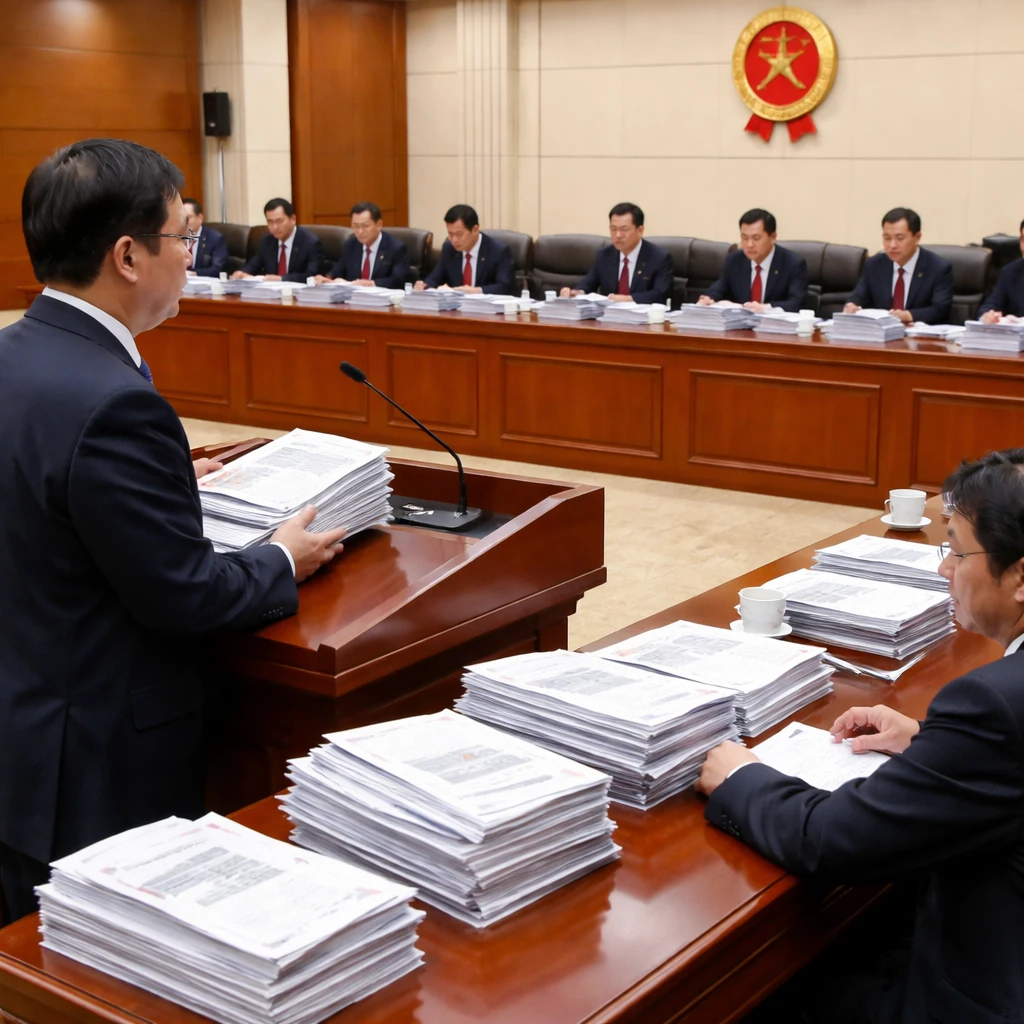
China’s National Audit Office delivered its yearly audit findings to the country’s legislature on Tuesday, setting out a series of concerns affecting both government spending and the operations of major financial institutions.

Auditor Hou Kai formally presented the report to lawmakers, and the National Audit Office subsequently made the document available on its website.

Among the specific issues disclosed, the report states that Bank of China Ltd. avoided 2.37 billion yuan in taxes over the period from 2023 to 2025. The audit also indicates that the bank improperly benefited from preferential policies intended for public mutual funds.

The Agricultural Bank of China Ltd. was cited for lending practices connected to farmland projects. From 2021 through 2025, the bank issued 11.1 billion yuan in loans to projects that the audit judged did not meet the required high-standard criteria. The audit further reports that portions of these loans were diverted to uses not authorized under the relevant lending rules, specifically including investments in wealth management products and repayment of debt.

The audit also identified governance and oversight shortcomings at China Everbright Group Ltd. The report says the group failed to maintain proper decision-making control over certain units and did not provide adequate supervision of some of its subsidiaries.


The audit text published online presents a set of confirmed findings without offering additional commentary or remediation plans in the public summary. Lawmakers received the report through the formal presentation by Hou Kai; the audit office has placed the full document on its website for reference.

These audit results outline concrete instances of tax irregularities, lending to projects that did not meet prescribed standards, misuse of loan proceeds for unauthorized purposes, and lapses in corporate oversight within the entities reviewed.

Readers should note that the published report records the outcomes described above but does not in the publicly posted summary elaborate further on subsequent actions or penalties that may follow from the audit findings.

Risks

  • Confirmed tax avoidance by a major bank introduces regulatory and compliance risk for the banking sector while potentially prompting closer fiscal scrutiny.
  • Loans extended to farmland projects that did not meet required standards, and subsequent use of funds for unauthorized purposes, create credit and asset-quality risks within agricultural finance and the broader lending market.
  • Insufficient decision-making control and weak oversight at a large financial group raise governance and operational risks for its subsidiaries and counterparties.

More from Stock Markets

Quest Diagnostics Gains After New York Clears Haystack MRD Test for Nationwide Use Jun 24, 2026 Put Options Drive Heavy Activity in Stellantis Contracts; Total Volume Tops 34,000 Jun 24, 2026 Warsaw Stocks Slip; WIG30 Falls 2.31% to One-Month Low Jun 24, 2026 Copenhagen benchmark rises as consumer and healthcare names lead gains Jun 24, 2026 Istanbul shares retreat as technology, textile and chemical stocks drag BIST 100 down 1.43% Jun 24, 2026