
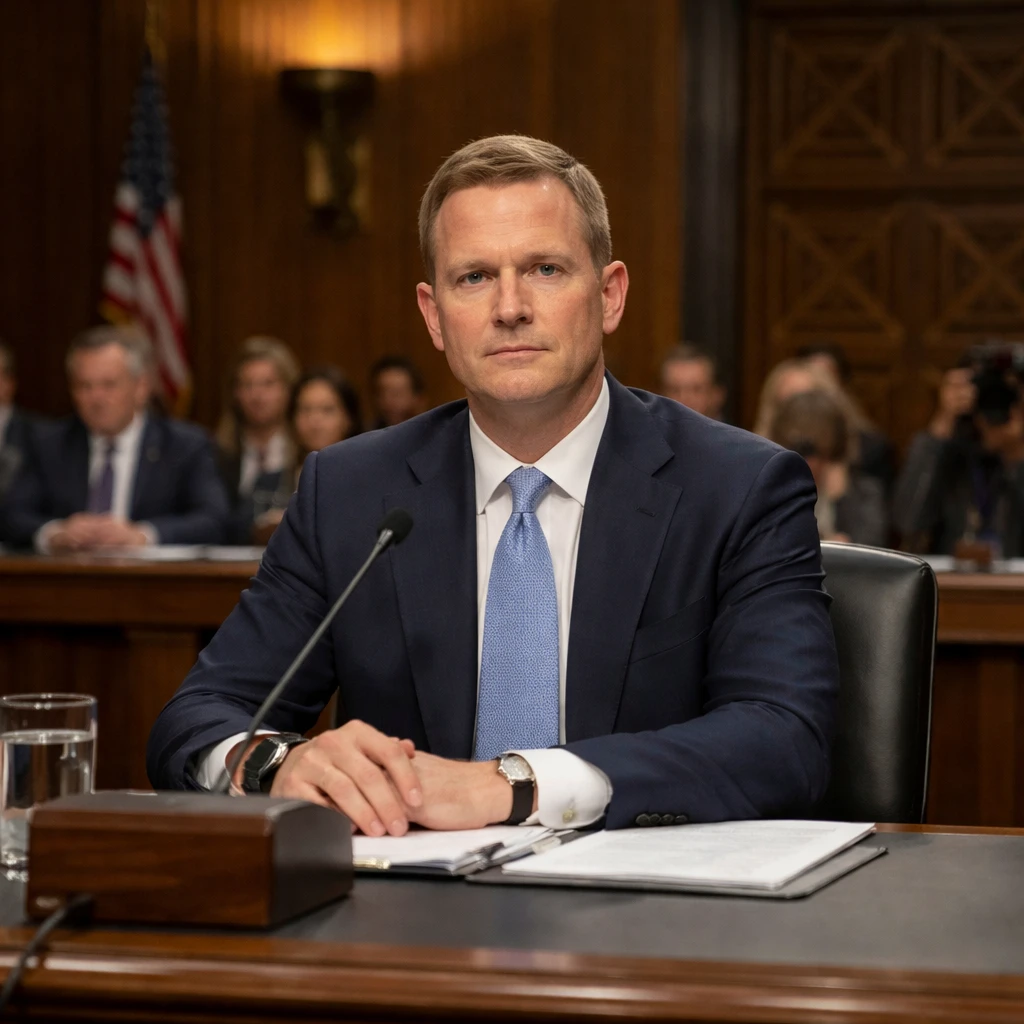
Brian Johnson, currently working in a credit card compliance capacity at Capital One, will appear before U.S. lawmakers on Thursday as the Senate Banking Committee considers his nomination to become director of the Consumer Financial Protection Bureau (CFPB). The hearing comes as the Trump administration pursues leadership changes at an agency it has sought to curtail.
Johnson previously served as the top Republican official at the CFPB during President Trump's first term. His return to the bureau in a leadership slot could signal a shift in how the administration steers the agency, which Congress created after the 2008 financial crisis to police predatory lending and misconduct in consumer financial products.
The Senate Banking Committee, which is vetting the nomination, is under Republican control and includes allies of the president. Johnson is the third individual nominated for the CFPB director role since the president resumed office last year; two earlier nominees were withdrawn by the White House.
While serving in the private sector, Johnson has been regarded as an industry insider and has at times been openly critical of the CFPB. David Silberman, who formerly worked at the bureau and whose tenure overlapped with Johnson’s, said he did not expect Johnson to pursue a course aimed at dismantling the agency. "I do not think he would pursue an agenda of decapitating the CFPB although I believe he will feel obligated to carry out the president’s directives and policy priorities," Silberman said.
Under the leadership of acting Director Russell Vought, the CFPB scaled back most of its activities and attempted to remove a large portion of its staff, characterizing the agency as "woke" and signaling plans for abolition. Federal courts have intervened to block those moves to date.
Ethics disclosures and private-sector ties
Ethics filings indicate Johnson retains professional connections from previous private-sector work to financial firms and former clients that are regulated by the CFPB. Those ties include relationships with major banks that operate the Zelle money-transfer service. During Vought's tenure, the agency abandoned several enforcement actions and settlements, including matters tied to Capital One and to entities associated with Zelle.
Johnson did not reply to a request for comment regarding his nomination and the forthcoming hearing.
Financial disclosure records show Johnson and his spouse report combined net assets in retirement accounts and other investments ranging between $336,000 and $2.7 million. The disclosures also list salary and bonus compensation from Capital One of approximately $740,000.
If confirmed, Johnson has agreed to surrender between $250,000 and $500,000 in unvested Capital One shares. An ethics agreement states the bank waived any requirement that he repay some or all of his bonus payments, and that Johnson will recuse himself from CFPB matters involving Capital One for two years. Capital One did not immediately reply to a request for comment.
Context for the hearing
The confirmation hearing will test lawmakers' assessments of Johnson's record, his stated approach to the CFPB's mission, and how his private-sector relationships might influence agency decisions. The committee's Republican majority and the White House's previous pattern of withdrawing nominees frame the nomination as a consequential step in the administration's long-running effort to reshape the CFPB's role.
Observers and former bureau officials will be watching whether Johnson's tenure would continue the rollback of enforcement actions seen under acting leadership or adopt a different stance toward the bureau's consumer-protection responsibilities.