
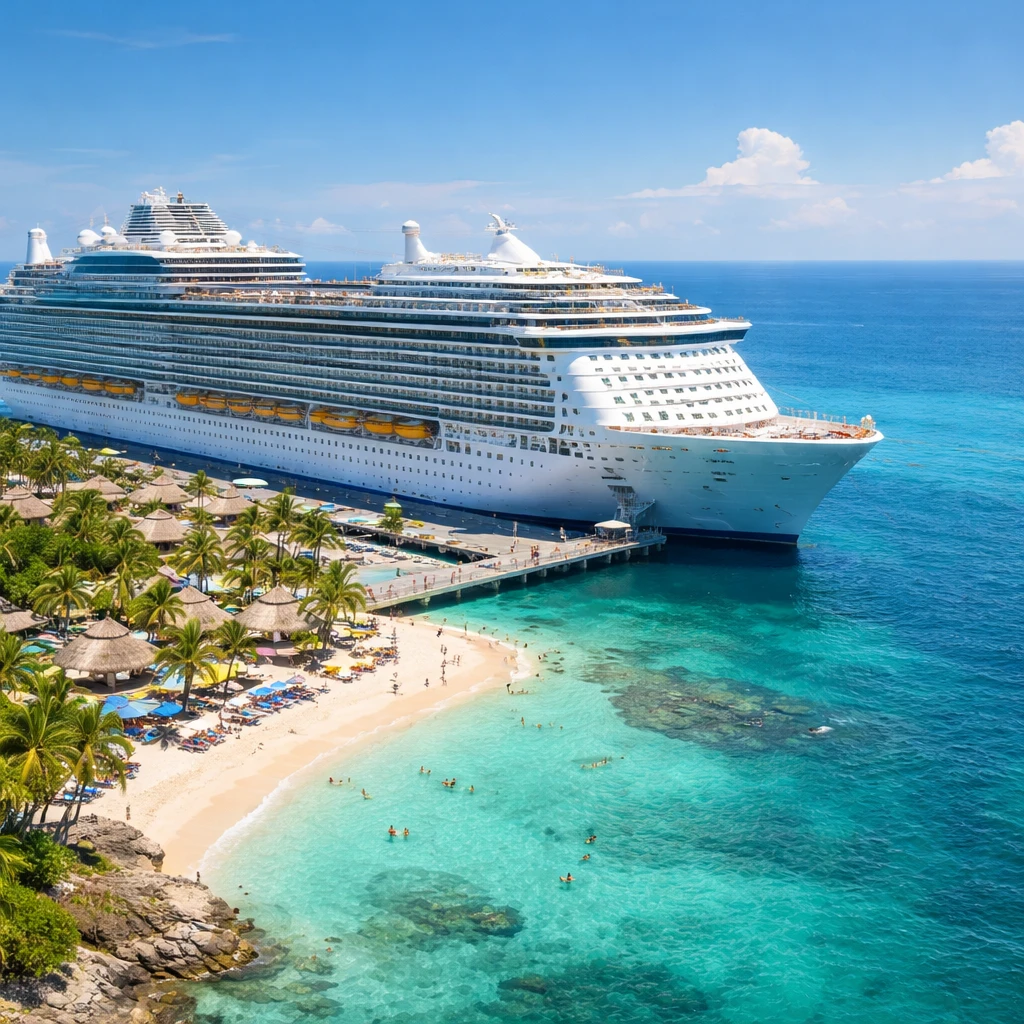
BMO Capital Markets has begun coverage of Royal Caribbean Cruises with an Outperform rating and a $370 price target, a level the firm says implies about a 30% total return. The initiating analyst, Tristan Thomas-Martin, framed Royal Caribbean as an operational engine whose strategy centers on both bringing new passengers into the cruising market and keeping existing customers engaged.
Thomas-Martin used the phrase "a machine" to summarize Royal Caribbean's approach, which he said combines targeted marketing, a refreshed slate of itineraries and a steady cadence of new ship introductions. The note emphasized the company's retention tactics as well, including its rewards program and a multi-brand portfolio that spans different price points to capture various customer segments.
BMO drew a distinction between Royal Caribbean and several of its industry peers. The firm said Royal Caribbean is not executing a turnaround but instead is positioned for the next phase of industry growth. As examples of product-led differentiation, the analyst pointed to destination experiences such as Perfect Day at Coco Cay and the Royal Beach Club Collection, which BMO says help boost onboard spending and set the company apart from competitors.
On financial metrics, BMO's note states that Royal Caribbean generates higher returns on invested capital than Norwegian Cruise Line Holdings and Carnival, and has shown "consistently strong free cash flow conversion and ROE over time." The analyst also commented on valuation: despite a roughly 12% share-price gain since 24 May 2026, Royal Caribbean was characterized as trading at reasonable multiples, near 12 times 2027 EV/EBITDA and about 14.5 times 2027 price-to-earnings.
BMO also contrasted Royal Caribbean's positioning with recent commentary from Carnival, which flagged softer European demand trends. The bank highlighted Royal Caribbean's more affluent customer base and its dominant footprint in the Caribbean as factors that make it comparatively better placed to navigate those demand variations.
Sectors impacted: cruise lines, travel and leisure, consumer discretionary, and broader equity markets tied to leisure travel demand.