
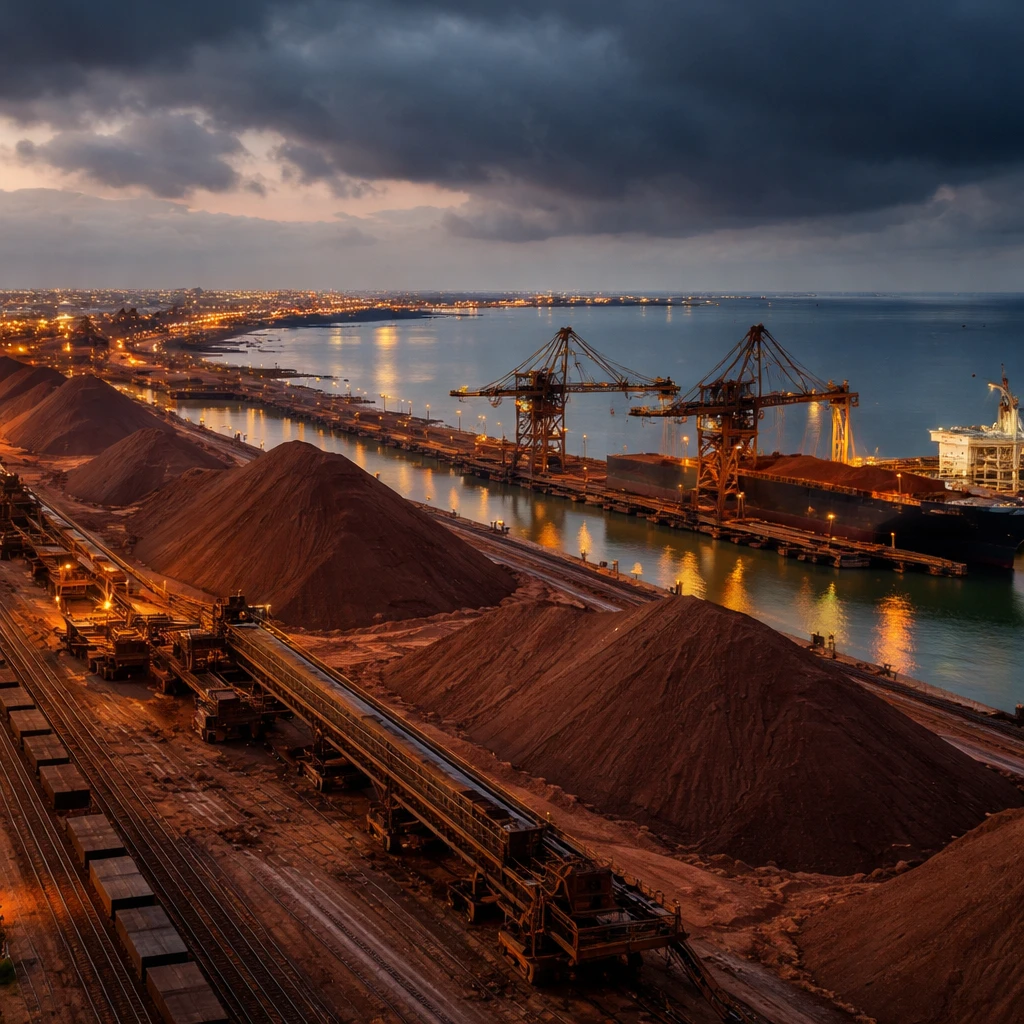
BHP has delivered a strong share-price performance over the past 12 months, up +54.7%. Yet recent developments have complicated the company's outlook. The miner now contends with a significant industrial stoppage at Port Hedland that could interrupt iron ore exports worth about $80 million a day, and management has narrowed its copper production forecast for FY2027 after encountering problems in South Australian operations. The Sydney-listed stock slid over 3% on Friday.
Snapshot
BHP Group Ltd (BHP): Trading at A$58.78 | Mkt Cap: $208.75B || 52W Range: $39.180 - $65.980 || YTD: +35.9% || 1Y: +54.7%
Q4 FY2026 results highlight contrasting momentum across metal businesses
BHP's quarterly update painted a mixed picture across its two largest commodities.
Iron ore - Production recovered after weather disruptions, with quarterly output climbing +7% quarter-on-quarter to 74.8 million metric tons following the Cyclone Zelia-related disruption in the prior quarter. The company reported a record full-year iron ore output of 291.2 million metric tons, which sits within guidance. Management has set FY2027 iron ore production guidance at 286-298 million metric tons, unchanged from the prior guidance band. Realized iron ore prices averaged $83.58 per metric ton, a +5% year-on-year improvement. However, the industrial action at Port Hedland presents an immediate risk to that trajectory.
Copper - By contrast, copper disappointed. Average realized copper prices rose to $6.53 per pound, up +47% year-on-year, yet FY2027 production guidance was trimmed to 1.65-1.80 million metric tons after BHP delivered 1.95 million metric tons in FY2026. The company attributed the guidance cut to unexpected issues in South Australian operations. Given that copper growth is a central pillar of BHP's longer-term investment thesis, the reduced near-term outlook represents a notable operational setback.
The strike at Port Hedland
Industrial action at Port Hedland began on July 16, 2026. The terminal handles a substantial volume of iron ore exports and, according to the company update, the stoppage threatens approximately $80 million of export revenue per day. Negotiations are scheduled to resume on July 21 with the Fair Work Commission engaged. If the dispute is protracted, the company warned it could have a material negative effect on first-half FY2027 earnings.
How analysts reacted
Following the quarterly update, three major brokers trimmed their price targets while retaining cautious stances:
- Citi - Rating: Neutral; Price target A$63, down from A$66
- UBS - Rating: Neutral; Price target A$59, down from A$60
- CLSA - Rating: Hold; Price target A$60, down from A$62
InvestingPro's Fair Value is listed at A$53.71, implying about an 8.5% downside from recent Australian dollar levels. The wider analyst consensus comprises 4 Buy, 12 Hold, and 1 Sell, indicating a broadly neutral stance among the analyst community.
Where proponents and skeptics find their arguments
Supporters of BHP point to its long-standing financial and operational credentials: 47 consecutive years of dividend payments and interest coverage supported by strong cash flow. The company has outperformed many mining peers over one- and ten-year windows, and the structural demand story for copper from electrification remains a multi-decade tailwind. A quick resolution of the Port Hedland dispute would remove the most acute near-term overhang.
On the other side, counterarguments focus on valuation and operational risk. At about $83.65 per ADR when converted, the stock trades near the upper end of analyst targets. The copper guidance cut signals operational friction in a core growth segment, the Port Hedland strike is an immediate operational threat, and the share price is already up +35.9% year-to-date, suggesting that much of the easy re-rating may already be reflected in market prices.
Bottom line
BHP leaves investors with a landscape of contrasts: a robust annual return but two pressing issues that could influence near-term earnings and sentiment. The Port Hedland industrial action and the lowered FY2027 copper production guidance are the primary uncertainties to monitor as the company enters the new fiscal year.