
Stock Markets June 30, 2026 08:33 AM

Baird Survey Finds Same-Store Sales Momentum Eased at End of June

Private restaurant chains reported slower comparable-sales growth in the week ended June 28, with fast casual leading gains while quick-service and casual dining softened

By Maya Rios
Share
Twitter Reddit Facebook LinkedIn
MCD

A weekly poll of private restaurant executives covering $26 billion in annual sales showed same-store sales growth weakened in the week ending June 28, averaging close to 2% for that week versus about 4% during the first three weeks of June. Fast casual concepts drove the strongest gains, while quick-service and casual dining experienced softer results. Cooler, wetter weather was cited as a potential factor for the late-June slowdown.

Baird Survey Finds Same-Store Sales Momentum Eased at End of June
MCD
Summarize with
ChatGPT Perplexity Claude Grok Gemini

Key Points

  • Survey of private restaurant executives covering $26 billion in annual sales showed comparable sales close to 2% in the week ended June 28, down from about 4% in early June.
  • Fast casual and coffee concepts recorded the strongest growth in late June, while quick-service and casual dining posted weaker comparable-sales results.
  • Reported segment trends may affect consumer discretionary exposures tied to restaurant operators and related foodservice supply chains.

A Baird survey of senior executives at private restaurant chains that together represent $26 billion in annual sales found same-store sales growth decelerated in the week ended June 28, with mixed results across operating formats.

Overall trends - The poll reported comparable sales rising close to 2% for the week, down from an average near 4% in the first three weeks of June. Baird noted that the June average for the group came in slightly below the 3% growth recorded in both April and May, and under the 2.7% increase logged in the first quarter.

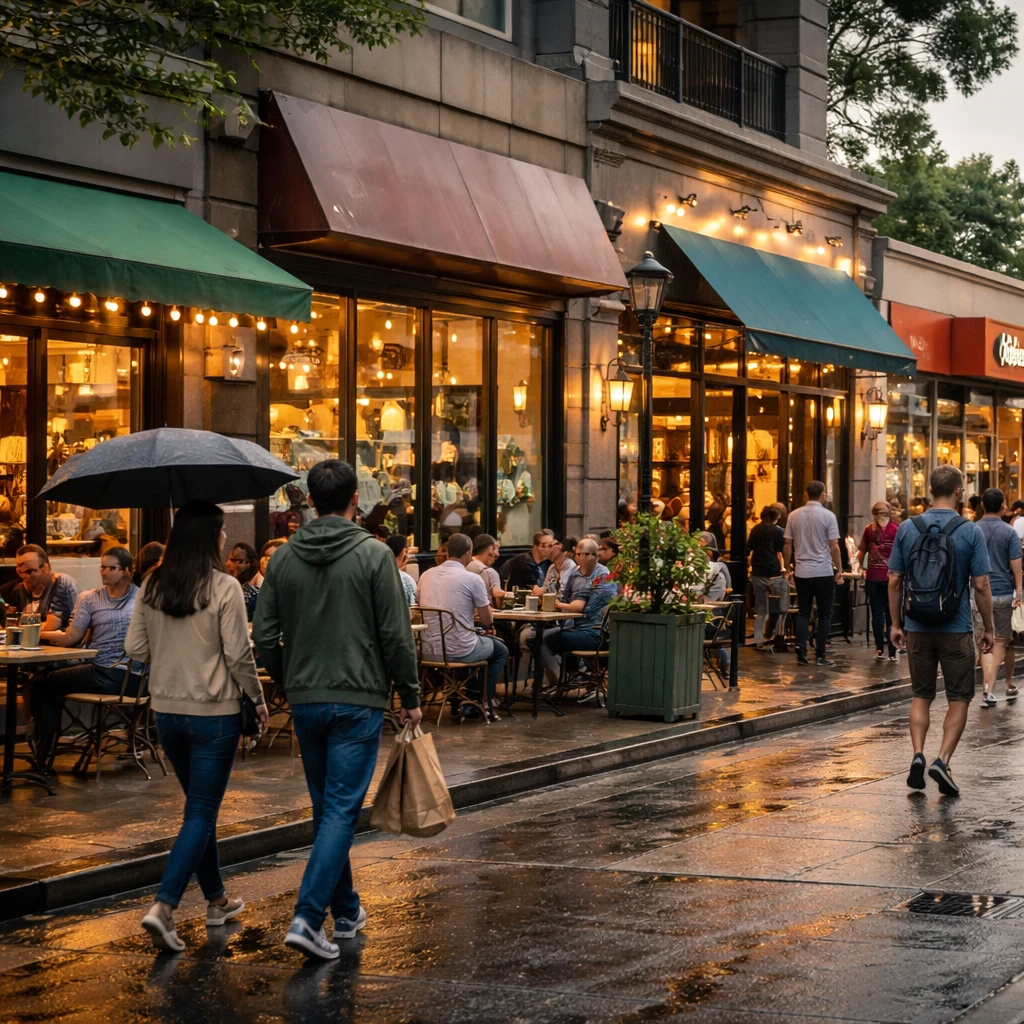
Baird's preliminary analysis pointed to cooler and wetter weather versus the prior year as a possible influence on demand patterns during the final week of June.


Segment-level performance

  • Quick-service: Comparable sales were down 1% in the most recent week and rose by less than 1% for June overall. That pace compares with 2% growth in May and roughly 1% to 2% in April. For the second quarter, the quick-service segment averaged 1% to 2% growth, below the first quarter's 2.2%.
  • Casual dining: Comparable sales fell by less than 1% in the final week of June. The segment averaged a 1% decline for the full month, matching its performance in May. Second quarter comparable sales for casual dining averaged a 1% decline, which Baird describes as an improvement from a 1.6% drop in the first quarter.
  • Fast casual: Operators in the fast casual space posted 7% comparable sales growth in the most recent week, lifting the June average to 10%. This followed 5% growth in both May and April. Baird noted that much of the June strength for the segment was driven by one large participant with company-specific factors.
  • Coffee concepts: These outlets showed 4% to 5% comparable sales growth in the final week of June and 3% to 4% for the month overall, versus 3% to 4% in May and 5% in April. The second quarter averaged close to 4% growth for coffee concepts.

What this means - The survey indicates momentum cooled late in June across a broad cross-section of private restaurant operators, with divergent outcomes by format. Fast casual and coffee concepts maintained positive growth, while quick-service and casual dining experienced weaker comparable-sales results.

Note: The figures above reflect the responses gathered in the Baird survey and Baird's preliminary analysis cited in the poll results.

Risks

  • Weather-related demand shifts - cooler, wetter conditions in late June were cited as a possible factor for the slowdown, creating short-term volatility in restaurant traffic and revenues; impacts are most pronounced for quick-service and casual dining operators.
  • Concentration risk in fast casual results - June's improvement in the fast casual segment was driven largely by one large participant with company-specific factors, which could overstate broader segment strength.
  • Segmental weakness could pressure operators' near-term cash flows and margins in quick-service and casual dining, affecting investors in consumer discretionary and restaurant-related equities.

More from Stock Markets

Circle Internet Shares Slide After Major Consortium Announces Competing Dollar Stablecoin Jun 30, 2026 Chinese Smartphone Makers Deeply Cut 2026 Volume Targets as Memory Shortage Bites Jun 30, 2026 Oppenheimer Cuts Ratings on Major U.S. Banks, Urges Shift Toward Alternative Asset Managers Jun 30, 2026 Digital Realty Shares Drop After Closing Blackstone Purchase and Following Large Secondary Sale Jun 30, 2026 Morgan Stanley Sees More Room for Post-Conflict Rotation in EEMEA Stocks Jun 30, 2026