
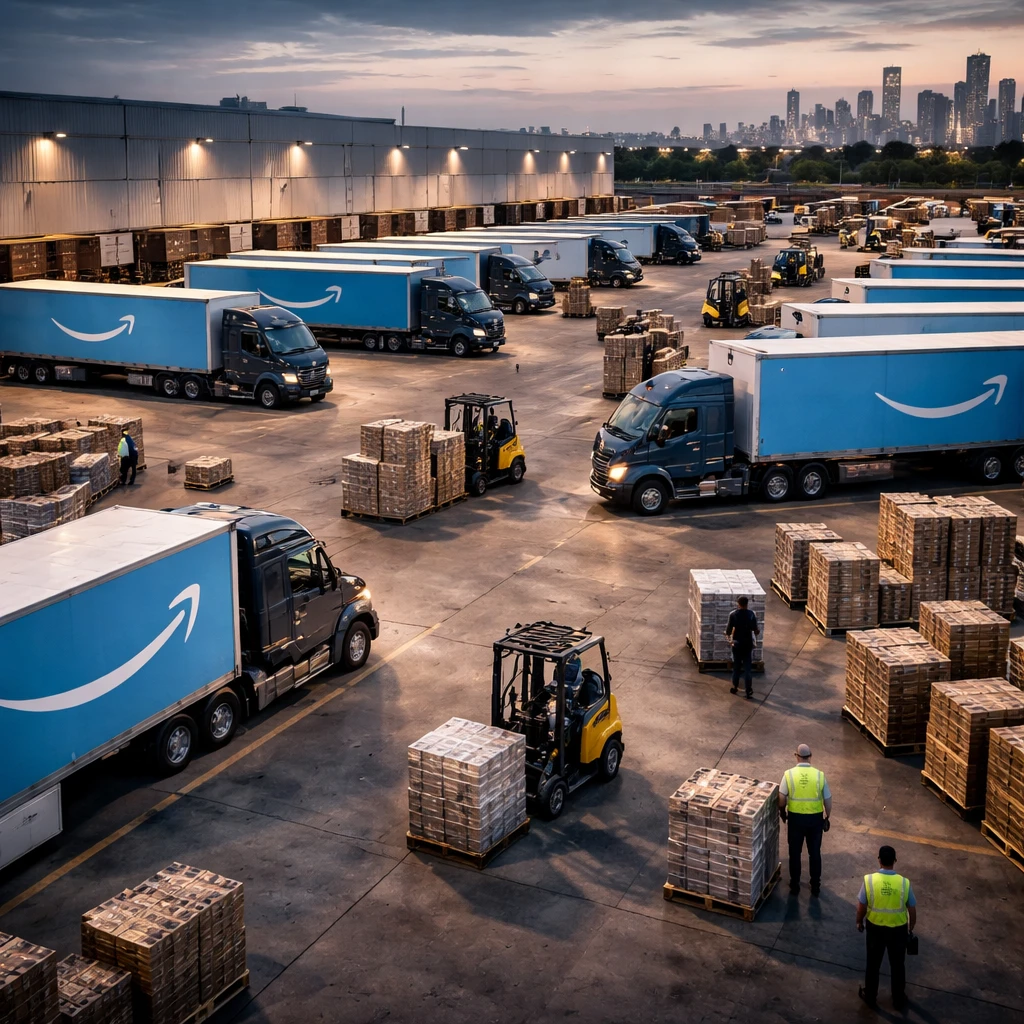
Amazon announced an expansion of its less-than-truckload freight service, extending use beyond inbound deliveries to Amazon facilities to permit businesses to ship palletized loads to third-party warehouses, distribution centers and retail partners nationwide. The company said the broader offering responds to customer demand for more flexible access to Amazon LTL.
Operating since 2019 for Amazon selling partners and vendors, Amazon LTL moved millions of pallets across its U.S. network last year. The service targets typical LTL shipments of between one and six pallets, with parcel weights ranging from 150 to 15,000 pounds.
Amazon described multiple pickup options built into the service: next-day live pickup for orders placed by 5 p.m., same-day pickup through Amazon drop trailers, and standing daily pickups for shippers with high volume. The company said the offering is supported by a large logistics footprint - more than 80,000 trailers, 24,000 intermodal containers, and terminals in major U.S. metropolitan areas - and is part of the broader Amazon Supply Chain Services platform that spans freight, distribution, fulfillment and parcel shipping.
Raymond James responded to the expansion by describing it as incrementally bearish to the long-term competitive landscape for public LTL carriers. The firm emphasized that, while the announcement does not alter its short-term investment thesis for public LTL operators, it is a development that warrants continued monitoring.
The research note highlighted why LTL operations remain operationally intensive - constrained by the density of terminals and doors, pickup-and-delivery execution, freight handling, claims management and the need for consistent service. Those are areas where established LTL carriers such as Old Dominion Freight Line, Saia, XPO Logistics and FedEx Freight currently possess structural advantages.
Raymond James expects the near-term downside risk to be concentrated among small and medium business freight as well as retail-oriented shippers who already operate inside Amazon’s ecosystem. The note indicated that larger enterprise shippers may be less inclined to migrate freight to Amazon, citing hesitancy to share freight, customer and supply chain data with a competitor.
This expansion by Amazon adds a new layer to the competitive dynamics in U.S. LTL and freight markets. The company’s service capabilities - including rapid pickup options and an extensive trailer and container base - create an alternative for businesses seeking palletized LTL solutions, while incumbent carriers retain structural operational strengths that could mitigate immediate disruption.