
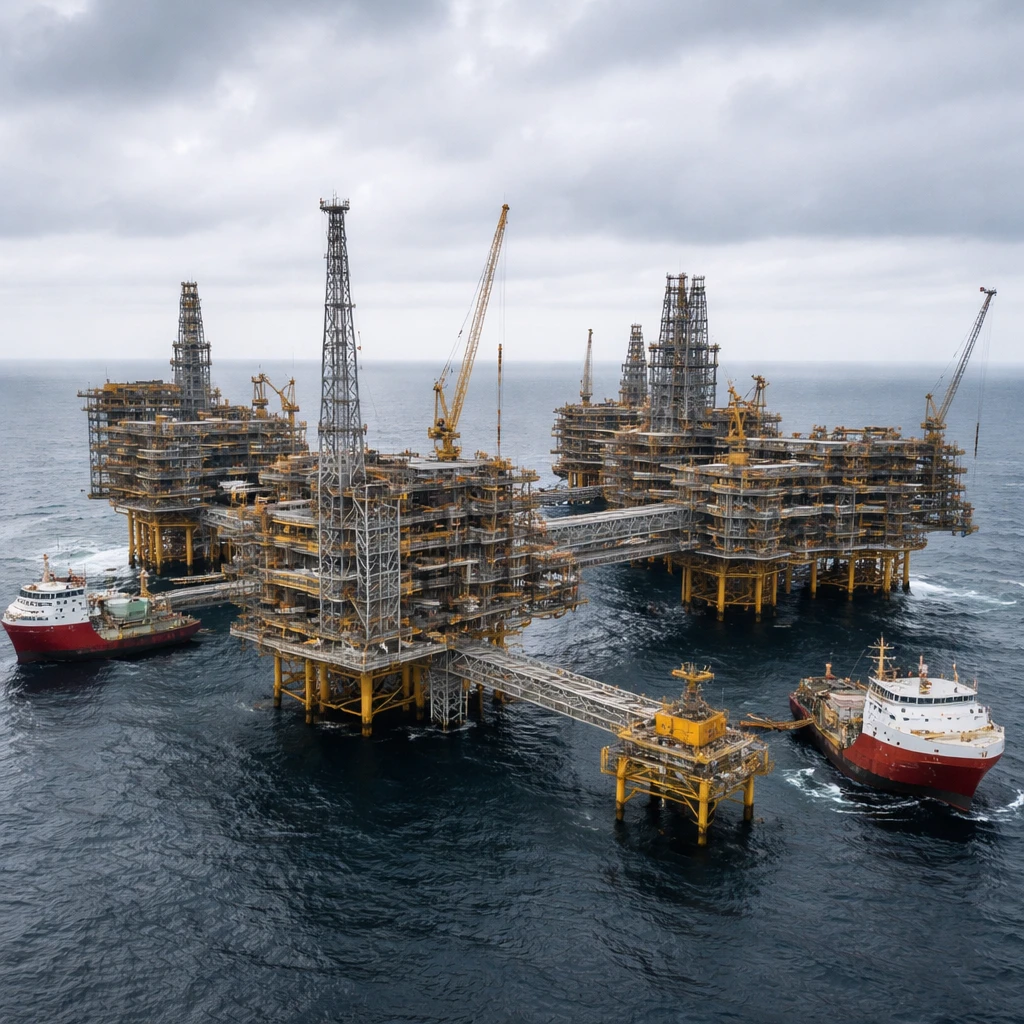
Aker BP and TotalEnergies have gained slightly larger ownership positions in the Johan Sverdrup oilfield in Norway after an independent review of participant shares, the companies said on Monday.
Under the revised allocation, Aker BP's stake in the North Sea field rose to 31.7163% from 31.5733%. TotalEnergies' share increased to 8.72% from 8.44%, according to figures provided by TotalEnergies. Norway's state-owned oil company Petoro saw its interest fall to 16.94% from 17.36% as a result of the adjustments.
The two oil companies initiated an independent review in 2025 with the objective of increasing their holdings. That review produced an adjustment to ownership percentages based on updated technical and production data supplied during the process. The revised percentages reflect a reallocation of historic production volumes among participants in the field.
As part of the reallocation, Aker BP will be allocated an additional 2.2 million barrels of oil equivalent from Johan Sverdrup over the coming two years. The companies described this as a transfer of historic production volumes rather than new production beyond the field's existing output.
Johan Sverdrup is identified as western Europe's largest producing oilfield. The ownership adjustments follow established procedures for re-evaluating participant shares when updated operational or production information becomes available.
Below are the central factual points from the companies' statements:
- Aker BP's stake: increased to 31.7163% from 31.5733%.
- TotalEnergies' stake: increased to 8.72% from 8.44%.
- Petoro's stake: decreased to 16.94% from 17.36%.
- Aker BP to receive 2.2 million barrels of oil equivalent over the next two years via reallocated historic production volumes.
- The ownership adjustments followed an independent review requested in 2025 and were based on updated technical and production data.
The companies' announcements did not provide additional operational details beyond the revised percentages, the volume reallocation to Aker BP, and the explanation that updated technical and production data underpinned the review. The statements characterize the outcome as an administrative reallocation rather than an expansion of the field's production capacity.
This report focuses solely on the changes in ownership shares and the documented reallocation of production volumes as described by the companies involved.